

More news on this day
Dubai’s civil aviation authorities are covering hotel stays, meals and rebooking support for tens of thousands of stranded passengers as airspace restrictions linked to the Iran–US–Israel crisis continue to disrupt flights across the Gulf.
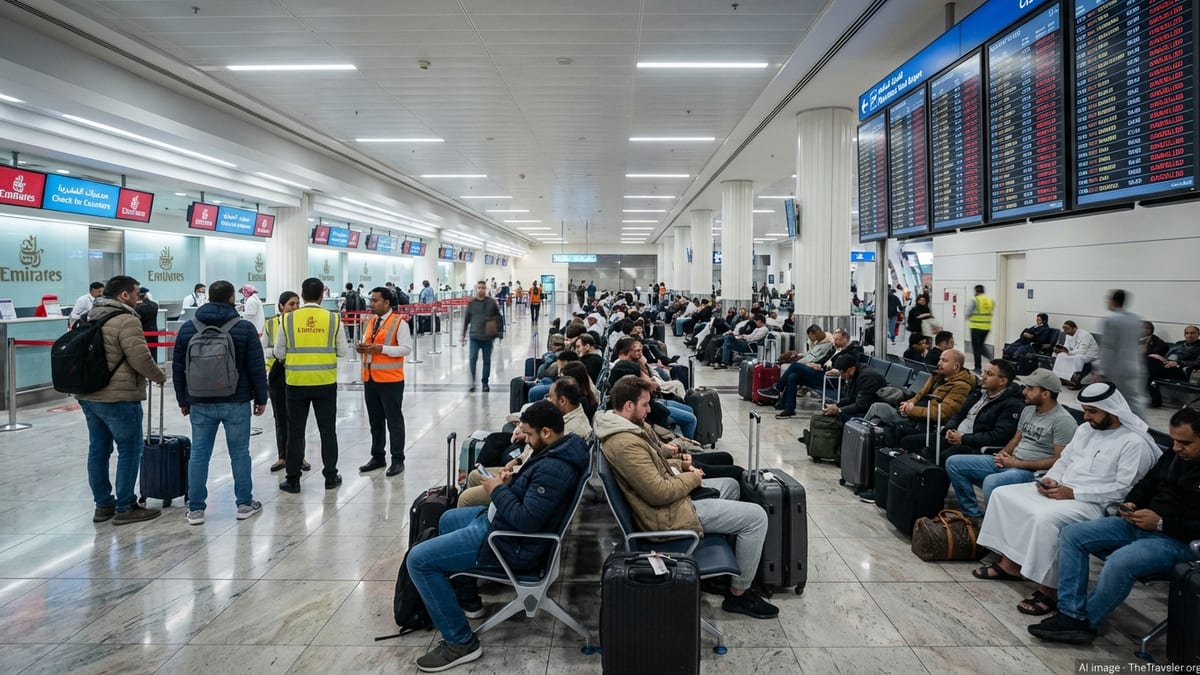
Emergency Support for More Than 20,000 Travelers
The UAE’s General Civil Aviation Authority confirmed that the state is paying for accommodation and sustenance for travelers affected by widespread cancellations and diversions at major airports, including Dubai International, Abu Dhabi’s Zayed International and Sharjah International. Officials said more than 20,200 passengers have already been processed and placed in hotels and temporary housing as part of an emergency aviation support plan rolled out over the weekend.
Under the scheme, stranded tourists and transit passengers are being offered hotel rooms, meals, refreshments and assistance with flight changes at government expense. Authorities described the measures as a way to protect visitors from financial hardship and preserve confidence in the country’s role as a global transit hub during an unprecedented regional security crisis.
Travel data from regional and international monitoring services indicates that more than 1,000 flights have been cancelled across the Middle East since the airspace restrictions took effect, with Dubai among the hardest-hit hubs. Delays and rerouting have rippled far beyond the Gulf, affecting connections to Europe, Asia and North America as airlines work around closed corridors.
Hotels Told Not to Evict Guests
Local tourism regulators in Dubai and Abu Dhabi have instructed hotels to extend stays for guests unable to travel, stressing that no visitor should be left without a room because of cancelled or postponed flights. In guidance circulated to hotel managers, Dubai’s Department of Economy and Tourism asked properties to allow guests to remain under the same conditions as their original bookings if departures are delayed beyond checkout dates.
The circular also directed hotels to notify authorities if a guest cannot cover additional nights so that government agencies can step in to assume costs where necessary. Abu Dhabi’s Department of Culture and Tourism issued similar instructions, confirming that extended hotel stays for stranded visitors in the capital will be funded by the state during the disruption.
Airport authorities and hotel operators say the coordination is aimed at preventing scenes of overcrowded terminals and passengers sleeping in public areas. Instead, transport and tourism agencies are pooling resources to move travelers into available rooms across the city while airlines work through a substantial backlog of rebookings.
Partial Flight Resumptions but Ongoing Restrictions
Dubai Airports reported that a limited number of services have begun operating again after what amounted to a nearly 48 hour shutdown of normal operations at the city’s main hubs. Priority is being given to previously scheduled flights and to clearing the most heavily backlogged routes, but carriers warn that schedules will remain heavily disrupted for several days.
Emirates and other major airlines serving Dubai have told passengers not to travel to the airport unless they hold confirmed rebooked itineraries. With regional airspace still restricted and some neighboring countries maintaining full closures, airlines are adjusting routings, consolidating services and, in some cases, operating repatriation style flights to move stranded travelers out of the UAE once safe corridors are available.
Officials emphasize that safety remains the overriding consideration in all decisions on airspace and flight operations. Aviation regulators are in continuous contact with military and security agencies as well as international partners, and further adjustments to flight schedules are expected as the regional situation evolves.
Private Sector Steps In with Free Stays
Alongside the state funded program, several Dubai based hospitality businesses and property firms have launched their own initiatives to house stranded tourists. Local holiday home operator Arabnb Homes offered vacant apartments free of charge to visitors who suddenly found themselves without a flight or hotel booking after the airspace closures. The move was widely shared across social media and helped funnel travelers into safe, short term accommodation.
Separately, Mileo Dubai, a hotel on Palm Jumeirah, announced complimentary short stays for affected families and elderly passengers. Management said the decision was driven by a sense of community responsibility, with staff redeployed to manage check ins, logistics and basic support for vulnerable guests caught up in the crisis.
These private efforts complement the official aviation and tourism response, expanding the pool of beds available at short notice. For travelers on longer layovers or those whose original accommodation was tied to package tours, the combination of government backed and voluntary offers has provided a crucial safety net.
What Stranded Passengers Can Expect Now
Authorities are urging passengers currently in Dubai or transiting through the UAE to stay in close contact with their airlines, which remain the primary channel for rebooking and refund options. Travelers who have already been checked into government arranged hotels are being given updates through airline representatives and airport help desks coordinating ground transport and onward itineraries.
Visitors staying in private accommodation have been advised to seek extensions from their hotels, rental hosts or tour operators, noting that local tourism departments are encouraging flexible policies and can intervene in hardship cases. Travelers who have paid for their own meals or rooms during the early stages of the disruption are being told to retain receipts, as reimbursement is expected to be available where expenses align with the official support scheme.
With airspace restrictions still in force across parts of the region and security conditions fluid, officials caution that a full return to normal schedules may take several days. In the meantime, Dubai’s civil aviation and tourism authorities say their priority is to ensure that no passenger is left without shelter, food or clear information while they wait for a safe route home.