

More news on this day
Tourism to key Middle Eastern hubs including Dubai, Tel Aviv and Doha is reeling as sudden airspace closures, mass flight cancellations and a sharp selloff in global airline stocks unsettle travelers and investors following a dramatic escalation of conflict involving the United States, Israel and Iran.
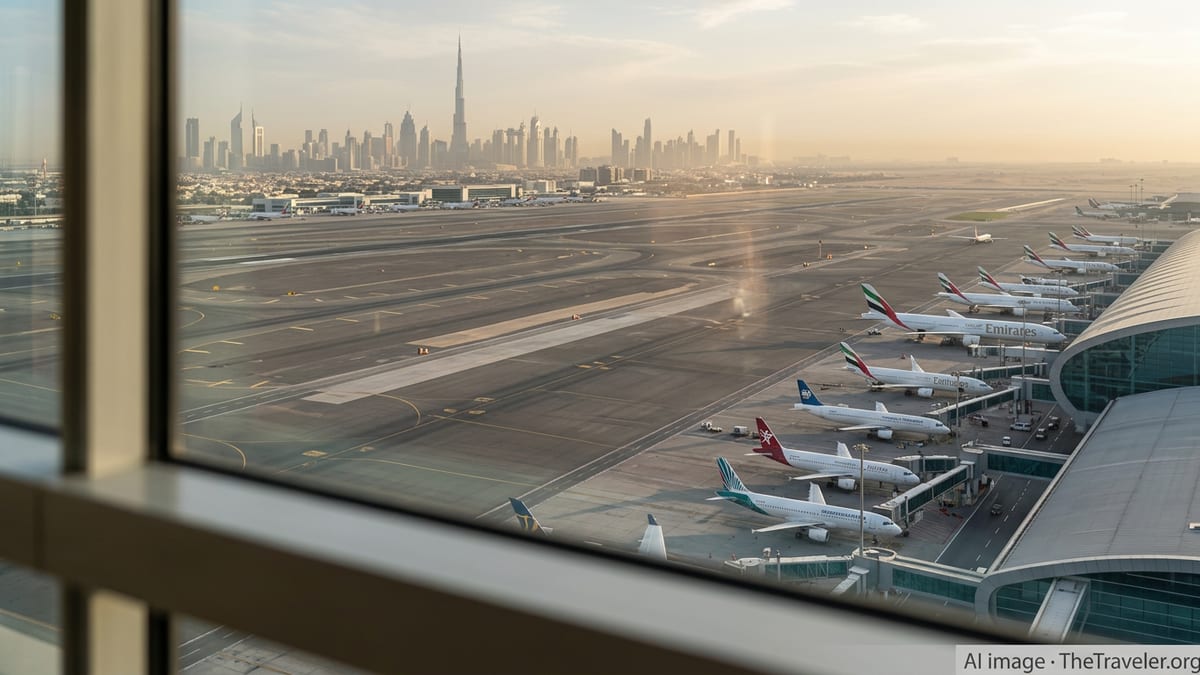
Flight Cancellations Paralyze Major Gulf and Israeli Gateways
Air travel into and across the Middle East has been thrown into disarray since February 28, when missile and drone strikes triggered rapid-fire airspace closures from Iran and Iraq to Israel, Qatar and the United Arab Emirates. Aviation analysts describe the shutdown of Gulf hubs as the most disruptive event for commercial flying since the peak of the pandemic, with thousands of flights canceled and hundreds of thousands of passengers stranded worldwide.
Dubai International, one of the world’s busiest airports, saw operations halted for 48 hours before a limited number of services cautiously resumed on March 2. Airlines based in the emirate, including Emirates and flydubai, have warned that regular schedules will remain curtailed, while urging passengers not to approach the airport unless they hold confirmed rebooked seats. Stranded travelers have been relying on emergency accommodation arranged by authorities, hotels and local residents.
In Doha, Hamad International Airport has experienced similar turmoil after Qatari airspace was closed during Iranian strikes, with further attempted attacks reported against the capital’s aviation infrastructure. Authorities say most incoming missiles and drones were intercepted, but the resulting shutdowns and security alerts have led to rolling cancellations and long delays for travelers attempting to connect between Europe, Asia and Africa via Qatar’s flagship hub.
Israel’s Ben Gurion Airport near Tel Aviv, a key gateway for both religious tourism and growing tech and medical conferences, has also been swept up in the airspace lockdowns. International carriers that had gradually rebuilt schedules to Israel over the past year have again halted or pared back service, complicating plans for spring travelers, pilgrimage groups and diaspora families.
United, American and Global Airline Stocks Slide on Risk and Fuel Costs
The shock to tourism demand has been amplified by a sharp selloff in airline and travel stocks, particularly in the United States and Europe. Shares of United Airlines, Delta Air Lines and other major carriers fell on March 2 as investors reacted to surging oil prices and the prospect of prolonged route disruptions in a region that sits astride some of the world’s busiest long haul corridors.
United, which has historically had the deepest exposure among US airlines to Israel routes, has canceled flights from the United States to both Dubai and Tel Aviv into early March and issued broad travel waivers for customers booked through the end of the month. The carrier is allowing many passengers to rebook without change fees, but warns that the situation remains fluid as military operations and airspace permissions shift day by day.
American Airlines has temporarily suspended services to Tel Aviv and Doha, while adjusting selected flights from New York and Chicago toward Dubai to skirt restricted skies. Longer routings to avoid conflict zones are adding hours to flight times in some cases and driving up fuel burn at a moment when oil prices have spiked on fears for exports through the Strait of Hormuz.
European and Canadian carriers have joined the retreat. Air France and KLM have suspended flights to Dubai, Doha and Tel Aviv, while Air Canada has paused routes from Toronto to the Gulf. For investors, the combination of higher operating costs, weaker premium demand and uncertainty over when normal schedules can resume has created a volatile backdrop for airline shares.
Tourism Hotspots Face Immediate Shock and Longer-Term Reputational Risk
For Dubai, Tel Aviv and Doha, the immediate impact is being felt in hotel occupancies, last minute cancellations and a collapse in short lead-time bookings. Travel agents report group tours, conferences and events being postponed or shifted to alternative destinations as organizers wait for clarity on the security and airspace picture.
Dubai, which has positioned itself as a global stopover playground and winter sun destination, is seeing disruption ripple far beyond point to point visitors. With Emirates and other Gulf carriers serving as vital connectors between Europe, Asia, Africa and Australasia, any sustained reduction in transit flows can quickly affect shopping malls, restaurants and attractions that rely on high volumes of overnight and short-stay guests.
Tel Aviv, long marketed as a Mediterranean city break combining culture, nightlife and beach life, is facing a renewed blow just as hoteliers and tour operators had begun to rebuild after previous rounds of regional violence. Even for travelers not directly affected by flight cancellations, renewed images of missile interceptions and air raid sirens are likely to weigh on sentiment and delay discretionary leisure trips.
Doha, which emerged from the FIFA World Cup with enhanced global visibility and a growing reputation as a premium stopover and business hub, is similarly vulnerable to reputational damage. While authorities emphasize that interceptions have prevented more serious damage to critical infrastructure, aviation and tourism executives worry that repeated closures and highly visible security alerts could erode confidence among first time visitors.
Airlines Reroute Through Narrow Corridors as Travelers Scramble
As large swaths of Middle Eastern airspace remain closed or heavily restricted, many airlines are being funneled into a narrow corridor over the Caucasus, threading routes through Armenia, Georgia and Azerbaijan to maintain connections between Europe and Asia. Industry experts warn that the corridor, at points only around 100 miles wide, is vulnerable to congestion, weather disruptions and further geopolitical shocks.
Carriers able to operate are also leaning more heavily on alternative paths through Egypt, Turkey, Saudi Arabia and Oman, but these detours often demand additional fuel stops and complicate crew scheduling. The patchwork of closures and permissions is forcing network planners into near real time adjustments, with schedules being rewritten on an almost daily basis.
For passengers, the result is a maze of cancellations, diversions and rebookings. Travelers bound for Dubai, Tel Aviv or Doha are being re-accommodated through secondary hubs where possible, though capacity is tight and many long haul itineraries now involve overnight layovers or backtracking. Travel insurers and credit card providers are fielding a surge in claims as holidaymakers weigh whether to postpone or cancel trips entirely.
On the ground in affected cities, tourism boards and hotel associations are racing to provide clarity and reassurance. However, with security and aviation decisions being driven by national defense considerations, local tourism authorities have limited influence over the pace at which skies will reopen or airlines will restore full schedules.
What Travelers Need to Know Before Booking Middle East Trips
Industry specialists say that would-be visitors to Dubai, Tel Aviv and Doha over the coming weeks should plan for uncertainty. Travelers are being urged to monitor airline advisories closely, opt for flexible tickets and consider routes that allow rerouting through multiple hubs if their primary gateway remains closed.
Many carriers, including United, American and leading Gulf airlines, have introduced broad change fee waivers for tickets purchased before the latest escalation. These policies typically allow passengers to shift travel dates within a defined window or receive refunds if flights are canceled outright, but terms vary widely by airline and booking channel, making it critical for customers to review fine print before making changes.
Security experts advise that travelers also pay close attention to government travel advisories and register their trips where such services exist. While tourism infrastructure in Dubai, Tel Aviv and Doha remains largely intact, the volatile nature of the conflict and the possibility of further missile or drone activity mean conditions can evolve quickly.
For now, the tourism outlook for the region hinges on both the trajectory of the conflict and the pace at which airspace can safely reopen. Until airlines regain confidence in stable routings and fuel markets calm, destinations that depend on seamless global connectivity will continue to feel the strain in reduced arrivals, softer hotel performance and jittery forward bookings.