

More news on this day
Dubai’s status as one of the world’s busiest tourism and transit hubs has been shaken as escalating conflict in the wider Middle East triggers airspace closures, mass flight cancellations and an abrupt collapse in visitor arrivals, leaving thousands of international travelers stranded in and around the city’s airports.
Airspace Shutdown Paralyzes a Global Hub
What began as rolling airspace restrictions on February 28 rapidly escalated into a near-total shutdown of civilian flights across much of the Gulf, freezing operations at Dubai International Airport and Dubai World Central for roughly 48 hours. Authorities in the United Arab Emirates closed the country’s skies following Iranian missile and drone barrages linked to wider hostilities involving the United States and Israel, forcing Emirates, Flydubai and dozens of foreign carriers to suspend or reroute services.
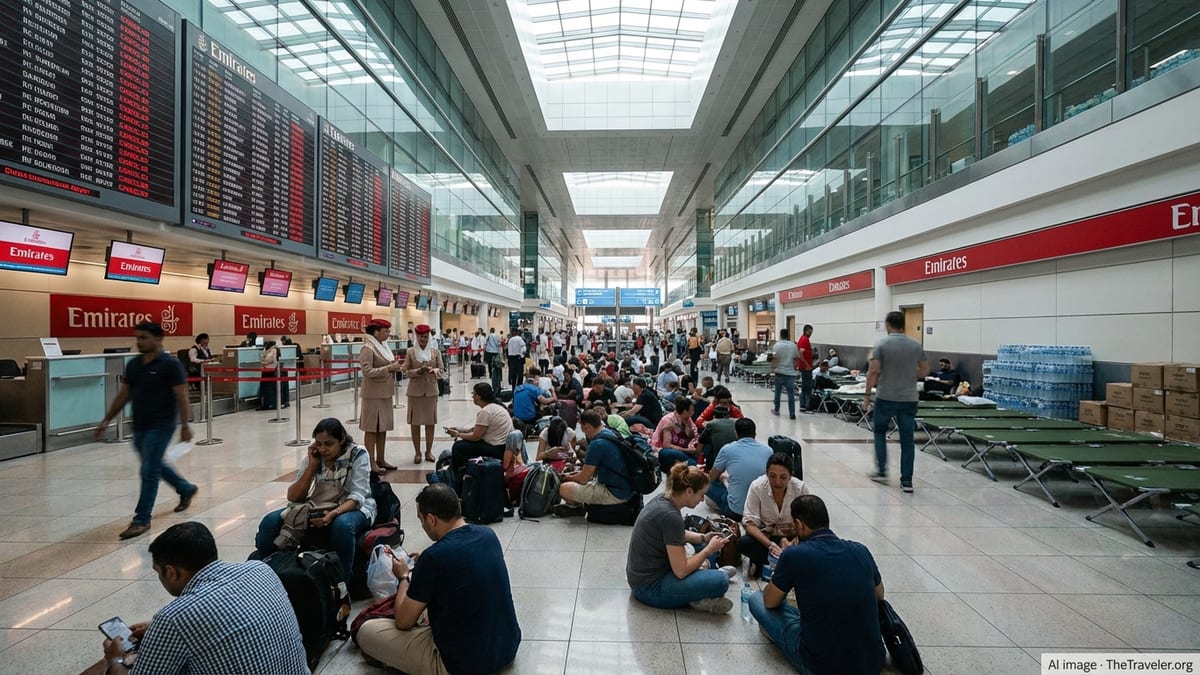
By March 2, Dubai Airports confirmed that only a limited number of flights had resumed, with regular schedules canceled or severely curtailed and passengers urged not to travel to the terminals unless directly contacted by their airline. Departure boards at Dubai International, ordinarily a symbol of the city’s hyper-connectivity, were dominated by red "canceled" notices as long-haul services to Europe, Asia and the Americas were scrapped or diverted to alternative hubs.
The sudden paralysis has hit at the heart of Dubai’s economic model, which relies heavily on seamless aviation links to feed its hotels, shopping districts and events industry. Analysts warn that even a short disruption measured in days risks inflicting outsized damage on an ecosystem built around high volumes of transit and stopover traffic.
Thousands of Tourists Stranded in Dubai and Across the Region
The airspace shutdown and ongoing security concerns have left an estimated many thousands of international travelers unable to leave Dubai, Abu Dhabi and other Gulf cities. Passengers bound for onward destinations found themselves caught mid-journey when their connecting flights were canceled, while inbound visitors on leisure trips suddenly faced an indefinite extension of their stay.
Inside Dubai’s terminals, travelers reported improvised sleeping areas near departure gates, long queues at airline service desks and growing uncertainty about when they might be able to depart. With hotel availability tightening in areas close to the airport, local authorities and tourism bodies coordinated with the hospitality sector to secure temporary accommodation for transit passengers who could not be rebooked the same day.
The disruption has rippled far beyond the UAE. Regional hubs from Doha to Kuwait City and Bahrain have also seen large-scale cancellations, compounding the number of tourists and business travelers stuck in limbo. Several European and Asian governments have begun organizing assisted departures or charter evacuations for their nationals, while advising citizens against non-essential travel to parts of the Middle East until the security situation stabilizes.
Sharp Reversal for a Record-Breaking Tourism Boom
The crisis marks a dramatic reversal for Dubai’s tourism sector, which had been celebrating record visitor numbers at the end of 2025. The emirate and the wider Gulf region had emerged from the pandemic with one of the fastest travel recoveries in the world, fueled by aggressive airline expansion, liberal visa policies and a packed calendar of conferences, concerts and sports tournaments.
Industry data for 2025 showed the Middle East’s tourism market surpassing pre-pandemic revenue levels, with the UAE capturing more than half of regional tourism spending and Dubai consolidating its role as a pivotal global transit node. Luxury resorts along the Palm Jumeirah, downtown hotels near Burj Khalifa and desert retreat properties all reported high occupancy rates, while cruise tourism through Port Rashid and Dubai Harbour saw strong growth.
That momentum has now swung abruptly in the opposite direction. Tour operators report a wave of cancellations for March and April itineraries that included Dubai, Abu Dhabi and neighboring Gulf destinations, amid heightened perceptions of regional risk. International conference organizers are reassessing whether to proceed with large-scale events scheduled in the emirate, and airlines face a complex restart even after airspace restrictions ease, as they work through backlogs of displaced passengers.
Government Response and Emergency Support Measures
As the scale of the disruption became clear, UAE authorities and local tourism departments moved to contain the fallout for visitors. In Abu Dhabi, the Department of Culture and Tourism instructed hotels to extend the stays of guests unable to depart because of flight suspensions, effectively turning many properties into temporary shelters for transit passengers. Similar guidance has circulated informally among hoteliers in Dubai, where front-desk staff are scrambling to reassign rooms and honor extended bookings.
Developers and private-sector partners have also stepped in, offering short-term housing in vacant apartments and holiday rentals for visitors who cannot secure traditional hotel rooms. Airport staff, civil defense agencies and local volunteers have coordinated to distribute water, food and basic supplies to stranded passengers in terminal buildings during the peak of the shutdown.
At the federal level, the UAE’s emergency management authorities have emphasized that passenger safety remains the overriding priority, urging residents and visitors to follow official alerts and shelter instructions when air-raid sirens or mobile warnings sound. Consular teams from multiple countries have set up help desks in airport halls and major hotels to assist citizens with emergency travel documents, medical needs and communication with families back home.
Uncertain Outlook for Dubai’s Tourism Recovery
With airspace only partially reopened and the broader military confrontation still unfolding, the outlook for Dubai’s tourism sector remains clouded by uncertainty. Aviation analysts note that even if missile and drone attacks subside quickly, insurance costs for airlines, higher security expenditures and lingering traveler anxiety could weigh on demand for months.
Carriers using Dubai as a transfer point for routes between Europe, Asia and Oceania are reassessing flight paths to minimize exposure to potential conflict zones, in some cases adding fuel and crew costs that could make marginal routes uneconomical. Travel search platforms are already registering a shift in demand toward alternative hubs and destinations perceived as less exposed to the current hostilities.
For now, Dubai’s tourism officials are focused on crisis management rather than promotion, working to restore confidence among visitors currently in the city and those with imminent bookings. Industry executives stress that the emirate has weathered shocks before, from global financial turmoil to the pandemic, and argue that its infrastructure and brand strength position it for eventual recovery. But with thousands of tourists still stranded and airlines operating on skeleton schedules, the immediate reality is one of disruption rather than resilience, as one of the world’s premier travel cities navigates its most serious aviation crisis in years.