

More news on this day
Flights between Dubai and the United Kingdom are slowly resuming as Emirates and other Gulf carriers restart limited services following days of sweeping Middle East airspace closures triggered by regional conflict.
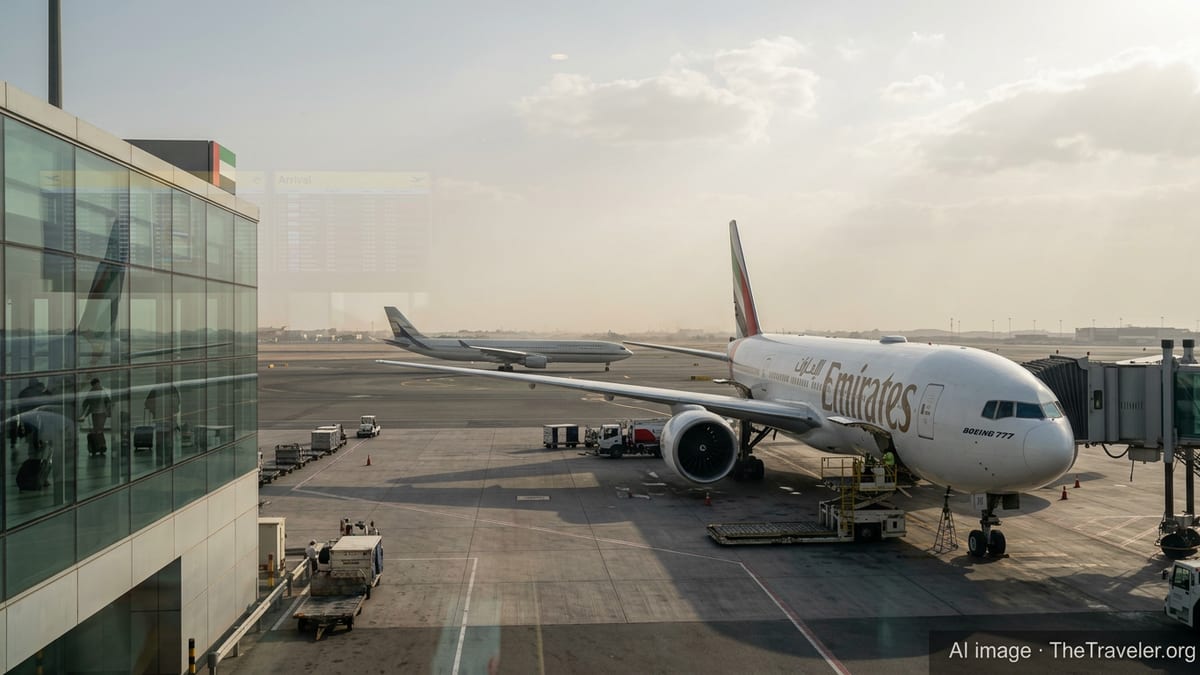
Partial Reopening Restores a Lifeline Between Dubai and the UK
After a rare near-standstill in Gulf aviation, Emirates has begun rebuilding its schedule between Dubai and key UK airports, providing a crucial outlet for stranded travelers. Following a 48-hour near total shutdown of operations over the United Arab Emirates and neighboring states, Dubai Airports authorized a phased restart from March 3, with Emirates operating a reduced roster of departures to London and other British cities.
The Dubai flag carrier is currently prioritizing passengers whose flights were cancelled at the height of the disruption. Industry updates indicate that the airline has been running a limited but growing number of daily services to London Heathrow, Gatwick, Manchester, Birmingham and Glasgow, with plans to reach 11 daily UK flights as early as March 7 if security conditions allow. Schedules remain thinner than usual, but the resumption has eased pressure on UK-bound routes that were effectively cut off when airspace closures rippled across Iran, Iraq, Israel, Qatar, Bahrain and parts of the Gulf.
Travel demand between the UAE and the UK remains strong, and aircraft are departing close to full, according to aviation analysts. However, the mix of passengers has shifted, with a higher proportion of repatriating residents, business travelers trying to reconnect global supply chains, and connecting passengers rerouted from Asia and Africa after their original itineraries collapsed.
While Dubai and Abu Dhabi airports are once again handling international traffic, authorities and airlines stress that operations are still classified as limited. Many connections, including onward links across the Middle East, remain suspended or heavily rerouted around closed or high-risk airspace corridors.
Gulf Airlines Navigate Complex Airspace Restrictions
The return of Dubai–UK flights is unfolding against a backdrop of one of the most complex airspace crises the region has seen in years. A series of strikes and retaliatory attacks across the Middle East prompted authorities to close or sharply restrict skies over multiple countries, forcing airlines to cancel thousands of flights and design emergency routings in real time.
Emirates and Abu Dhabi-based Etihad temporarily suspended the bulk of their services when the closures first took effect, before securing tightly controlled corridors to revive a limited schedule. Carriers in Qatar, Bahrain and Kuwait have faced even more stringent constraints, with many of their routes still grounded or operating only ad hoc repatriation flights. The economic and logistical impact is particularly acute in Dubai, which normally relies on seamless overflight rights across Iran and Iraq to support its role as a global connecting hub.
For UK-bound services, airlines have shifted to longer detours that skirt restricted skies, often routing north over Turkey or south over Saudi Arabia and the Arabian Sea. These alternative flight paths add time and fuel burn, but they allow carriers to maintain at least a skeleton network while regulators and military authorities reassess the security picture each day.
Despite the gradual reopening, industry bulletins emphasize that airspace conditions remain fluid. Civil aviation agencies in Europe and the Gulf continue to issue advisories urging operators to avoid certain flight information regions entirely, or to transit them only at predefined altitudes and along agreed tracks cleared by air defense systems.
Virgin Atlantic and European Carriers Rebuild Dubai Links
Emirates is not alone in reconnecting Dubai and the UK. Virgin Atlantic has resumed scheduled services between Dubai and London Heathrow after halting flights when airport operations in the emirate were first curtailed. The airline operated its first post-closure departure on March 3, describing it as part of a carefully managed restart in coordination with UK and UAE authorities.
Virgin Atlantic’s return has added capacity on one of the most heavily trafficked long-haul corridors for British leisure and business travelers. However, the airline continues to warn customers that routings and schedules may change at short notice, and that flight paths are being dynamically adjusted in response to security assessments on Middle East overflights.
Other European carriers remain more cautious. Some have kept Dubai flights suspended or severely reduced, citing both airspace risk and congestion as jets jostle for limited routing options around closed flight regions. Where services have resumed, airlines are generally deploying larger aircraft to maximize available seats on each safe corridor, while trimming overall frequency until route stability improves.
Analysts say that the staggered approach reflects differing corporate risk thresholds and operational footprints. Gulf carriers with extensive regional experience and local regulatory ties have moved faster to design safe detours, while some European airlines are waiting for clearer medium-term guidance from their national regulators and the European Union Aviation Safety Agency.
Stranded Passengers Face Backlogs and Lengthy Rebookings
For travelers caught in the shutdown, the reopening of Dubai–UK flights has brought relief, but also a fresh set of challenges. Cancellations and rolling delays over several days have left sizeable backlogs of passengers holding disrupted tickets, all vying for limited seats on the first wave of restored services.
Emirates has urged customers not to travel to the airport unless they have a confirmed booking on one of the operating flights, a message echoed by Etihad, flydubai and other Gulf carriers. Many stranded travelers report being rebooked several days out, while some are being rerouted via alternative hubs in Istanbul, Cairo or Addis Ababa to reach the UK.
At Dubai International Airport, terminals are busier than during the shutdown but still operating under crowd-control measures, with airlines prioritizing passengers whose original travel dates fell during the period of total or near-total suspension. Check-in counters and customer service desks are focusing on re-accommodating those travelers before releasing remaining seats to new bookings.
Industry experts note that formal compensation for delays is likely to be limited, as airlines will argue that the disruption was caused by extraordinary geopolitical events beyond their control. Instead, carriers are offering fee waivers for changes, flexible rebooking options, and in some cases accommodation or meal vouchers during extended layovers.
What UK and UAE Travelers Should Do Now
With Dubai–UK flights running again, albeit at reduced levels, both airlines and regulators are advising passengers to treat the route as operational but fragile. The most consistent guidance from carriers is to verify flight status repeatedly in the 24 hours before departure and to rely on official channels and direct notifications rather than third-party apps or social media rumors.
Travel agents in London and Dubai are reporting strong demand for seats in the coming week as residents, tourists and business travelers attempt to recover missed trips or return home. Many are advising clients to build in extra connection time, avoid tight same-day onward connections in Europe, and consider flexible fares that allow changes should airspace conditions shift again.
For now, the restoration of Dubai–UK links is being viewed within the aviation industry as a tentative but important indicator that Gulf carriers can sustain at least partial long-haul operations while a broader regional security crisis continues. If the current trend of partial reopening holds, airlines expect to further increase frequencies, restore suspended UK regional airports, and gradually return to near-normal capacity on one of the world’s busiest intercontinental corridors.
Yet aviation executives caution that the situation remains highly sensitive to developments on the ground. Any new escalation or additional airspace closure could quickly reverse recent gains, sending schedules back into disarray and once again grounding the vital air bridge between Dubai and the UK.