

More news on this day
Dubai International Airport, the world’s busiest hub for international passengers, has been forced into an extended period of disruption as severe weather, cascading flight cancellations and wider geopolitical uncertainty combine to slow tourism and strain the United Arab Emirates’ flagship aviation and hospitality sectors.
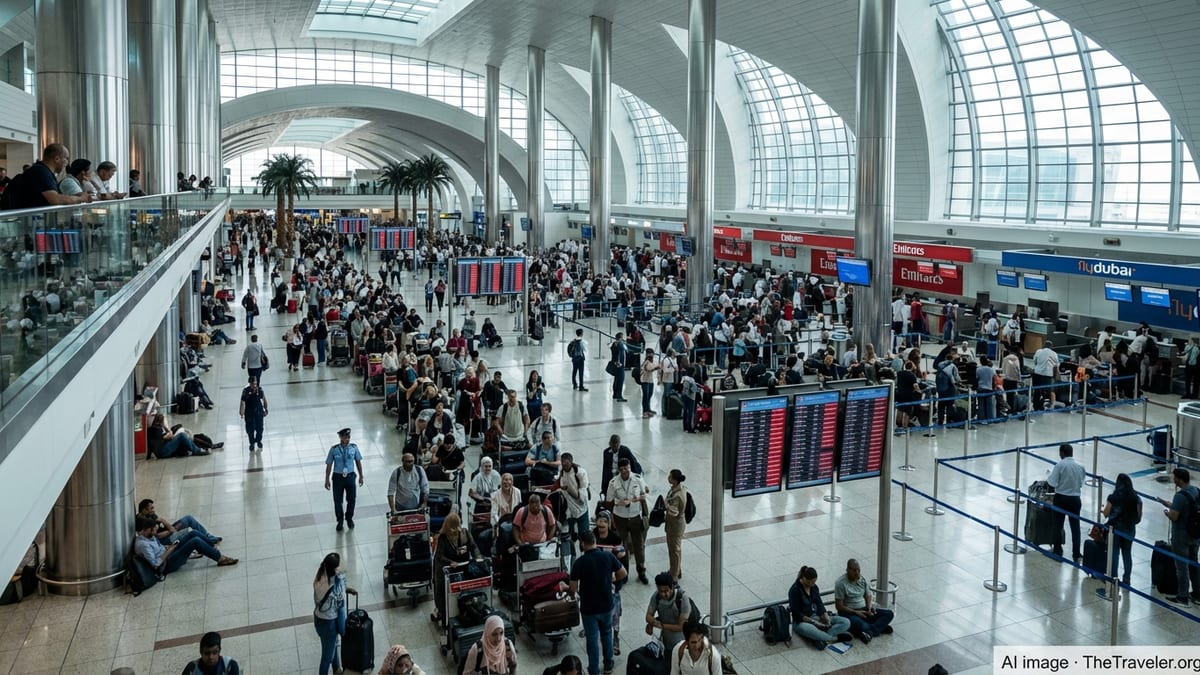
Record Storms Trigger Rare Travel Freeze at DXB
Dubai International Airport has endured one of the most disruptive episodes in its six-decade history after record rainfall and flooding repeatedly forced ground stops and large-scale cancellations across its three terminals. Airport authorities temporarily halted operations and later moved into what they described as recovery mode, but the backlog of stranded passengers and aircraft has taken days to untangle.
In mid-April, the heaviest rainfall on record in the UAE inundated airfields, access roads and key parts of airport infrastructure. Dubai Airports’ chief executive called it the most disruptive weather event since the airport opened, with more than 2,000 flights ultimately cancelled and hundreds more diverted or delayed as crews and equipment struggled to keep pace with the scale of the disruption.
At the height of the storm fallout, normal inbound traffic was sharply curtailed, with a temporary cap on arriving flights and priority given to home carriers Emirates and flydubai while clean-up and safety checks continued. Airlines advised passengers not to travel to the airport without confirmed bookings as terminals became congested and ground transport across the city was hampered by flooding.
Even after runways reopened, airlines faced rolling knock-on effects as aircraft and crew remained out of position, extending the effective travel freeze for many routes well beyond the official suspension period. Carriers serving regional destinations in South Asia and the Middle East reported reduced frequencies and last-minute schedule changes as they worked through the backlog.
Tourism Slows as Travellers Reroute and Postpone Trips
The operational chaos has rippled quickly into Dubai’s crucial tourism economy, which relies heavily on seamless air connectivity at DXB. Travel agents across key source markets in Europe and Asia report a surge in rebookings and cancellations for Dubai packages, with some travellers opting to delay trips or divert to alternative hubs in the Gulf and beyond.
Industry executives say the timing of the disruptions, coinciding with busy spring travel and major events in the emirate, has amplified the impact. Tour operators describe guests missing the first nights of hotel stays or entire short breaks due to cancelled connections, undercutting Dubai’s hard-won reputation for reliability and smooth transit.
While Dubai’s tourism authorities maintain that visitor numbers remain on a strong long-term growth trajectory, hotel marketers acknowledge a short-term slump in arrivals tied directly to the airport freeze and its aftermath. Forward bookings data shared by regional travel firms point to softer demand over the weeks following the storms, especially among first-time visitors who are more likely to change destinations when uncertainty rises.
In response, many hotels and destination management companies have rolled out flexible booking policies, fee waivers and added-value offers in a bid to shore up confidence. Some high-end properties report extending complimentary nights for guests whose stays were truncated by flight disruptions, absorbing the immediate cost in the hope of preserving repeat business.
Aviation Hub Status Tested by Cancellations and Diversions
Dubai’s aviation model is built on connecting long-haul traffic through DXB, and the scale of cancellations has laid bare how sensitive that model is to prolonged operational shocks. Data compiled by aviation analytics firms show well over a thousand flights scrubbed or diverted in the space of just a few days, amounting to a substantial share of the airport’s scheduled movements.
Emirates and flydubai, which together account for the majority of DXB’s traffic, bore the brunt of the disruptions but have also been at the forefront of the recovery, mounting rolling rebooking drives and deploying larger aircraft on key routes where possible. International carriers using Terminal 1 similarly faced days of schedule instability as slots and gate allocations shifted hour by hour.
Airport managers argue that the rapid resumption of operations and the scaling-up of contingency plans demonstrate resilience rather than fragility. They point to the fact that average daily passenger volumes at DXB had been near record highs before the storms and that forecasts still point to annual traffic comfortably above pre-pandemic levels once the disruption washes through.
Nevertheless, analysts caution that repeated large-scale interruptions, whether from extreme weather or regional tensions, could prompt airlines and regulators to press harder for diversified routings and backup capacity at Dubai World Central, the emirate’s second airport. The UAE has already outlined a multibillion-dollar expansion there, a plan likely to gain renewed urgency after the latest crisis.
Hospitality and Airport Services Face Operational Strain
On the ground, Dubai’s hospitality and airport services sectors have been grappling with both lost revenue and unexpected costs. Hotels near the airport and along key transport corridors were pressed into service as emergency accommodation for stranded passengers, with some properties reporting occupancy surges driven not by tourists but by displaced travellers waiting days for onward flights.
Airport lounges, ground handlers and catering providers have faced similar pressures. Staff worked extended shifts to handle fluctuating passenger volumes, while food and beverage suppliers scrambled to keep pace as thousands of passengers remained in terminals far longer than planned. Service providers say the episode has underscored the need for more flexible staffing, inventory and crisis-management protocols.
Inbound tour operators and event organisers have also been forced to rework logistics, from airport transfers to conference schedules, sometimes at hours’ notice. Several large-scale corporate and incentive groups reportedly scaled back non-essential activities or shortened stays, limiting ancillary spending on dining, entertainment and retail.
Despite those setbacks, many hospitality leaders stress that Dubai’s well-established infrastructure and experience handling peak events have helped prevent a complete breakdown. They note that transparency from airlines and the airport, along with rapid coordination between government agencies and private operators, has been critical to managing traveller expectations and safeguarding the city’s wider brand.
Geopolitical Uncertainty Compounds Market Jitters
The airport disruptions come against a backdrop of heightened geopolitical tensions across the broader Middle East, adding another layer of uncertainty for airlines and travellers. Carriers in the region have already adjusted routes and schedules in recent months in response to airspace restrictions and security considerations, particularly around conflict zones.
While Dubai remains perceived as a relative safe haven and neutral hub, industry observers warn that any perception of fragility in its air transport network could encourage some long-haul passengers to experiment with alternative gateways. Competing hubs in the Gulf and Europe have been quick to court rerouted traffic when weather or political events pinch capacity at DXB.
Aviation analysts say that for now, the underlying demand story for Dubai and the UAE remains intact, supported by ongoing investment in infrastructure, tourism promotion and new hotel and attraction openings. However, they underline that maintaining that momentum will require visible follow-through on promised upgrades to resilience, from airfield drainage and terminal systems to crisis communications.
For travellers and the global tourism trade, the episode is a reminder that even the world’s busiest and most technologically advanced airport is vulnerable to sudden shocks. How quickly Dubai restores full confidence in DXB’s reliability, amid both climatic extremes and shifting geopolitical winds, will help determine how deep and lasting the current tourism and aviation setbacks prove to be.