

More news on this day
Hundreds of passengers were left stuck in terminals and on aircraft at Dublin Airport as a fresh wave of disruption led to 177 delayed flights and 28 cancellations, hitting services operated by Emerald Airlines, Lufthansa, Aer Lingus, British Airways, American Airlines and several other carriers on routes to Exeter, Frankfurt, London, Charlotte and beyond.
Get the latest news straight to your inbox!
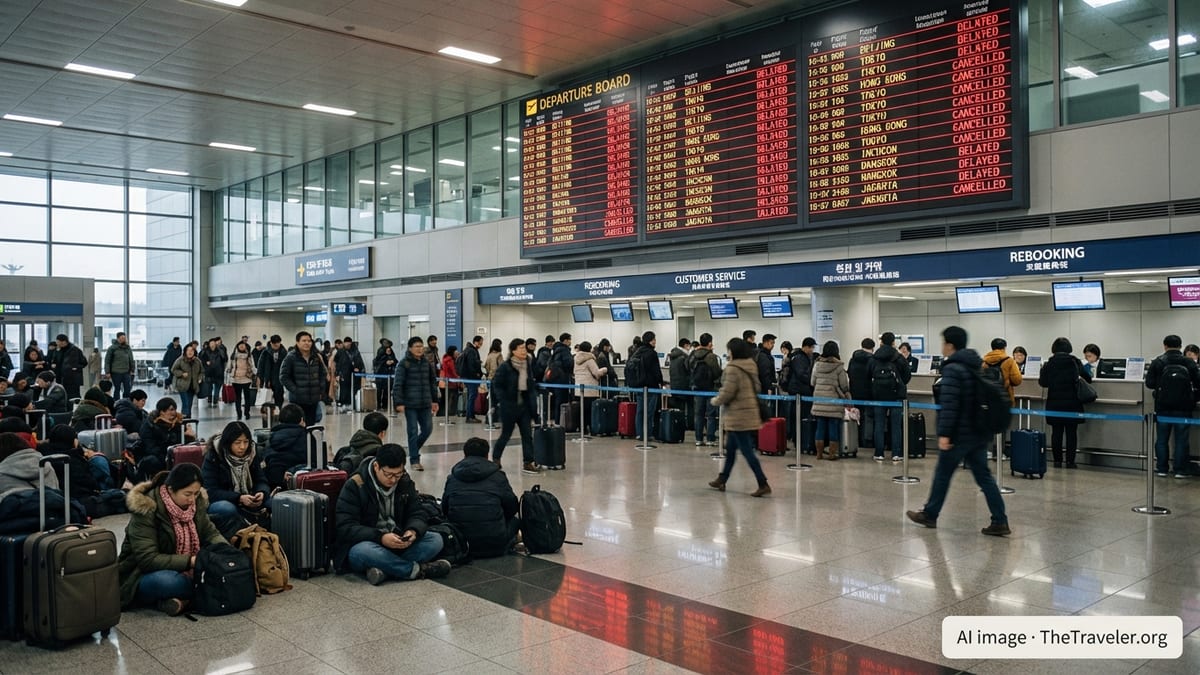
Widespread Disruption Across Carriers and Routes
Operational data compiled from live tracking platforms and aviation analytics services shows that Dublin Airport experienced a sharp spike in delays and cancellations, primarily concentrated on short and medium haul services. The disruption affected a broad mix of regional and legacy airlines, with Emerald Airlines and Aer Lingus Regional services particularly exposed on UK routes.
Flights to and from Exeter, regional English airports and major hubs such as London Heathrow and London Gatwick saw rolling delays, with some departures held on the ground for extended periods before either departing late or being scrubbed from the schedule. Services to Frankfurt, a key Star Alliance hub for Lufthansa, were also affected, prompting knock-on issues for passengers with onward connections into continental Europe and beyond.
Transatlantic flows were not spared. Publicly available schedules and status boards indicated disruption on American Airlines services linking Dublin with Charlotte and other US gateways, compounding an already challenging day for long-haul travelers trying to connect through Ireland’s busiest airport.
The pattern of delays suggested that the disruption was not confined to a single airline or alliance but rippled across the network. Aer Lingus, British Airways and Lufthansa each recorded a number of late departures and arrivals, while smaller regional operators reported schedule slippages that cascaded through afternoon and evening rotations.
Knock-on Effects for Stranded and Misconnected Passengers
The immediate impact for travelers was felt in packed departure lounges, extended queues at customer service desks and mounting anxiety over missed connections. With 28 cancellations registered alongside 177 delays, a significant number of passengers were left seeking hotel accommodation, rebooked itineraries or alternative transport options at short notice.
For passengers heading to secondary UK cities such as Exeter, limited frequency on some regional routes meant that same-day re-accommodation was difficult. Travelers facing cancellations on last departures to smaller airports were often rebooked via London or Manchester, lengthening journey times and adding complexity to itineraries that were originally intended to be straightforward point-to-point hops.
Those traveling to or from Frankfurt faced similar challenges. The German hub functions as a major connecting point for long-haul services operated by Lufthansa and its partners, so any disruption on the Dublin–Frankfurt leg risked missed onward flights to Asia, Africa and the Americas. Rebooking in such cases typically involves rerouting via other European hubs, which can add substantial delays to end-to-end travel times.
Long-haul passengers using Dublin as a gateway to North America encountered missed or very tight connections, particularly on itineraries combining Aer Lingus or Emerald-operated regional segments with American Airlines services. Industry observers noted that such mixed-carrier itineraries are especially vulnerable when irregular operations occur, as each delay can cascade across multiple airlines’ systems.
Operational and Weather Pressures Behind the Delays
While a complete causal picture is still emerging, publicly available information from aviation data providers and regional media coverage points to a combination of operational constraints and broader European network challenges contributing to the disruption. These include congested air traffic flows over key corridors, weather-related restrictions affecting parts of the UK and mainland Europe, and tight turnaround schedules on busy regional fleets.
Recent analyses of European air traffic performance have highlighted the vulnerability of short-haul operations to even minor disturbances. When morning rotations from airports such as Dublin face initial delays, the impact can ripple across the entire day’s schedule, leading to late-evening cancellations when there is no remaining slack to recover lost time.
Industry commentators also point to the complexity of coordinating multiple carriers at a major hub-like Dublin. With Emerald Airlines operating Aer Lingus Regional services alongside mainline Aer Lingus, and additional movements from British Airways, Lufthansa, American Airlines and others, small disruptions on one operator’s flights can have disproportionate effects as shared resources such as gates, ground handling teams and air traffic slots become constrained.
Weather-related challenges in the wider European network, including low visibility, wind and periodic storm systems, have recently prompted temporary flow restrictions at major hubs such as London and Frankfurt. When these constraints coincide with already tight schedules, airports like Dublin can experience sudden spikes in delay statistics even if local weather conditions appear relatively benign.
Passenger Rights and Options Under European Rules
The latest disruption has renewed attention on air passenger protections under European and UK legislation, which provide certain entitlements when flights are severely delayed or cancelled. Under these frameworks, travelers may be entitled to care such as meals and refreshments after specified waiting times, as well as accommodation when overnight stays become unavoidable because of cancellations or missed onward connections.
Eligibility for financial compensation, however, is more complex and typically depends on the cause of the disruption, the length of the delay on arrival and the distance of the affected flight. If delays or cancellations stem from factors considered extraordinary, such as severe weather or air traffic control restrictions outside the airline’s control, compensation may not be granted, even though care and re-routing obligations still apply.
Consumer advocates encourage passengers caught up in events like the current Dublin disruption to retain boarding passes, booking confirmations and any written notifications from airlines. These documents can support later claims, whether directly with carriers or through specialized claims agencies that analyze operational data to determine whether compensation thresholds were met on specific flights.
Travel experts also note that passengers booked on itineraries involving multiple airlines, particularly those combining regional and long-haul segments, should pay close attention to how their tickets were issued. Journeys sold under a single booking reference often provide more robust protections compared with separate tickets, as responsibility for re-accommodation in the event of missed connections tends to be clearer.
Advice for Travelers Using Dublin in the Coming Days
The scale of the latest disruption has led travel planners and aviation analysts to urge passengers using Dublin Airport in the near term to build in additional time and flexibility. Checking live flight status before leaving for the airport, using airline apps and airport information channels, can help travelers avoid unnecessary early arrivals for services that are already significantly delayed.
For those with onward connections via hubs such as London or Frankfurt, allowing longer layovers than the minimum suggested by booking engines can provide a buffer against knock-on delays. Where possible, travelers with critical time-sensitive commitments are being advised to consider earlier departures in the day or alternative routings, even if that involves an extra stop.
Passengers who have already experienced disruption are encouraged by consumer groups to review their rights, seek reimbursements for out-of-pocket expenses where applicable, and file formal complaints if they believe obligations were not met. Many airlines now provide online claim forms, though processing times can vary and supporting documentation is crucial.
As Dublin Airport continues to handle a high volume of regional and transatlantic traffic, industry observers suggest that further periods of strain cannot be ruled out, particularly during peak travel seasons. For now, the focus for stranded travelers remains on getting to their destinations, while airlines and airport operators work to stabilize schedules after a day marked by 177 delays and 28 cancellations across a broad slate of carriers.