

More news on this day
Dublin Airport recorded a sharp rise in traffic in February, with more than 2.3 million passengers passing through its terminals, a 9.7% increase on the same month last year that underscores robust demand for international travel and renewed growth momentum at Ireland’s main gateway.
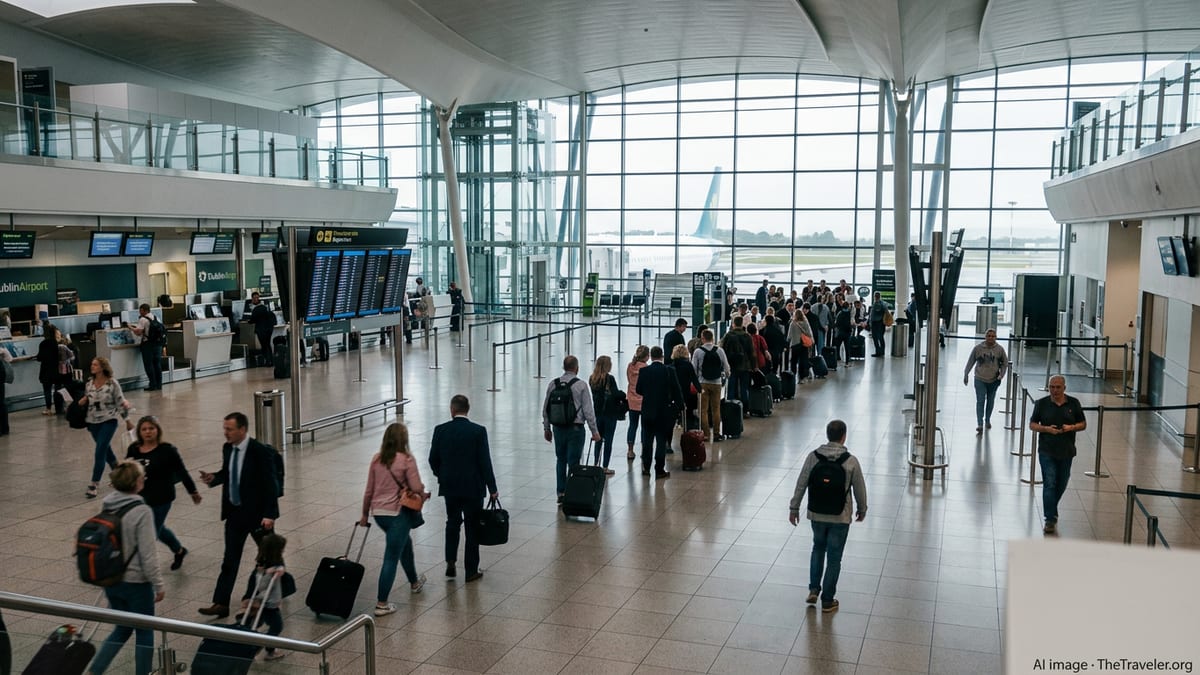
February Traffic Tops 2.3 Million as Growth Trend Continues
Figures published by airport operator daa show that just over 2.3 million passengers travelled through Dublin Airport in February 2026, up from around 2.1 million a year earlier. The increase builds on a strong start to the year following record volumes in January and comes against a backdrop of rising capacity from airlines serving the Irish capital.
The latest data confirms that Dublin Airport is consolidating the recovery it achieved in 2025, when annual passenger numbers exceeded 36 million and pushed the facility beyond its long-debated planning cap. The sustained growth has strengthened Dublin’s position as a key European hub for both short-haul and transatlantic services.
Airport executives described February’s performance as evidence of “enduring underlying demand” rather than a one-off spike linked to events or holidays. They pointed to consistently high load factors across major European routes and resilient long-haul traffic, particularly to North America, as supporting the double-digit rise.
Airlines Add Capacity as Demand for City-Breaks and Business Travel Rises
The February surge was driven in large part by additional capacity from major carriers, including Irish-based airlines that have been steadily rebuilding and expanding their networks. Low-cost operators have added more frequencies on popular European city-break routes, while full-service airlines have focused on strengthening transatlantic schedules ahead of the summer peak.
Short-haul leisure routes to cities such as London, Amsterdam, Paris and Barcelona continued to see strong performance, buoyed by pent-up appetite for weekend trips and competitive fares. Airport officials report particularly brisk demand from Irish residents taking multiple short breaks each year, a trend that has re-emerged since the lifting of pandemic-era restrictions.
Business travel has also shown renewed momentum, with corporates reinstating in-person meetings, conferences and trade events. Dublin’s role as a European base for technology, pharmaceutical and financial services firms is feeding consistent two-way traffic, helping airlines justify higher frequencies on key business routes.
Long-haul growth has been underpinned by expanded North American services operated by Irish and international carriers. New and increased frequencies to secondary US cities, combined with strong transatlantic demand from both business and diaspora travellers, have helped fill winter and early-spring seats that were previously more challenging to sell.
Capacity Constraints and Passenger Cap Politics Back in Focus
While the rise in passenger numbers is positive for tourism and trade, it is also refocusing attention on the longstanding capacity constraints at Dublin Airport. The facility has been operating under a planning condition that effectively capped annual passenger throughput at 32 million, a limit that was exceeded well before the end of 2025.
The Irish government has now moved to legislate for the removal of the cap, publishing the General Scheme of the Dublin Airport (Passenger Capacity) Bill in February 2026. The draft legislation is intended to provide a clearer framework for future growth while aligning with wider national transport and climate goals, but it has drawn criticism from some local representatives and residents’ groups concerned about noise and traffic.
Airport management argues that February’s figures underline the urgency of resolving the planning constraints. They contend that constrained capacity would risk turning away demand, limiting route development and undermining Ireland’s competitiveness as a destination for foreign investment, conferences and inbound tourism.
Regulators and policymakers now face the challenge of balancing Dublin Airport’s role as critical national infrastructure with environmental and community impacts. Upcoming consultations on noise management, night-flight limits and surface-access improvements are expected to shape how far and how fast the airport can continue to grow.
Infrastructure Upgrades Aim to Protect Service Quality Amid Growth
The continued rise in passenger numbers has heightened scrutiny of the airport’s ability to maintain service standards during busy periods. In response, daa has been rolling out a series of incremental upgrades across the terminals, focusing on pinch points such as security screening, passenger flows and accessibility.
Recent improvements include an upgraded walkway connecting key areas in Terminal 1, designed to smooth passenger circulation and ease congestion during peak waves. The airport has also invested in refreshed wayfinding and sensory-friendly spaces, catering to passengers with additional needs and aligning with broader accessibility commitments.
Operational teams are working on enhanced real-time information tools, including more accurate security wait-time indicators, to help travellers better plan their journeys through the airport. Industry observers note that such measures are becoming increasingly important as traffic climbs and staffing markets remain tight.
Medium-term infrastructure plans, including further terminal improvements and airfield optimisation, are expected to be refined in parallel with the government’s capacity legislation. The goal, according to officials, is to ensure that productivity and passenger experience keep pace with rising volumes, avoiding the bottlenecks that have challenged other fast-growing European hubs.
Tourism, Regional Links and Wider Economic Impact
February’s robust numbers are also being welcomed by tourism bodies and regional stakeholders, who see Dublin Airport as a vital gateway for visitors to the rest of the country. Strong inbound traffic in the early part of the year is viewed as a positive signal for the 2026 tourism season, particularly for city attractions, cultural events and short-break destinations beyond the capital.
Improved connectivity through Dublin is playing a role in supporting smaller Irish airports and regional economies, as airlines explore feeder routes and code-share arrangements that rely on a strong primary hub. New and planned services linking regional cities with Dublin and onward long-haul connections are expected to enhance visitor dispersal and length of stay.
Economists point out that the airport’s growth has wider implications for employment, trade and investment. Aviation activity supports tens of thousands of jobs directly and indirectly, from ground handling and retail to hospitality and logistics. Rising passenger volumes tend to amplify this impact, though they also intensify debates over sustainable transport policy and emissions.
For now, February’s 9.7% uplift in traffic is reinforcing perceptions of Dublin Airport as one of Europe’s faster-growing mid-sized hubs. How policymakers respond to the twin challenges of capacity and sustainability over the coming months will help determine whether that growth can be sustained without eroding the passenger experience or community support.