

More news on this day
Dublin Airport is advancing a major revamp of its lounge network in Terminals 1 and 2, a move aimed squarely at enhancing the premium experience for the rapidly growing number of North American travelers using Ireland’s busiest hub.
Get the latest news straight to your inbox!
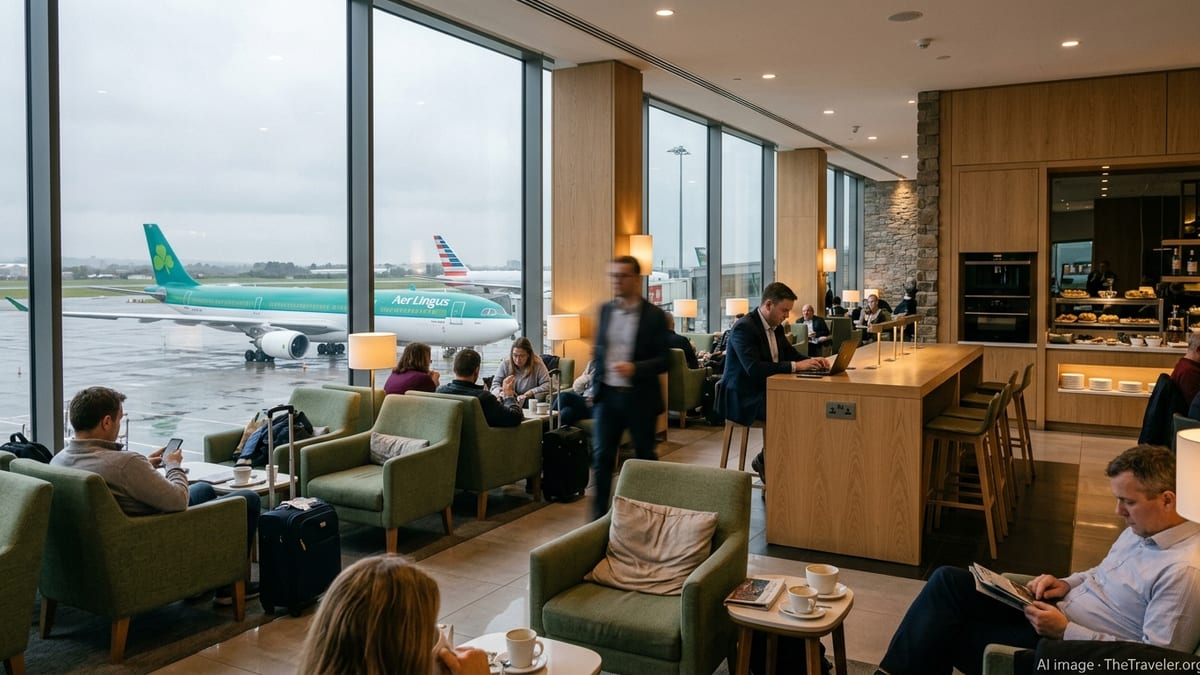
Revamped Lounge Lineup Targets Transatlantic Growth
The overhaul of Dublin Airport’s lounges comes as Ireland’s main gateway continues to deepen its role as a transatlantic bridge, with Aer Lingus and multiple US carriers expanding links between North America and Dublin. Recent seasons have seen new and resumed routes from US and Canadian cities, alongside rising transfer traffic that uses Dublin as a one-stop connection between North America and Europe. In this context, elevated lounge facilities have become a key differentiator for premium passengers and frequent flyers.
The renewed focus on lounges began with the opening of the Liffey Lounge in early 2025, replacing the former Terminal 2 Lounge. Located in the connecting area between Terminal 1 and Terminal 2, the redesigned space was positioned as a shared premium retreat for passengers departing from either terminal. Airport information describes it as part of a broader, multi-year upgrade cycle intended to modernize and expand capacity across all key lounge locations.
Alongside the Liffey Lounge, Dublin Airport has rebranded and refreshed the former East Lounge as the Martello Lounge, creating a second core facility for non-airline-specific premium guests. The airport operator has highlighted these projects as foundational steps in a larger program that includes both cosmetic improvements and operational changes, such as updated seating layouts, enhanced food and beverage offerings, and extended opening hours to match early morning departures to North American hubs.
For North American travelers, particularly those flying in business cabins or holding elite status with partner airlines, these changes signal a more consistent standard of comfort at Dublin regardless of carrier. The upgraded lounges are designed to support both point-to-point passengers and connecting itineraries that combine European short-haul services with long-haul transatlantic flights.
Terminal 1 Lounge Expansion Geared to Premium Demand
Terminal 1, which handles a mix of European services and some long-haul traffic, is in the midst of one of its most significant lounge transformations in years. Airport communications outline plans for a complete overhaul and extension of the T1 Lounge, with the refurbished space expected to almost double in size. The project follows a temporary closure period to allow construction and interior works to proceed.
Travel industry briefings indicate that the revamped Terminal 1 lounge, set to reopen in spring 2026, will feature expanded seating zones, improved workspaces for business travelers, and upgraded showers and refreshment areas. Capacity has been a persistent concern at peak times, particularly during morning and late-afternoon banks of flights that feed into transatlantic services. The enlarged footprint is intended to ease crowding and provide more consistent access for eligible passengers, including those connecting onto North American flights via Dublin.
The redesigned entrance and circulation plan will integrate closely with a new mezzanine-level Fast Track security facility in Terminal 1. Publicly available details suggest that premium passengers using Fast Track will have a more direct route from security into the lounge, reducing walking times and simplifying wayfinding. This integration is likely to appeal in particular to corporate and high-frequency travelers who value time savings during short connections.
Although Terminal 1 is not the primary base for Aer Lingus’s transatlantic operations, many North American travelers begin their journeys on European feeders routed through T1. The upgraded lounge is therefore being framed as a key part of the end-to-end premium journey, ensuring that passengers connecting between terminals or airlines encounter a similar standard of comfort and design.
Terminal 2 Enhancements and the Return of 51st & Green
Terminal 2, home to most transatlantic services operated by Aer Lingus and several US carriers, is also seeing an intensified focus on premium facilities. With the Liffey Lounge now serving as the primary common-use lounge for T2 departures, the next major milestone will be the reopening of the 51st & Green lounge in the dedicated US preclearance area.
According to recently updated airport information, 51st & Green is scheduled to return in spring 2026 after a substantial refurbishment. The lounge, positioned beyond US Customs and Border Protection preclearance, has long been marketed as one of the most convenient last-stop lounges for travelers heading to the United States, allowing guests to wait in a quiet environment until boarding while already cleared for entry.
During the renovation period, transatlantic business-class passengers and eligible status customers have experienced a patchwork of interim arrangements, including alternative seating areas in Terminal 2 and access to other lounges before preclearance. Travel forum reports have described these temporary options as more limited than the full lounge service traditionally offered at 51st & Green, underscoring the importance of the upgraded facility’s return for carriers that market Dublin as a smooth one-stop entry point to the United States.
Once reopened, the renewed 51st & Green is expected to complement the Liffey Lounge and Martello Lounge, giving Terminal 2 a three-tiered premium ecosystem that covers departures both before and after US preclearance. For North American-bound travelers, this is likely to translate into more predictable access to showers, hot food, workstations, and runway views during what can be a lengthy pre-boarding process.
Premium Private Terminal and VIP Services Strengthen Top-End Offering
Above standard lounge access, Dublin Airport is also enlarging its ultra-premium segment through the expansion of its Platinum VIP private terminal. Operator statements describe the recent addition of multiple new suites, taking the facility to ten in total and reflecting increased demand from business travelers, high-net-worth individuals, and charter clients.
The Platinum VIP terminal, located away from the main passenger flows behind Terminal 1, offers private parking, dedicated security screening, and direct transfers to and from aircraft. While not limited to any particular route, these services are particularly relevant to corporate and entertainment-sector travelers flying between Ireland and North America, where privacy and time efficiency are critical. The additional suites are designed to reduce waiting times and accommodate parallel groups, including visiting delegations and executive parties.
The investment in this private terminal runs in parallel with the broader lounge renovations rather than replacing them, creating a layered premium proposition that ranges from common-use lounges to fully tailored, behind-the-scenes handling. For the airport, this mix of offerings provides a way to capture different segments of the North American premium market, from frequent-flyer business passengers to high-spend private clients.
As long-haul traffic grows and competition among European hubs intensifies, airports are increasingly using differentiated ground products to win over airlines and travelers. Dublin’s expansion of its private terminal suggests a strategic focus on high-yield passengers who may otherwise route through larger hubs such as London Heathrow, Amsterdam, or Frankfurt.
What North American Travelers Can Expect From 2026 Onward
By spring 2026, Dublin Airport’s lounge landscape is set to look significantly different from just a few years earlier. The expanded Terminal 1 lounge, refreshed Terminal 2 common-use lounges, and reimagined 51st & Green are expected to provide a more coherent and upgraded experience across the entire pre-flight journey. For North American travelers, this will be most visible in reduced crowding, more reliable seating, and improved food, beverage, and workspace standards.
These changes arrive at a time when North American demand for Ireland and onward European connections remains strong. Airline network announcements over the past two years have pointed to new US gateways, additional Canadian links, and deeper partnerships among transatlantic carriers, all of which funnel higher volumes of premium passengers through Dublin. Enhanced lounge infrastructure helps support that growth, while also giving airlines a more attractive product to bundle with their business and premium economy fares.
Publicly available planning and regulatory documents further indicate that Dublin Airport is working within passenger-cap constraints that limit overall growth, which has placed additional emphasis on making better use of existing space and elevating the experience for those who already travel through the terminals. The focus on quality rather than simply capacity is particularly evident in the lounge program, where refurbishment, rebranding, and targeted expansion are favored over a purely numerical increase in seats.
For travelers arriving from or departing to North America, the cumulative effect of these initiatives is likely to be felt most clearly from late 2026 onward, as all major projects move from construction to day-to-day operation. While the current transition period still involves occasional disruption and temporary solutions, the next phase promises a more polished and competitive premium environment at Ireland’s primary international gateway.