

More news on this day
Resurgent air links between Ireland and China, combined with relentless demand from US, UK and German visitors, are tightening an already strained Dublin hotel market and raising fresh questions over whether the capital can cope with the next tourism upswing.
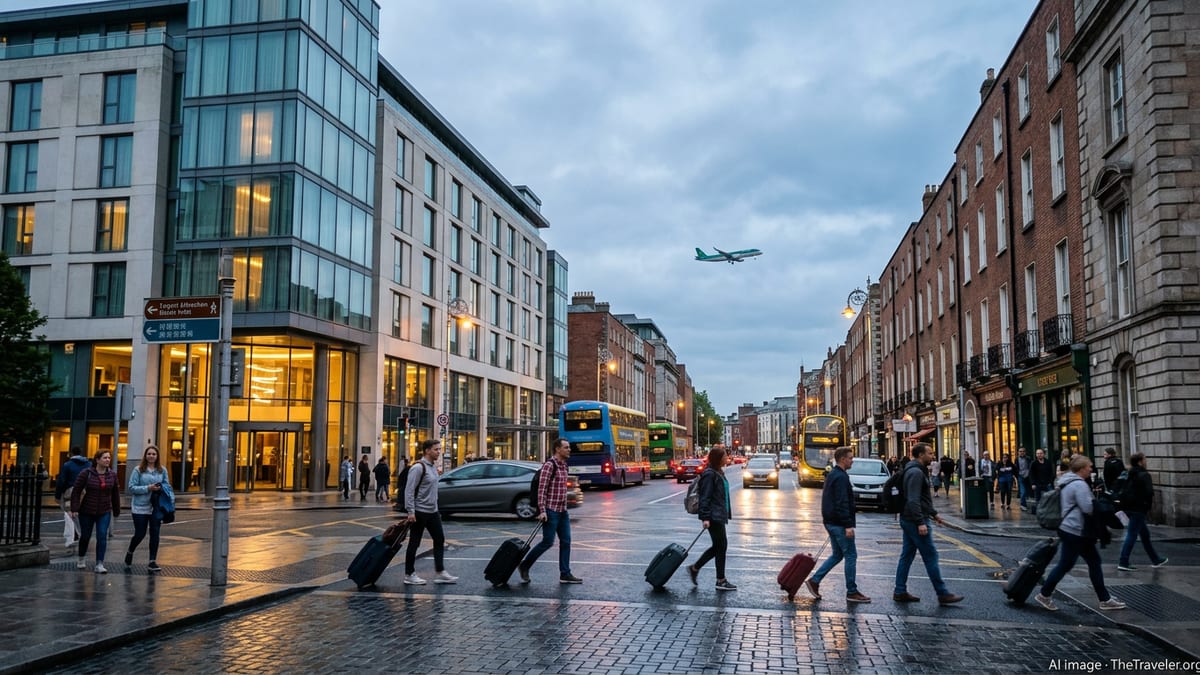
China Routes Return as Western Demand Stays Strong
The reopening and planned ramp-up of direct flights between Dublin and Beijing are restoring a crucial bridge to China just as Ireland leans ever more heavily on long-haul tourism. Hainan Airlines, which relaunched its non-stop service in 2024, has confirmed it will lift frequencies to four flights a week on the Dublin–Beijing route in peak periods, using wide-body Airbus A330 aircraft aimed squarely at high-spend leisure and visiting-friends-and-relatives traffic.
While Chinese carriers are leading the direct connection, European and transatlantic airlines are expected to benefit indirectly. Industry analysts say Ryanair, Aer Lingus, British Airways and United Airlines are all positioned to pick up additional feeder traffic as Chinese visitors route through London, Frankfurt and US hubs into Ireland, layering new demand on top of an already buoyant US and European market.
Official figures underline how reliant Ireland has become on Anglo-American and German visitors. Central Statistics Office data for 2024 show that Great Britain, the United States and Germany together accounted for nearly two-thirds of foreign visitors departing Ireland, with Americans alone representing close to one-fifth of the market and spending heavily on hotels. With tourism bodies targeting further growth from these same markets, the additional lift from China risks turning a capacity challenge into a structural squeeze.
Tourism agencies and hoteliers argue that, on paper, the mix is ideal: a spread of short-haul UK and European breaks and high-yield US and Chinese stays. But with Dublin remaining the primary gateway and first-night stop for most of these visitors, the city’s ability to absorb overlapping peaks during festivals, sport fixtures and conference season is increasingly in question.
Hilton and Marriott Ride Demand Wave in a Tight Market
Global brands such as Hilton and Marriott have emerged as clear winners from Dublin’s post-pandemic rebound. Data presented to the Irish Hotels Federation in February 2026 showed that Dublin hotels ran at more than 95 percent occupancy on 62 nights in 2025, up from 37 nights the previous year and well above pre-Covid norms. On those so-called compression nights, when virtually every room is sold, dynamic pricing drives average rates sharply higher, benefiting the best-located international chains.
Hilton and Marriott, which operate a mix of upscale and select-service properties across Dublin’s city centre, airport and business districts, are reporting especially strong demand from US guests who are less deterred by prices than European visitors. Industry executives say American travellers, used to higher hotel rates at home, continue to book even as Dublin’s average daily rate remains above 180 euro on high-demand dates, pushing revenue per available room to record levels.
At the same time, growth in German and British arrivals is filling in shoulder periods and weekends, boosting occupancy for corporate-focused hotels that rely on a blend of business and leisure stays. Loyalty programs play a key role, with Hilton Honors and Marriott Bonvoy members funnelling a disproportionate share of long-haul bookings into branded properties, particularly around Dublin Airport and the Docklands.
Yet behind the headline success, operators warn of narrowing margins. Rising wages, higher energy bills and increased food and beverage costs are eroding profitability, particularly outside the capital. For Dublin’s big-box properties, though, the main constraint is no longer demand but the physical limit on how many rooms they can sell, and how often their guests are priced out or pushed into alternative accommodation.
Dublin’s Hotel Capacity Lagging Europe’s Gateway Cities
Multiple recent studies highlight that Dublin has fewer hotel beds relative to visitor nights than most comparable European gateway cities. Occupancy across the capital has averaged above 80 percent since 2023, a level that analysts typically associate with a market operating close to full capacity. Compression nights above 95 percent are becoming routine, not exceptional, as the city’s events calendar expands and more long-haul flights arrive.
According to Dublin’s economic monitoring data, the city had just over 63,000 registered bedspaces by mid-2024, nearly 90 percent of them in hotels. While a significant pipeline of new projects is under way, including lifestyle and budget properties scheduled through 2029, planning bottlenecks and construction inflation mean supply is playing catch-up with demand rather than getting ahead of it.
The imbalance is visible on the ground. On busy weekends tied to major concerts, Six Nations rugby, American football fixtures or tech conferences, central Dublin’s hotels routinely sell out, pushing visitors toward airport properties, suburban guesthouses or short-term rentals. For airlines and tourism agencies courting new Chinese and US services, the risk is that travellers who cannot secure well-located rooms, or who balk at peak rates, simply choose rival European cities instead.
Investors, meanwhile, are continuing to pour capital into Irish hospitality assets, citing resilient long-term demand from North America and a diversified European base. But they also acknowledge that without a faster, more predictable planning regime and infrastructure upgrades, particularly around Dublin Airport’s capacity cap, hotel growth may not keep pace with the tourism ambitions being sketched in airline boardrooms and government strategies.
Hostels and Alternatives Step In, but Pressure Remains
Part of the gap is being filled by a wave of new hostels and hybrid properties aimed at younger and budget-conscious travellers. Developers have secured planning permission for thousands of additional hostel beds in central Dublin, backed by domestic and international investors betting on sustained high occupancy. Modern concepts blend traditional dorms with private and family rooms, creating a crossover product that can absorb some of the overflow from mid-market hotels on the busiest nights.
Short-term rentals and serviced apartments have also become a crucial release valve for the city, particularly for German and British visitors on multi-night stays. However, policymakers are under pressure to tighten regulation of non-hotel accommodation to ease strains on the local housing market, raising the possibility that some of this capacity could shrink just as international visitor numbers rise again.
Hoteliers note that while these alternative options help, they do not replace the need for more professionally run, fully serviced hotels that can handle tour groups, conferences and long-haul guests arriving late at night. Hilton and Marriott, along with other global flags, are studying additional Irish opportunities, but often run into the same obstacles as local operators: scarce central sites, rising land values and extended timelines between planning submission and opening day.
As Dublin tries to balance residents’ concerns with tourism’s economic benefits, the rapid recovery of China links and steady growth from the US, UK and Germany are testing how far existing stock can stretch. With airlines eager to add capacity and international brands ready to invest, the question now is whether Ireland can move quickly enough to ensure that demand for beds does not outpace both the city’s patience and its planning system.