

More news on this day
Travelers across the United States, Canada, the United Kingdom, Germany, and the Netherlands are facing missed connections and disrupted plans after operations at Washington Dulles International Airport were hit by 17 flight cancellations and 129 delays, affecting services operated by United Airlines, Delta Air Lines, Lufthansa, British Airways, and several other carriers.
Get the latest news straight to your inbox!
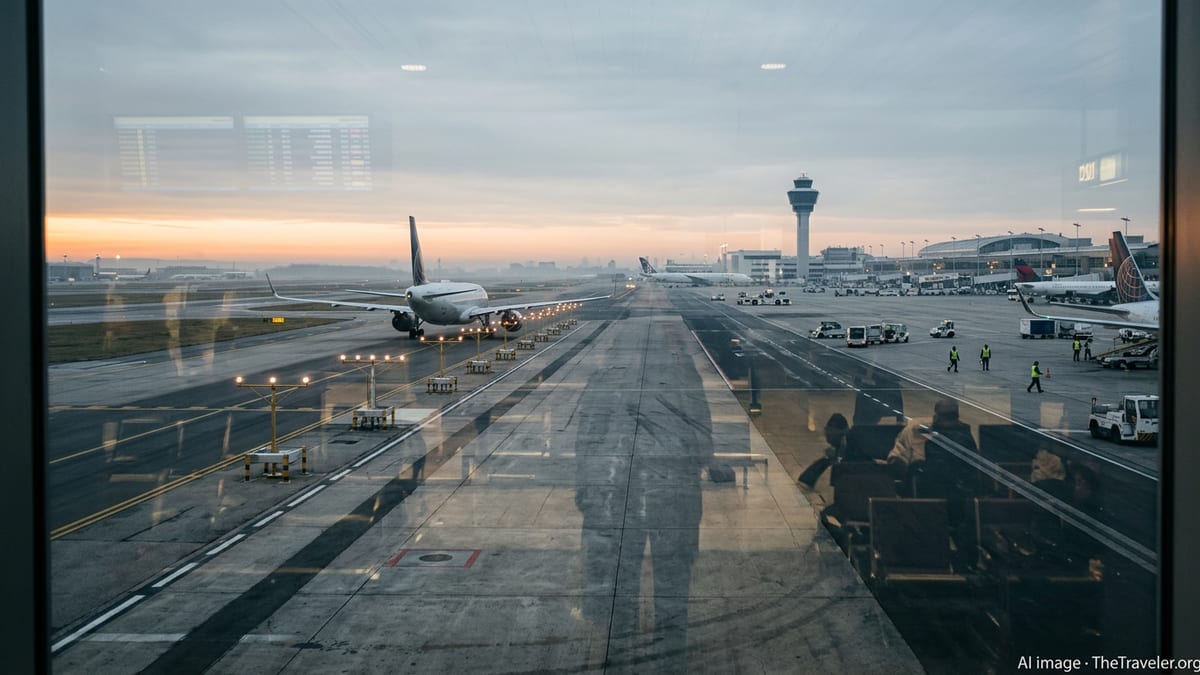
Operational Strain at a Key Transatlantic Gateway
Washington Dulles International Airport serves as a major long haul hub linking the US capital region with cities across Europe and Canada, and even a relatively limited number of cancellations and delays can have disproportionate knock on effects across airline networks. Publicly available flight tracking data for the current travel period indicate that 17 departures and arrivals were cancelled and at least 129 were delayed at Dulles, concentrating disruption into a single day of operations.
United Airlines, which maintains a large hub at Dulles, appears to be bearing a significant share of the schedule disruption, with late running domestic feeder flights cascading into the long haul banks that serve Europe and Canada. Delta Air Lines, which operates competitive services into Dulles and relies on connections through its own hubs, has also been affected as crew and aircraft rotations absorb the impact of delays originating in the Washington region.
European flag carriers including Lufthansa and British Airways have seen their transatlantic flights caught in the same pattern. When widebody departures from Dulles depart late or are held on the ground, the result is often missed onward connections in Frankfurt, Munich, London Heathrow, and London Gatwick, as well as delays to the next day’s departures as aircraft and crews arrive out of position.
While the precise mix of causes for the current disruption at Dulles remains varied, recent data from aviation regulators and industry trackers point to a familiar combination of high seasonal demand, constrained air traffic capacity, weather related spacing on departure and arrival routes, and lingering staffing tightness in some operational roles.
Transatlantic Travelers in the UK, Germany and the Netherlands Affected
The heaviest ripple effects from the Dulles disruption are being felt on transatlantic routes linking the US East Coast with major European hubs. Flight monitoring for services between Washington and London, Frankfurt, Munich and Amsterdam shows extended delays on both departures from the US and returns from Europe, particularly on rotations operated by United, Lufthansa and British Airways.
In the United Kingdom, travelers on London bound flights from Dulles face extended gate holds, altered departure times and, in some cases, missed last train and coach connections after late night arrivals. The delay of an overnight service can translate into missed early morning onward flights to regional UK airports, complicating travel for passengers who rely on Heathrow as a connecting hub.
Germany is experiencing similar knock on effects, especially at Frankfurt, where late arriving widebody jets from Washington compress already busy morning and evening banks of connecting flights. This can lead to short notice rebooking for passengers headed to secondary German cities and to destinations across Central and Eastern Europe, as airlines attempt to protect long haul connections while managing limited aircraft availability.
Amsterdam, which functions as a key gateway for travelers to and from the Netherlands and the wider Benelux region, is also seeing delays on services that route passengers through Dulles. Even when European carriers are not directly operating the Washington leg, codeshare arrangements with US airlines mean that delays in Virginia can impact journeys booked on European ticket stock, complicating customer service and reaccommodation.
North American Networks Feel the Knock On Impact
Within North America, travelers in cities across the United States and Canada are encountering residual effects as airlines attempt to recover their schedules. Dulles sits at the center of a dense web of domestic and cross border routes feeding major hubs such as Chicago, Newark, Houston, Atlanta and New York, as well as Canadian gateways including Toronto and Montreal.
When departures from Dulles are pushed back or cancelled, the impact can quickly spread beyond the Washington region. Aircraft that should be cycling from Dulles to another US hub and then on to Canada, for example, may arrive too late for the next leg, triggering a chain of missed connections and aircraft swaps. Reports from recent periods of elevated disruption in the United States suggest that this kind of cascading delay pattern has become increasingly common during peak travel dates.
Canadian bound travelers are particularly sensitive to these knock on effects because many journeys rely on tight connections from US domestic flights into transborder services. A delayed feeder from a smaller US city into Dulles can easily result in a missed evening departure to Toronto, Vancouver or Calgary, forcing passengers into overnight stays and complex rebookings across multiple airlines.
For US travelers, the issues at Dulles add to a broader pattern of strain across the national aviation system during busy holiday periods, when weather, air traffic initiatives and staffing challenges can combine to reduce on time performance at multiple major hubs simultaneously.
Rights, Rebooking Options and What Passengers Can Do
For passengers disrupted by the cancellations and delays at Dulles, the options depend heavily on the carrier, the itinerary and the jurisdictions involved. In the United States, consumer advocates note that airlines are generally required to provide refunds when a flight is canceled and the traveler chooses not to fly, even on non refundable tickets, but they are not obligated to offer compensation for delays alone.
On routes touching the United Kingdom, Germany, the Netherlands or other European Union member states, European air passenger rules, commonly known as EU261 or UK261, can provide additional protections. Under these frameworks, travelers on qualifying flights may be entitled to fixed cash compensation and reimbursement of reasonable expenses when disruptions are within the airline’s control and meet specific delay or cancellation thresholds.
Publicly available guidance from consumer agencies and transport regulators recommends that travelers keep detailed records of boarding passes, booking confirmations, delay notifications and receipts for food, lodging and ground transport. These documents can be essential when filing claims with airlines or seeking assistance from national enforcement bodies after travel has been completed.
Travel experts also encourage passengers to monitor their itineraries proactively using both airline apps and independent flight tracking tools, particularly when connecting through complex hubs such as Dulles. Early awareness of an emerging delay can improve the chances of securing a favorable rebooking option before alternative flights fill up.
Airlines Adjust Schedules as Summer and Holiday Peaks Loom
The disruption centered on Washington Dulles comes as the airline industry moves through one of the busiest travel periods of the year, with elevated demand around spring and early summer holidays already testing operational limits. Recent data from industry trackers show that US carriers have struggled with high volumes of delayed flights during major holiday weekends, and European hubs have faced their own bouts of congestion and staffing pressure.
In response, major airlines including United and Delta have been refining schedules, trimming marginal frequencies and building in additional buffers on some routes in an effort to improve completion rates. European partners such as Lufthansa and British Airways have also been reviewing schedules at key transatlantic gateways where minor disruptions can quickly snowball into widespread delays.
Air traffic management initiatives in the United States and Europe are likewise under review, as aviation authorities examine how ground delay programs, route restrictions and staffing levels at control facilities influence punctuality at complex airports such as Dulles. Industry observers note that even modest improvements in how peak traffic is handled can significantly reduce the risk that a local disruption will ripple into an international one.
For now, however, passengers planning trips that involve Washington Dulles and transatlantic connections through the US, Canada, the UK, Germany or the Netherlands are being advised by travel specialists to build in extra time, consider earlier departures where possible, and remain prepared for same day adjustments as airlines work to stabilize their operations.