

More news on this day
Passengers at Washington Dulles International Airport faced hours of disruption as 47 departures were delayed and four canceled, snarling United Airlines, Mesa Airlines, Qatar Airways, EgyptAir and All Nippon Airways flights to Chicago, Newark, Doha and other U.S. cities.
Ripple Effects Across Major Domestic and International Routes
The disruption at Washington Dulles unfolded through the morning peak and into the afternoon, affecting a mix of domestic and long haul services. United Airlines and its regional partner Mesa, which together operate a significant share of the airport’s schedule, saw banks of departures to hubs such as Chicago O’Hare and Newark pushed back repeatedly as operations slowed.
International services were also caught in the gridlock, with passengers bound for Doha on Qatar Airways and for Cairo on EgyptAir reporting extended waits at the gate while aircraft remained on the ground. All Nippon Airways services connecting through U.S. hubs were similarly impacted, as crews and aircraft scheduled to rotate through Dulles found themselves out of position.
Although some delayed flights ultimately departed, the four outright cancellations created a knock on effect for travelers with onward connections. Many were forced to rebook onto already crowded later departures to Chicago, Newark and other domestic hubs, while long haul customers scrambled for scarce seats on alternative international routings.
With more than 50 movements affected in a single day, the disruption underscored how quickly a localized problem at one major airport can cascade across a carrier’s wider network, particularly at a facility that serves as both an intercontinental gateway and a key domestic connection point.
Stranded Passengers Face Long Queues and Limited Options
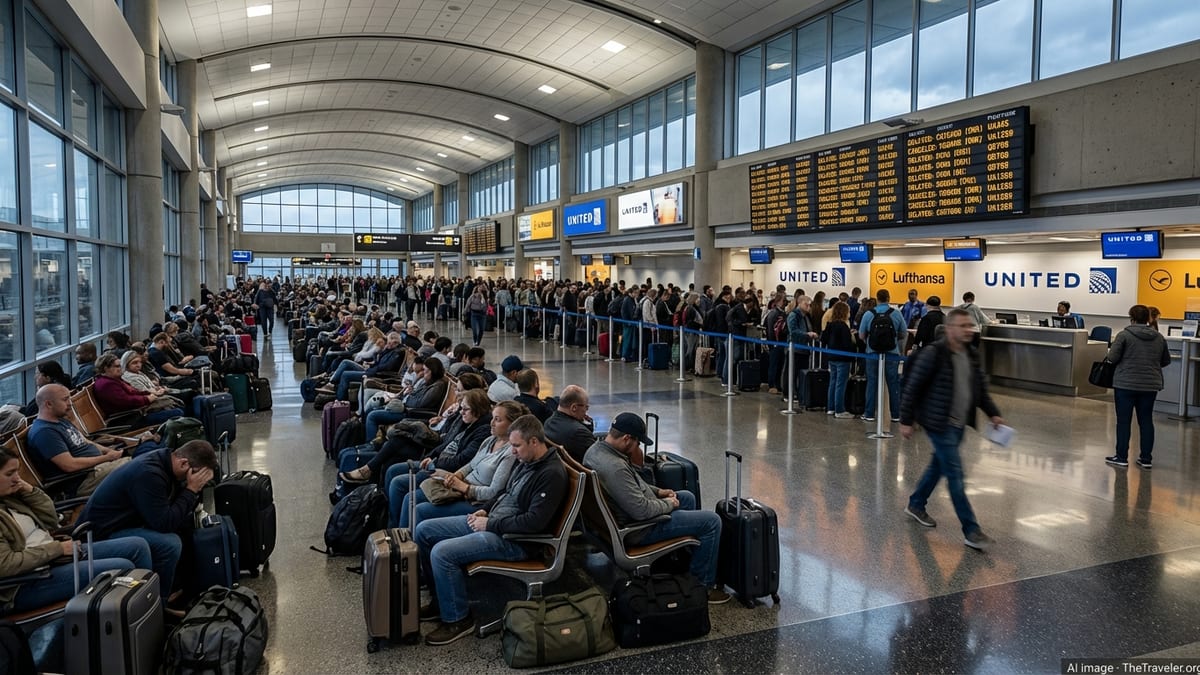
Inside the terminal, the impact was most visible in the snaking lines at airline customer service desks. Families traveling at the tail end of the winter season, business travelers aiming to make meetings in the Midwest and East Coast, and international tourists heading home all converged on the same counters seeking answers and alternatives.
Several passengers described waiting more than an hour to speak with an agent as staff worked flight by flight through a backlog of rebooking requests. With aircraft already heavily booked, airlines turned to measures such as voluntary re accommodation on next day departures, rerouting via alternate hubs, and in some cases providing overnight hotel vouchers.
Those whose flights were delayed but not canceled faced their own frustrations. Departure times were frequently revised in short increments, leaving travelers reluctant to leave the gate area. As delays stretched longer, crowded seating areas around busy concourses became a patchwork of people trying to rest, charge phones, and monitor departure boards for the latest updates.
For international passengers whose onward connections were jeopardized, the situation was even more complicated. Missed links in Chicago, Newark and other hubs meant some travelers risked arriving a full day late at their final destinations, impacting work commitments, tours and hotel bookings arranged around tight itineraries.
Operational Strain Highlights Ongoing Vulnerabilities
The episode at Dulles highlighted how vulnerable tightly timed airline operations remain to spikes in disruption. Even when only a portion of the daily schedule is affected, the combination of high load factors, limited backup aircraft and crew duty time restrictions can quickly reduce airlines’ ability to absorb shocks.
United and its partners at Dulles depend on complex banks of arrivals and departures that are designed to maximize connections. When one wave of flights is delayed, those carefully calibrated schedules can unravel, with aircraft arriving late, crews nearing duty time limits and a shrinking window to complete necessary ground handling before the next departure slot.
International carriers such as Qatar Airways, EgyptAir and All Nippon Airways layer their own networks on top of these domestic patterns, relying on punctual feed from U.S. cities to fill widebody departures to the Middle East, Africa and Asia. Disruptions at one hub therefore have the potential to ripple across continents, forcing last minute changes by passengers and airlines alike.
While major carriers have improved their overall reliability in recent seasons, the concentration of delays and cancellations into short windows at busy airports continues to test both infrastructure and customer service resources, particularly during periods of strong travel demand.
Airlines Offer Waivers as Travelers Seek Alternatives
In response to the series of delays and cancellations, affected airlines moved to relax some fare rules and give travelers more flexibility. Change fee waivers and options to switch to later flights or alternate routings without additional charges were made available in many cases, especially for those on the four canceled departures.
However, rebooking options were constrained by limited spare capacity at short notice. Popular evening departures from Dulles and from onward hubs such as Chicago and Newark were already heavily sold, leaving some passengers accepting early morning flights the following day or less direct routings that added extra stopovers to their journeys.
Passengers with fixed commitments, including business meetings or organized tours, faced difficult choices between paying out of pocket for premium last minute alternatives on other carriers or accepting significant schedule changes. Travel insurance policies offered some relief for those who had purchased comprehensive coverage, but many discovered that not all disruption related costs were reimbursable.
Airlines also encouraged customers with flexible plans to consider voluntarily shifting their travel to later dates, in an effort to ease pressure on already stretched operations and open seats for those whose trips were time critical.
What Today’s Disruptions Mean for Future Flyers
The disruption at Washington Dulles serves as a reminder for travelers planning journeys through major U.S. hubs in the coming weeks. Industry data shows that while overall cancellation rates have improved compared with earlier years marked by staffing shortages and weather shocks, delays remain a persistent feature of busy travel days.
Travel planners increasingly advise allowing more generous connection times when routing through complex hubs like Dulles, particularly when an international long haul sector is involved. Building in extra time between flights, booking earlier departures where possible, and having a backup plan for critical trips can all help reduce the risk of being stranded when schedules unravel.
Passengers are also encouraged to make full use of mobile apps and real time notifications from airlines to stay ahead of changes. Early awareness of a delay or a misaligned connection can make the difference between securing a workable alternative and facing a long wait at a crowded service desk once disruption peaks.
For carriers operating at Washington Dulles, the latest bout of delays and cancellations will fuel ongoing discussions around resilience, resource allocation and communication. As travel demand remains strong, the pressure will be on airlines and airport authorities to strengthen systems so that a day of disruption on the scale seen here becomes rarer, and less punishing, for passengers passing through one of the nation’s key international gateways.