

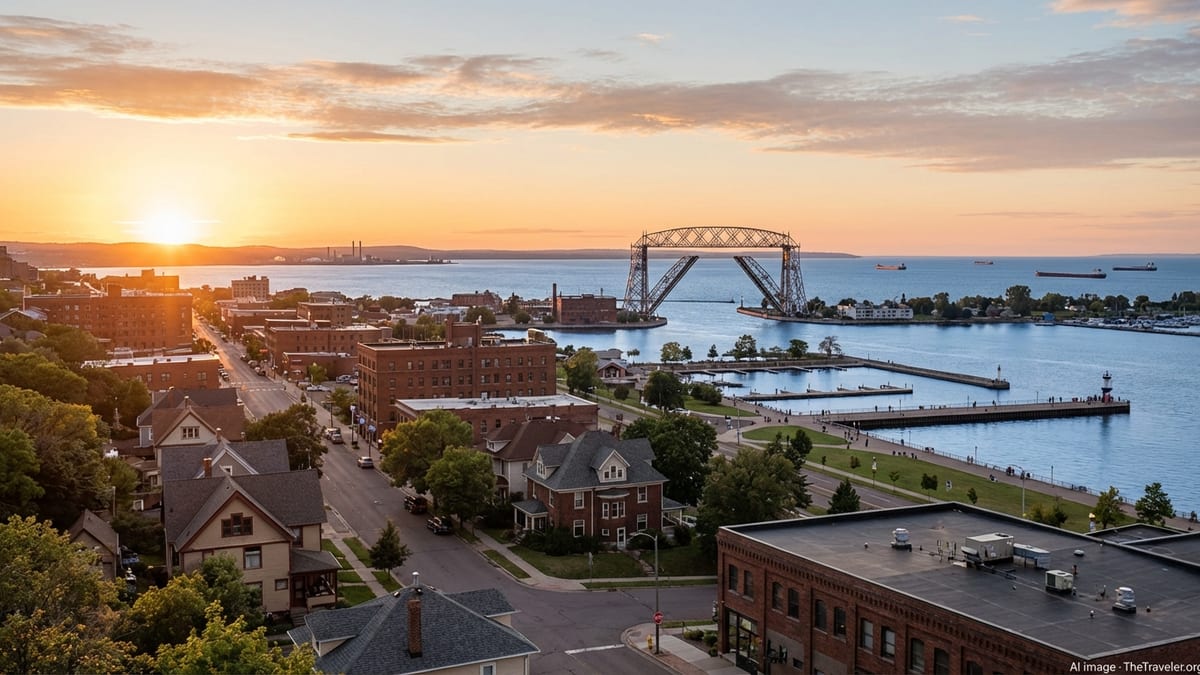
Duluth, Minnesota, rises steeply from the western tip of Lake Superior, a hillside city where cargo ships share the skyline with pine ridges and church steeples. Its waterfront warehouses have evolved into walkable districts, its former industrial corridors now laced with trails, and its views of the world’s largest freshwater lake shape nearly every experience. This guide will help you navigate Duluth’s lakefront energy, hillside streets, and harbor heritage, whether you are planning a long weekend or using the city as a launch point for the North Shore.
Getting Oriented: A Hillside City on the Inland Sea
Duluth stretches northeast along the Lake Superior shoreline, with downtown and Canal Park hugging the water and residential neighborhoods climbing the steep hillside above. The city’s geography is central to the experience: streets often feel like ramps tilted toward the lake, and a few blocks of walking can mean a surprising change in elevation and perspective. On clear days, the horizon seems to curve with the vastness of Superior, while freighters the size of city blocks slide silently into view.
First-time visitors often use Canal Park as their reference point. This redeveloped warehouse district sits beside the Duluth Ship Canal and the Aerial Lift Bridge, the city’s most recognizable landmark. From here you can walk the Lakewalk, access the harbor, and connect easily to downtown via pedestrian-friendly streets. Above it all, Skyline Parkway traces the ridge line along the hillside, offering a different vantage over the same lake and harbor that define life below.
Duluth’s climate is heavily influenced by Lake Superior, with long winters, cool springs, warm but often breezy summers, and vivid autumns. Even in July, evening temperatures near the lake can feel noticeably cooler than inland, while fog banks can roll in and out quickly. Visitors should pack layers year-round and expect conditions to shift with little notice, particularly close to the water or on exposed overlooks along Skyline Parkway.
Because Duluth is compact but built on a steep slope, many visitors combine walking with short drives or rideshares to move between neighborhoods. Comfortable footwear is essential, as sidewalks can be uneven and some routes include significant hills. The reward for that effort is a city that often reveals itself through its views: from the harborfront to hillside parks and towers that look out across both water and forest.
Lake Superior Front Row: Canal Park, Lakewalk, and Park Point
The waterfront at Canal Park is Duluth’s social and scenic heart. Converted warehouses now house hotels, restaurants, and shops, but the real attraction is the proximity to the lake itself. The wide, paved Lakewalk threads along the shoreline, passing rocky beaches, public art, and grassy pockets where visitors spread out with blankets or cameras. Joggers, cyclists, and families share the path, and benches dotted along the route invite you to pause and watch ships approach the harbor gates.
Near the canal entrance, the Aerial Lift Bridge rises above the water like a skeletal arch. When a freighter approaches, alarms sound and the bridge deck lifts to allow passage into the harbor. Watching a ship glide beneath the raised structure is one of Duluth’s signature experiences, and schedules are typically posted locally so visitors can time their visits. At night, the bridge’s lights reflect off the water and lend Canal Park a distinctive glow that contrasts with the darker sweep of the open lake.
Extending from Canal Park is the long sand spit known as Park Point, often cited as one of the world’s longest freshwater sandbars. Residential streets line much of the narrow strip, but several public access points lead to wide beaches where locals sunbathe, play volleyball, or brave the lake’s famously chilly water. On quiet days the sound of waves and gulls overwhelms the nearby city, while stormier conditions bring dramatic surf that can be impressive but potentially hazardous close to the shoreline.
Along the Lakewalk and Park Point, the weather is part of the show. Summer evenings can bring golden light over calm water, while spring and fall often feature fog drifting in low bands across the harbor. Winter, though demanding, reshapes the shoreline with ice formations and wind-blown snow. Visitors should check local advisories for surf, wind, and ice conditions, especially in colder months, and stay well back from the water’s edge when waves are high.
Skyline Parkway, Overlooks, and Classic Duluth Views
Climbing above the lakefront, Skyline Parkway offers one of the most memorable drives in the region. This scenic route follows the ridge line for miles, occasionally ducking into forest before emerging at overlooks that reveal Duluth’s full geography: harbor, hill, bridge, and the long curve of the lake. Many visitors choose to drive only a portion of the parkway, stopping at key viewpoints, while cyclists and runners use certain segments as a challenging workout route.
Enger Park and Enger Tower are among the most popular stops along this hillside corridor. The stone tower rises above manicured gardens, a Japanese-inspired peace bell area, and sloping lawns. A short climb up the tower’s interior stairway rewards you with a 360-degree panorama that includes both Duluth and neighboring Superior, Wisconsin, along with the harbor and inland forests. Access to the park is generally free, with seasonal restrictions possible for the tower itself in winter.
Further along the ridge toward the city’s eastern side, Hawk Ridge Nature Reserve is known for its fall raptor migration, when hawks, eagles, and other birds of prey funnel along the shoreline. At other times of year, visitors come for its trails and bluff-top views. To the east, the parkway eventually connects with Brighton Beach and other shoreline parks where waves break directly against rock, offering a wilder, closer-to-the-water experience than the gentler sands of Park Point.
Because Skyline Parkway is a narrow, winding route in places, it rewards unhurried driving and careful attention to conditions. Fog can reduce visibility, particularly in spring and fall, and winter driving can be challenging after snow or ice. When the weather cooperates, though, the combination of lake views, stone bridges, forested ravines, and overlook pullouts delivers a sense of Duluth’s landscape that you simply cannot get from the harborfront alone.
Downtown Duluth: Historic Core and Harbor Energy
Duluth’s downtown slopes from the hillside to the harbor, creating distinctive street views where century-old brick buildings frame distant glimpses of the Aerial Lift Bridge and lake. The core district blends government offices, historic theaters, independent shops, and a growing number of cafes and breweries. Architectural details reward those who look up: carved stonework, old painted signs, and narrow alleys that reflect the city’s late 19th and early 20th century boom years.
Close to the waterfront, the Duluth Entertainment Convention Center complex anchors a cluster of arenas and performance spaces that host college hockey, concerts, and touring shows. When events let out, crowds often spill toward Canal Park or into downtown bars and restaurants, giving the area a lively, if compact, nighttime energy. On non-event days, the same zone feels far quieter, with the harbor’s industrial sounds and the occasional ship’s horn marking the passing time.
Duluth’s identity as a working port runs through downtown and the adjacent harborfront. From various vantage points, you can watch grain, taconite, and other cargo being loaded and unloaded, or see tugboats shifting freighters into position at the docks. The contrast between active industry and leisure travel is part of Duluth’s allure. Visitors can move from a waterside patio to an overlook where ore docks and elevators dominate the view, then back to quiet side streets with coffee shops tucked into historic structures.
Walking downtown involves regular elevation changes, and some sidewalks show their age, especially in winter’s freeze-thaw cycles. Good footwear and a readiness for short, steep blocks make exploring more comfortable. Pay attention to seasonal parking rules and snow-related restrictions if you are driving; winter can reshape not just how the city looks but how you navigate it.
Outdoor Adventures: Trails, Forests, and Snow
Duluth has earned a reputation as an outdoor town, with trails and natural areas fanning out from both the lakefront and the hillside. The Superior Hiking Trail, a long-distance route that follows the North Shore, passes through portions of the city, giving visitors a chance to sample a piece of a larger wilderness corridor without leaving town. Local trail systems weave along creeks, climb ridgelines, and dip into mixed hardwood and conifer forests that showcase fall color and spring wildflowers.
On the city’s western side, Spirit Mountain offers lift-served skiing and snowboarding in winter, with multiple runs overlooking the harbor and the St. Louis River. Conditions vary with lake-effect snow and temperature swings, so visitors should check current reports before planning a day on the slopes. Warmer months transform the same slopes into a hub for mountain biking, an alpine coaster, and other gravity-fed activities, while scenic chairlift rides appeal to those simply seeking views without the adrenaline.
Closer to town, smaller parks such as Chester Park, Lester Park, and Hartley Park offer trail networks for hiking, running, and in some cases cross-country skiing or fat biking when snow allows. Waterfalls and cascades along local creeks can be especially photogenic in spring, when snowmelt swells the flow, though trails may be muddy and footing uncertain. Visitors should be prepared for roots, rocks, and occasionally steep sections, even in urban-adjacent areas.
Winter presents both added opportunities and additional challenges. Snowshoeing and groomed ski trails open in various parks, while the lakefront may develop intricate ice and snow formations that attract photographers. At the same time, temperatures can drop sharply, wind chill off the lake can be intense, and daylight hours are short. Dressing in layers, keeping an eye on local forecasts, and knowing your limits are key to enjoying Duluth’s cold-season landscapes safely.
Food, Drink, and Staying in Duluth
Duluth’s culinary scene reflects its lakefront setting, college-town influences, and northern climate. Visitors can expect a mix of casual harbor-view spots serving familiar American fare, places highlighting freshwater fish when available, and newer establishments with regional, seasonal menus. Comfort food has a strong presence, particularly in colder months, with hearty stews, brick-oven pizzas, and baked goods that pair well with the ever-present chill off the lake.
Coffeehouses are easy to find in and around downtown, Canal Park, and the hillside neighborhoods, providing warm refuge on cool mornings and reliable Wi-Fi for remote work. The craft beer scene has expanded in recent years, with several breweries offering taprooms where visitors can try local lagers, IPAs, and stouts. Many of these spaces incorporate views of the harbor or hillside, reinforcing the sense that Duluth’s geography is never far from daily life.
When it comes to lodging, options cluster most heavily in Canal Park and downtown, where lakefront hotels, midrange chains, and a few boutique-style properties sit within walking distance of major sights. These areas are convenient for first-time visitors who prioritize access to the Lakewalk, the Aerial Lift Bridge, and harbor cruises. A second tier of lodgings, including motels and smaller inns, spreads along the main corridors leading into town and near attractions like Spirit Mountain, often at somewhat lower price points but with greater reliance on driving.
Vacation rentals in hillside neighborhoods or farther along the North Shore corridor may appeal to travelers seeking quieter stays or longer visits. When booking, it is worth considering your likely activities and the season. In winter, staying closer to plowed main routes can simplify daily logistics, while in summer, proximity to the lake can mean cooler temperatures but also more evening foot traffic and occasional event-related noise.
Seasons, Events, and Practical Tips
Duluth’s year is shaped by its seasons, each bringing different strengths for visitors. Summer, typically from late June through August, offers the warmest temperatures, the most reliable access to hiking and biking trails, and a packed calendar of festivals and outdoor concerts, especially along the harborfront. Lake breezes usually keep conditions more moderate than inland Minnesota, though sun and heat can still be intense on clear days.
Autumn, from September into October, is prized for fall color along the hillsides and the North Shore. Maple and birch trees paint the ridgeline above the lake in oranges and golds, while cooler air makes hiking and city walking more comfortable. This is also prime time for bird migration at sites such as Hawk Ridge. Visitors should be prepared for quickly changing weather, with warm afternoons giving way to chilly evenings and occasional early frosts.
Winter typically settles in by late November and can stretch into March or even April. For travelers who embrace snow and cold, this is a rewarding season: ski hills operate, lakeside parks transform into stark, icy landscapes, and harbor views take on a quiet, monochrome beauty. However, road conditions can deteriorate quickly during storms, sidewalks can be slick, and wind off the lake can make air temperatures feel significantly colder. Advance planning, including flexible itineraries and proper cold-weather gear, is essential.
Spring is the least predictable season, with lingering snow possible, freeze-thaw cycles affecting trails and roads, and lake-driven fog common along the shoreline. In exchange, travelers encounter fewer crowds and see the city emerging from winter: waterfalls swell with meltwater, buds appear on hillside trees, and outdoor patios begin to reopen. Regardless of season, it is wise to check local event calendars, as larger festivals, marathons, and ship-related celebrations can affect traffic, parking, and availability of accommodations.
The Takeaway
Duluth is defined by its meeting points: water and land, industry and recreation, hillside and harbor. The same geography that once made it a pivotal shipping port now supports a blend of outdoor experiences and urban comforts that is unusual for a city of its size. Visitors can watch ore ships load at working docks in the morning, hike forested ravines in the afternoon, and end the day with a lakeside sunset or a hillside overlook that puts the entire harbor at their feet.
Planning a rewarding trip to Duluth means paying attention to season, weather, and topography. The lake moderates and magnifies all three, creating conditions that can shift from sunny to foggy in minutes or from warm to brisk over a short walk uphill. With flexible plans, appropriate clothing, and a willingness to explore both shoreline and ridge, travelers are well positioned to experience the city’s full range of moods.
In the end, what stays with many visitors is less a single attraction than an overall impression: the sound of waves mixing with ship horns, the sight of the Aerial Lift Bridge framed by old brick buildings, and the feeling of looking out from a hillside park over a lake so large it reads as ocean. Duluth invites you to keep changing your vantage point, to see how its streets, trails, and harbor connect, and to appreciate how a working city can still feel closely tied to the wildness of the water it borders.
FAQ
Q1. When is the best time of year to visit Duluth?
The most popular months are late June through early September for warm weather and full access to trails, lake activities, and events. Autumn offers fall color and fewer crowds, while winter appeals to snow sports enthusiasts who are prepared for cold and variable conditions.
Q2. How many days should I plan for a first visit?
A long weekend of two to three full days is usually enough to experience Canal Park, the Lakewalk, Skyline Parkway, a key overlook like Enger Tower, and at least one hike. Adding extra days allows for side trips along the North Shore or more time at attractions such as Spirit Mountain.
Q3. Do I need a car to get around Duluth?
You can explore Canal Park, downtown, and the immediate lakefront on foot, but a car or rideshares make reaching Skyline Parkway, outlying parks, and Spirit Mountain much easier. The city has public transit, yet schedules and routes may not align comfortably with all sightseeing plans.
Q4. Is Lake Superior safe for swimming in Duluth?
Swimming is possible at places such as Park Point on calmer days, but the water is typically very cold even in midsummer, and conditions can change quickly. It is important to heed posted advisories, stay within designated areas, and avoid entering the water during high waves or strong currents.
Q5. What should I pack for a trip to Duluth?
Layers are essential in all seasons, along with a windproof outer layer for time near the lake. Comfortable walking shoes with good traction are useful for the city’s hills and trails, and in winter you will need insulated boots, hats, gloves, and other serious cold-weather gear.
Q6. Where are the best views of Duluth and Lake Superior?
Enger Tower, various Skyline Parkway overlooks, Hawk Ridge, and sections of the Lakewalk all provide standout views. The specific experience varies by location, from elevated panoramas high above the harbor to close-to-the-water perspectives where waves break just beyond the path.
Q7. Is Duluth family-friendly?
Yes, Duluth works well for families, with the Lakewalk, beaches at Park Point, kid-friendly trails, and a range of indoor attractions available in case of bad weather. Many restaurants and hotels in Canal Park and downtown cater comfortably to guests with children.
Q8. How challenging is winter travel in Duluth?
Winter driving and walking can be demanding, particularly during and after snowstorms when roads and sidewalks may be slick or snow-covered. Road crews are accustomed to winter conditions, but visitors should allow extra time, drive cautiously, and be ready to adjust plans if weather deteriorates.
Q9. Can I use Duluth as a base for exploring the North Shore?
Yes, many travelers stay in Duluth and make day trips along the North Shore to destinations such as Two Harbors, Gooseberry Falls, or farther up the coast. This approach offers a mix of urban comforts in the evening and classic North Shore scenery during the day.
Q10. Are there any local customs or etiquette I should know?
Locals are generally informal and friendly, and standard Midwestern politeness goes a long way. Giving space on shared trails, respecting private property along the shoreline, packing out trash, and staying mindful of changing weather are all appreciated practices that help keep Duluth welcoming for residents and visitors alike.