

More news on this day
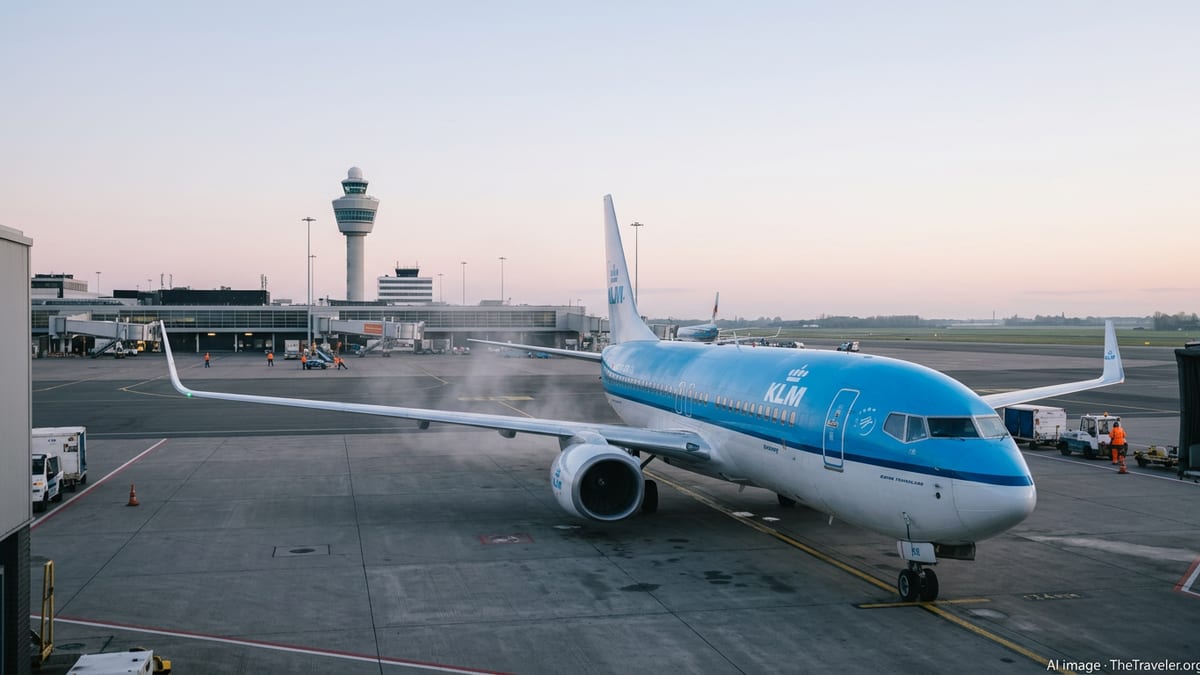
The Netherlands’ King Willem-Alexander has made his final commercial flight on a KLM Boeing 737, closing a three-decade chapter in the cockpit just as the Dutch flag carrier accelerates its transition from Boeing narrowbodies to a new generation of Airbus aircraft.
Get the latest news straight to your inbox!
A Monarch with a Long Airline Logbook
Publicly available biographical information shows that Willem-Alexander has been an active pilot since long before his accession to the throne in 2013, initially building his hours in the Royal Netherlands Air Force before moving into civil aviation. From the 1990s onward, he quietly logged flights for KLM Cityhopper, typically operating as a first officer on short-haul European services.
For many years the monarch flew the now-retired Fokker 70 regional jet, often using low-profile aliases and making routine passenger announcements without identifying himself by title. When KLM phased out the Fokker 70 from its Cityhopper fleet in 2017, he retrained on the Boeing 737, allowing him to continue flying regular scheduled services several times a month.
According to widely shared coverage and aviation community reports, the king’s flying duties have remained deliberately modest in scale, focused on maintaining his license rather than holding a conventional airline roster. Even so, three decades of regular operations have made him one of Europe’s most unusual heads of state: a reigning monarch with thousands of hours on commercial flight decks.
Final Flight Marks the End of a Boeing Era
The latest reports indicate that the king’s recent 737 rotation, completed in mid-March 2026, was his last commercial flight on the type for KLM. The sortie closes roughly 30 years of active airline flying that began on Fokker jets and evolved into Boeing narrowbody operations across Europe.
Enthusiast accounts circulating in Dutch media and on aviation forums describe the flight as operationally routine, with the aircraft crewed and dispatched like any other KLM service. Passengers, as on most of the king’s flights, were unlikely to have been explicitly informed of the royal presence on the flight deck, reflecting his long-standing preference to be treated as a regular first officer when in uniform.
The farewell to the 737 comes at a symbolic moment for KLM, which has relied on the type as the backbone of its European network for roughly two decades. The king’s final sector in the cockpit coincides with the airline’s broader fleet transition, effectively aligning his personal flying history with a generational shift in Dutch commercial aviation.
KLM’s Strategic Shift to the Airbus A321neo
Corporate documents from the Air France–KLM group outline a multiyear program to replace KLM’s Boeing 737 fleet with Airbus A321neo aircraft, part of a wider push to improve fuel efficiency and reduce emissions on short and medium-haul routes. The new Airbus jets promise lower operating costs, quieter cabins, and a refreshed onboard product aimed at maintaining KLM’s competitive position in the crowded European market.
According to this publicly available material, KLM plans for a gradual phase-out of its 737s, resulting in a transition period during which crews migrate to the Airbus platform through extensive simulator and line training. For pilots, the move involves adopting the Airbus flight deck philosophy and systems, a change that can be both technically demanding and professionally invigorating.
In this context, reports indicate that Willem-Alexander intends to retrain on the A321neo, effectively following the same trajectory as KLM’s line pilots. Training is expected to be timed so as not to interfere with operational priorities, with the king joining conversion courses only once sufficient capacity is available for the airline’s regular crews.
Aviation Culture and National Identity
The king’s long-running side role on KLM aircraft has become part of modern Dutch aviation folklore, frequently cited in international coverage as a quirky example of the Netherlands’ informal, down-to-earth ethos. Enthusiast discussions often highlight how a sitting monarch shares the same flight deck duties as any other first officer, performing checklists, managing radios, and helping to guide aircraft through European airspace.
Travelers and aviation fans have for years traded stories about flying KLM routes in the hope of having the king at the controls, even if in practice his appearances have been limited and discreet. The knowledge that a head of state could be quietly piloting a routine Amsterdam rotation has added an unusual layer of allure to an otherwise standard short-haul experience.
With his final 737 flight complete, that folklore now enters a new phase. The story of a king at the controls of a Boeing workhorse gives way to an Airbus narrative, mirroring the broader industrial realignment under way across European skies as carriers seek more efficient fleets.
A New Chapter for Dutch Aviation
The convergence of Willem-Alexander’s personal milestone with KLM’s fleet renewal underscores how closely the Dutch monarchy and national airline remain intertwined. From royal flights operated on government aircraft to routine scheduled services flown under an alias, the king’s aviation activities have consistently intersected with KLM’s operational story.
As the Airbus A321neo becomes the mainstay of KLM’s European network, the monarch’s planned retraining points toward continued, if evolving, engagement with frontline commercial flying. Observers note that this continuity preserves a distinctive aspect of Dutch public life, in which the head of state maintains a practical, skill-based role in a sector that is central to the country’s global connectivity.
For passengers passing through Amsterdam Schiphol in the coming years, the chances of encountering the king on the flight deck will remain slim but real. The equipment type will change, the flight numbers will rotate, and the Boeing 737s will gradually depart the fleet. Yet the underlying story endures: a travel-mad nation whose monarch still occasionally joins the crew, reinforcing the long-standing bond between the Dutch crown and its national carrier.