

More news on this day
EaseMyTrip co-founder and CEO Rikant Pittie is urging international travelers to adopt more strategic, flexible itineraries as strikes and regional airspace closures disrupt routes across Europe, the Middle East and beyond, warning that poorly planned connections can turn routine trips into costly, multi-day ordeals.
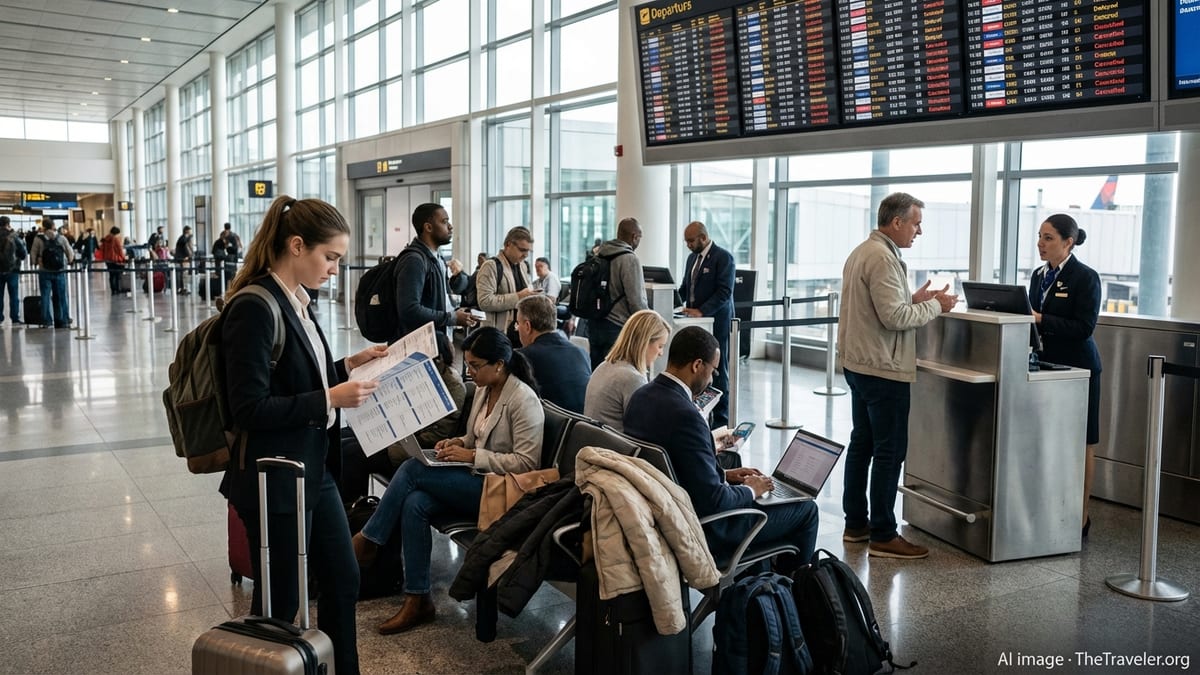
Travel Disruption Surges As Strikes and Closures Spread
Pittie’s renewed call for smarter itinerary planning comes as a series of strikes and operational disruptions ripple through the aviation and rail networks that underpin global tourism. In Europe, industrial action by air traffic controllers, ground staff and rail workers has led to rolling cancellations and delays, while in key transit regions airspace restrictions have complicated long-haul routing.
The EaseMyTrip co-founder recently highlighted that such disruptions no longer remain confined to a single city or airline. Instead, knock-on effects are increasingly felt across entire regions as carriers scramble to reassign crews, reposition aircraft and secure alternative flight paths, extending the impact well beyond the strike’s official end date.
For travelers, the result is a far more fragile network. Tight connections that once felt routine are now significantly riskier, and last-minute booking habits that flourished when schedules were stable are proving ill suited to an era where operational changes can cascade across multiple legs of a journey.
Industry analysts note that online travel agencies are fielding a sharp rise in queries around rebooking, missed connections and route alternatives, particularly on itineraries that pass through major European hubs or sensitive air corridors.
EaseMyTrip Co-Founder’s Key Advice: Build Flexibility In
Pittie is advising customers to rethink how they assemble itineraries when traveling during known or likely strike periods. Rather than focusing solely on the cheapest fare or shortest overall journey time, he recommends building deliberate buffers into each leg, especially when changing airports, carriers or transport modes.
According to his guidance, travelers should aim for longer layovers at strike-affected hubs, even if it means arriving slightly later at their final destination. Extra hours on the ground can provide a crucial cushion if inbound flights are delayed or if security lines and check in counters are stretched by staff shortages.
He also urges customers to avoid back to back timing between different transport systems, such as booking a nonrefundable rail ticket within minutes of a scheduled aircraft arrival. In a strike environment, that kind of precision planning, once seen as efficient, can leave passengers exposed to missed connections and out of pocket costs that travel insurance may not fully cover.
Pittie’s broader message is that flexibility is now a central part of risk management. He advocates for refundable or changeable fares where budgets allow, particularly on the first and last legs of long itineraries, and for keeping at least one alternative route in mind in case a key hub is hit by industrial action at short notice.
Strategic Routing and Backup Plans for Long Haul Trips
Beyond timing buffers, the EaseMyTrip co-founder is encouraging travelers to think more strategically about routing choices when strikes or airspace closures are in play. That can mean selecting hubs with a track record of resilience during past disruptions or choosing airlines that have greater capacity to rebook passengers across their own networks.
Travel planners at the company are reportedly steering some customers toward routes that consolidate connections through fewer, better resourced hubs, even if those options add modestly to flight times. The rationale is that a single, well buffered connection at a stable airport is often safer than multiple tight transfers through strike sensitive locations.
Pittie has also stressed the value of preparing a backup plan in advance. Travelers are being urged to research at least one alternative connection city or airline on critical journeys, check visa or transit requirements for those options and keep key booking details easily accessible in case swift changes are needed at the airport.
For complex itineraries, including multi city holidays or business trips that blend flights with regional trains, the company is recommending that customers consider professional itinerary design through agents who actively monitor strike calendars and can re-sequence stops to reduce exposure to known disruption hotspots.
Monitoring, Communication and Real Time Decision Making
Central to Pittie’s recommendations is continuous monitoring of both airline communications and broader industrial action developments. He has advised travelers to enable real time notifications in airline and agency apps, keep contact details updated and watch for schedule changes that may initially appear minor but could jeopardize onward connections.
EaseMyTrip’s own teams are emphasizing that early response is often the difference between a manageable reroute and an extended stranding. When strikes are announced in advance, customers who proactively shift to earlier flights, alternative airports or different carriers generally secure better options than those who wait until the day of travel to seek help.
Pittie is also highlighting the importance of clear communication with accommodation providers, tour operators and ground transport services when disruption becomes likely. Alerting hotels and transfer companies to possible late arrivals or date changes can minimize penalties and ensure that on arrival logistics are adjusted alongside revised flight times.
As global travel continues to recover and expand, the EaseMyTrip co-founder’s message to travelers is that strike aware itinerary planning is no longer a niche concern. For those heading abroad during periods of industrial or geopolitical tension, building flexibility, redundancy and real time awareness into every trip is increasingly viewed as essential rather than optional.