

More news on this day
From Singapore to Seoul and Tokyo to Bandar Seri Begawan, East Asia’s leading airlines are racing to rewrite the rules of what passengers can expect in the sky, unveiling new cabins, inventive dining concepts and quietly luxurious touches that blur the line between jet travel and boutique hospitality.
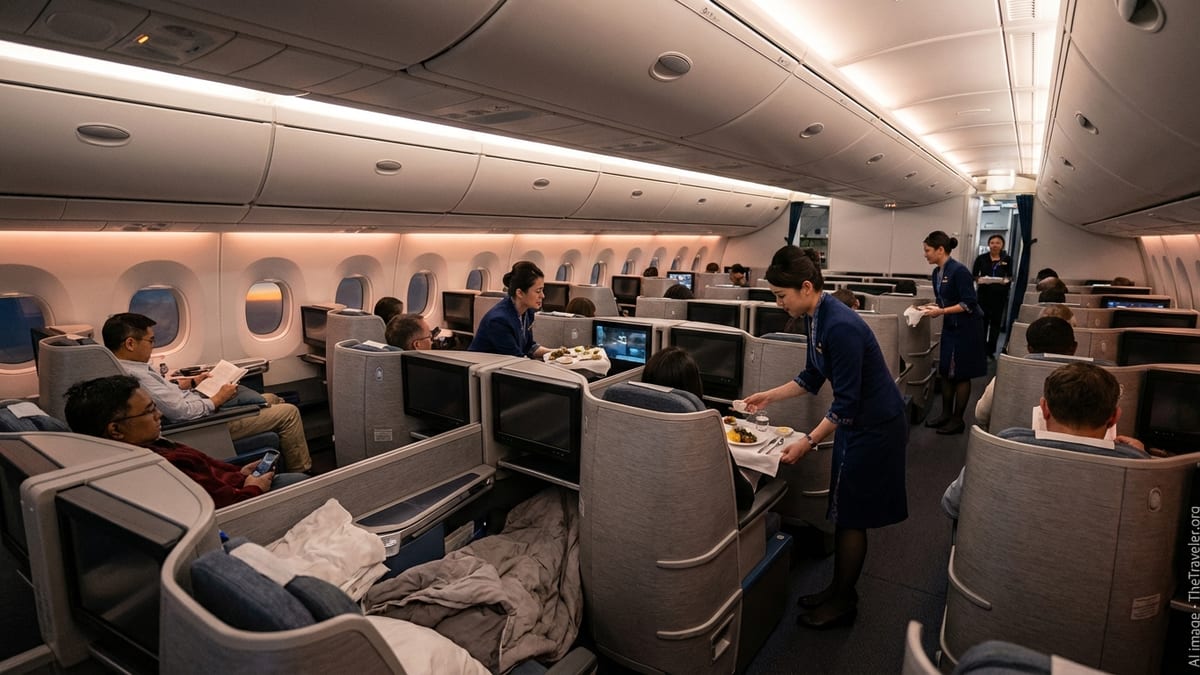
Singapore Airlines Raises the Bar in Premium Economy and Beyond
Singapore Airlines has long been a bellwether for full-service carriers, and its latest round of upgrades underscores how seriously it takes the battle for passenger loyalty. In March 2024 the airline unveiled an enhanced Premium Economy experience, with a renewed focus on personal space, tailored dining and thoughtful amenities designed to bring a business-class feel further down the cabin. The move is part of a broader strategy to sustain its reputation as one of the world’s most consistently top-ranked airlines while responding to travelers who increasingly seek comfort and quality without paying first or business class fares.
The reworked Premium Economy cabin focuses first on physical comfort. Ergonomically engineered seats offer generous 38-inch pitch and widths up to 19.5 inches, combined with deeper recline, calf rests and foot bars that transform long-haul flights into more lounge-like journeys. Leather upholstery, upgraded cushions and softer textiles give the cabin a warm, residential feel rather than a traditional airline aesthetic. Practical touches such as flexible reading lights, expanded stowage for personal items and universal power outlets with dual USB ports answer the everyday realities of working and relaxing at 35,000 feet.
Dining has received equal attention. Singapore Airlines now lets passengers preview menus up to eight days before departure via a digital menu platform, then confirms choices on board with expanded main course options that range from classic Western dishes such as beef bourguignon to regionally inspired favorites including bak chor mee and Thai-style crab curry. The airline has deliberately built these offerings around dishes that hold up well at altitude, with richer sauces, layered textures and carefully tuned seasoning. For many flyers, the effect is a dining experience that feels curated rather than simply catered.
Service is the final pillar in the Singapore Airlines formula. Crew have been trained to treat Premium Economy as a distinct product rather than an extension of standard economy, with more proactive beverage rounds, quicker responses to call bells and a service script that mirrors the attentiveness seen in business class. Together, these elements show how Singapore’s flag carrier is using dining, service and seat design to stay ahead in a region where competitors are rapidly raising their own game.
Korean Air Bets on Premium Economy and Restaurant-Level Dining
Korean Air, fresh from being named the world’s best airline in 2025 by a major aviation ratings firm, is in the midst of one of the most comprehensive product overhauls in its history. Central to that transformation is the introduction of a dedicated Premium Economy cabin on retrofitted Boeing 777-300ERs, alongside upgraded menus and more interactive service across all cabins. The airline is repositioning itself from a traditional flag carrier into what executives describe as a global airline based in Korea, with a stronger emphasis on design, gastronomy and consistency than ever before.
The new Premium Economy cabin, due to roll out from the second half of 2025, has been configured in a 2-4-2 layout with 40 seats that bridge the gap between Prestige business and standard economy. Seats are 19.5 inches wide and recline up to 130 degrees, with leg and footrests, winged headrests and 39 to 41 inches of pitch, giving passengers roughly 50 percent more legroom than regular economy. Large 15.6-inch 4K screens, privacy features and a quieter, more intimate cabin environment position the product as an attractive step up for long-haul travelers who do not need a lie-flat bed but refuse to compromise on comfort.
Korean Air’s soft product investments are just as striking. The carrier has overhauled its premium menus with the help of Michelin-recognized chef Seakyeong Kim, introducing first-class dining that leans into modern interpretations of Korean cuisine while drawing on global influences. New Bernardaud porcelain, Christofle cutlery and Riedel glassware in first class, along with Armani/Casa tableware in Prestige and Premium Economy, bring a restaurant-like feel to the cabin. Menus now feature six carefully composed courses, balancing indulgence with the realities of galley constraints, and place a stronger focus on plating, temperature and timing.
In economy, the changes are subtler but still substantial. Passengers can expect expanded choices ranging from beef or salmon bibimbap to spicy stir-fried octopus, along with improved vegetarian options like tofu pad thai and spicy eggplant stir-fry. Perhaps the most symbolic shift is the decision to serve kimchi across all cabins, a confident embrace of Korean culinary identity that the airline once hesitated to fully express onboard. Combined with planned lounge renovations in Seoul, Los Angeles and New York, as well as new business-class suites featuring privacy doors and adjustable “honeymoon” seating for couples, Korean Air is drawing a direct line between comfort, food and a modern, globally appealing Korean brand.
Japan Airlines Showcases Quiet Luxury on the A350-1000
Japan Airlines is taking a characteristically understated but ambitious approach to its next-generation cabins. With the debut of the Airbus A350-1000 on marquee routes such as Tokyo Haneda to New York, the carrier is using the aircraft as a platform to introduce entirely new seat designs, enhanced inflight amenities and carefully considered upgrades to the dining experience. The goal is to deliver comfort and privacy without the overt opulence that some competitors favor, in line with the Japanese concept of omotenashi, or anticipatory hospitality.
In first class, Japan Airlines has installed just six suites that effectively function as private mini-salons. Wide sofas can transform into single or double beds, with a split-recline system that allows passengers to host companions for meetings or shared meals before converting the space back into a sleeping area. High walls and sliding doors provide full privacy, while headphone-free speakers built into the seat back allow travelers to enjoy inflight entertainment without wearing a headset. Business class follows the same ethos, with fully enclosed suites that emphasize personal space, storage and tactile materials over flashy design statements.
Further back in the cabin, Premium Economy and Economy have not been overlooked. The airline has enlisted Japanese design firm nendo to rethink tableware and trays for these cabins, focusing on lighter, more sustainable materials and smarter layouts that make meals feel less cramped. New dishes emphasize balanced flavors and presentation even in the tighter confines of coach service, and reusable plant-derived materials are replacing traditional petroleum-based plastics wherever possible. It is a subtle but significant step that aligns in-flight service with growing passenger expectations around environmental responsibility.
Service refinements tie the experience together. Japan Airlines crews are emphasizing small gestures such as quietly refilling drinks, adjusting window shades and timing meal services so that customers can maximize sleep on key overnight sectors. Amenity highlights, including exclusive toothbrushes that can be used with only water and limited-edition collaboration amenity kits, reinforce a sense of thoughtful design. While less headline-grabbing than some competitors’ splashy launches, JAL’s A350-1000 program is a clear signal that comfort, sustainability and privacy are becoming mutually reinforcing pillars of long-haul travel.
Royal Brunei Experiments With Pre-Select Dining and Personalized Service
Compared with its larger regional rivals, Royal Brunei Airlines operates on a smaller scale, but the Bandar Seri Begawan-based carrier is using that nimbleness to test new ideas in dining and personalization. In late 2024 the airline introduced RB SkySavour, a pre-select meal service for business class guests, alongside RB SkyShop, a refreshed duty-free platform. Both are designed to give passengers more control over their onboard experience and to help the airline reduce waste while still offering indulgent touches.
SkySavour allows business-class travelers to choose their main courses in advance, often from a menu that is broader and more adventurous than what is loaded for on-the-day selections. By locking in choices before departure, Royal Brunei can better calibrate catering loads, freeing it to offer higher-quality ingredients and more complex dishes that might otherwise be too risky to provision. For passengers, the benefit is both guaranteed choice and the sense that their preferences have been noted and acted upon long before boarding.
The carrier is also leveraging its compact long-haul network to double down on service personalization. Cabin crew have more opportunity to address passengers by name, remember drink preferences and pace meals to individual routines, particularly on overnight flights linking Southeast Asia with the Middle East and Australia. Paired with contemporary Southeast Asian menus that reflect Brunei’s cultural influences, including halal preparations and lighter, spice-forward dishes, the service model positions Royal Brunei as an insider’s choice for travelers who prize warmth and nuance over scale.
These innovations are taking place against the backdrop of intensifying competition in the region. As neighboring giants invest heavily in hardware and lounges, Royal Brunei is betting that finely tuned dining programs and high-touch service will keep it relevant for premium travelers. Its experiments with pre-select dining mirror trends seen at larger carriers, but the airline’s ability to roll out and refine such services quickly makes it an interesting laboratory for where boutique-style in-flight hospitality could be headed.
Dining at Altitude Becomes a Culinary Arms Race
Across these four airlines, in-flight dining has emerged as one of the most visible battlegrounds in the fight for market share. Rather than relying solely on standardized trays of reheated fare, East Asia’s flag carriers are leaning into regional gastronomy, premium tableware and more flexible service structures to differentiate themselves. The result is an environment where a long-haul business-class meal can closely resemble a multi-course restaurant experience, and even economy passengers are seeing meaningful upgrades.
Singapore Airlines’ expanded Premium Economy menus and digital pre-viewing, Korean Air’s partnership with an acclaimed Seoul-based chef, Japan Airlines’ meticulous redesign of tableware in collaboration with nendo and Royal Brunei’s pre-select SkySavour program all point in the same direction. Airlines are realizing that menu variety, plating and ingredient quality matter as much as seat width when travelers choose between competing carriers. They are also becoming more disciplined about how dishes perform at altitude, favoring richer sauces, umami-forward flavors and items that maintain texture after reheating.
Service style is evolving alongside menu design. Traditionally rigid meal schedules are giving way to more personalized pacing, especially in premium cabins, with dine-on-demand concepts, lighter snacking options and carefully timed beverage services. Airlines are also investing in crew training, teaching staff not just how to serve but how to present and describe dishes in ways that mirror high-end restaurants. At the same time, digital tools such as pre-order systems help align passenger expectations with what can realistically be delivered in the galley, reducing disappointment and waste.
Economy cabins, though constrained by space and cost, are not being left behind. Improved recipe design, bolder regional flavors and better snack offerings mean that even those in the back rows notice the shift in philosophy. For many travelers, a well-crafted bowl of bibimbap, a thoughtfully seasoned noodle dish or a vegetarian curry can transform the perception of a 12-hour journey from endurance test to manageable experience, reinforcing loyalty in a way that inflight entertainment or loyalty bonuses alone no longer can.
Seat Innovation and Comfort Shape the Next Generation of Cabins
Hardware still matters deeply, and East Asia’s leading carriers are making substantial investments in new seats and cabin layouts that place comfort and privacy at the center. Korean Air’s upcoming business-class suites, complete with sliding doors, generous bed lengths and flexible “honeymoon” configurations for couples, are emblematic of a broader shift toward personal cocoons in the sky. Japan Airlines’ A350-1000 first and business suites, with their configurable sofas, enclosed spaces and integrated technologies, similarly redefine what a premium long-haul seat can be.
Premium Economy has emerged as perhaps the most dynamic cabin, both for airlines and passengers. Singapore Airlines’ early bet on the segment has been reinforced by Korean Air’s decision to retrofit 777-300ERs with a sizeable Premium Economy cabin that promises significantly more personal space, enhanced legroom and larger entertainment screens. These products are deliberately designed to appeal to a mix of leisure and business travelers who value comfort and are willing to pay extra, but for whom the leap to lie-flat business class is either unaffordable or unnecessary.
Even within economy cabins, incremental design improvements are shaping perceptions of comfort. Slimmer seat backs that preserve knee room, better headrests, improved cushioning materials and carefully tuned recline angles can mitigate the impact of denser configurations. Airlines are also rethinking lighting schemes, using warmer tones and dynamic programming to support circadian rhythms, and integrating more power outlets and device holders so passengers can create their own micro-environments. When paired with upgraded soft products such as mattress pads, loungewear and higher-quality blankets in premium cabins, the overall in-flight experience becomes less about simply arriving and more about arriving rested.
The interplay between cabin hardware and service is crucial. A private suite is only as good as the crew that maintains its calm, and a spacious Premium Economy seat delivers its full value only when paired with thoughtful touches like welcome drinks, priority boarding and attentive mid-flight care. East Asia’s top airlines are increasingly designing seats and service protocols together, rather than as separate tracks, ensuring that each new cabin concept has a coherent feel from first step onboard to final goodbyes at the door.
A Regional Trend With Global Implications
The rapid evolution of in-flight dining, service and seat comfort at Singapore Airlines, Korean Air, Japan Airlines and Royal Brunei is more than just a regional story. As these carriers push standards higher, they exert pressure on competitors across Europe, North America and the Middle East to respond in kind. Frequent flyers already compare experiences across alliances and continents, and the contrast between a forward-thinking East Asian cabin and a dated product elsewhere is becoming more stark with each product launch.
For travelers, the implications are largely positive. The same intensive menu testing that led Korean Air to rework its wine list and amuse-bouche offerings, or that prompted Japan Airlines to revisit everything from seat fabrics to toothbrushes, invariably filters into higher quality on board. Digital menu previews, pre-select dining programs and redesigned tableware in economy may have started as differentiators, but they are quickly becoming expectations on long-haul routes, raising the floor of what constitutes acceptable service.
At the same time, these innovations highlight the diverging strategies airlines are taking in a post-pandemic market. Some, like Singapore Airlines and Japan Airlines, lean on consistent refinement and quiet luxury, iterating on already-strong foundations. Others, like Korean Air, seize the moment to overhaul brand identity, cabin hardware and service philosophy in one ambitious sweep. Smaller players such as Royal Brunei test agile, customer-centric ideas that could be scaled by larger peers if proven successful. Together they sketch a future in which the quality of a flight is measured not just in punctuality and price, but in how human the experience feels from first sip of welcome drink to final tray clearance.