

More news on this day
East Central Railway has unveiled one of its most extensive Holi timetables to date, deploying hundreds of special trains across key routes to Bihar and neighboring states in a bid to ease severe overcrowding and give festival travelers more options during one of India’s busiest travel periods.
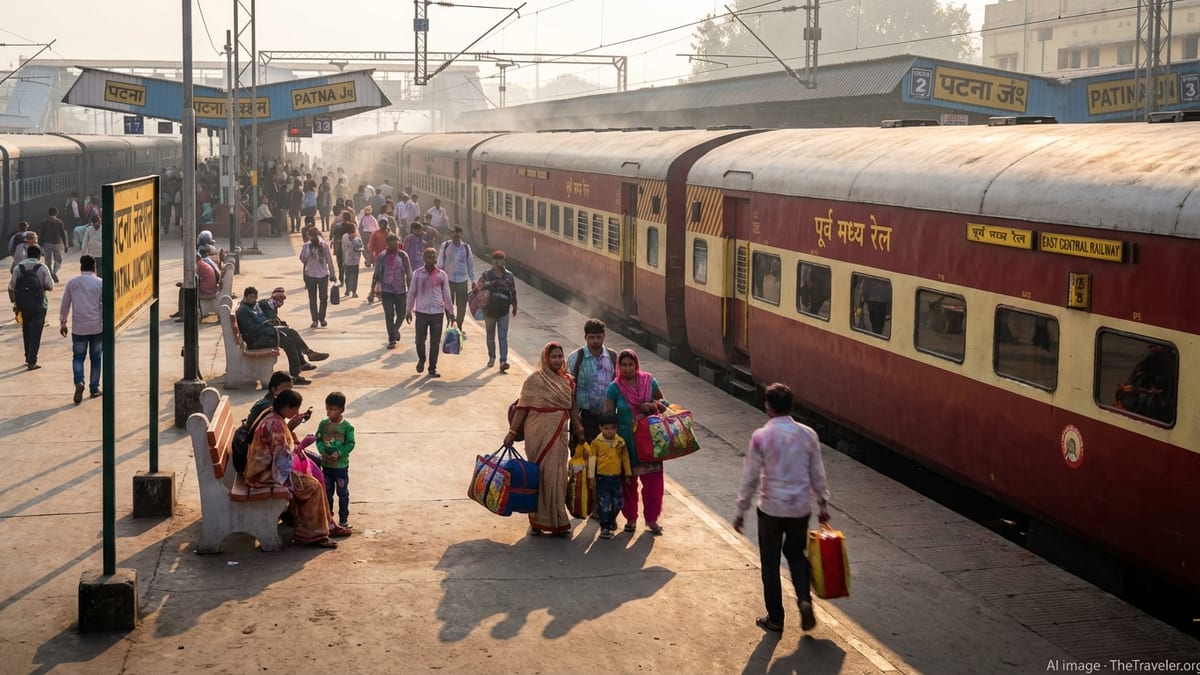
Record Holi Operations Centered on Bihar and the Heartland
The Holi 2026 timetable marks a significant ramp-up for East Central Railway, which operates across Bihar and parts of Uttar Pradesh, Jharkhand and Madhya Pradesh. As part of a broader Indian Railways plan to operate more than 1,400 Holi special services nationwide in March, ECR has been allocated the single largest share, with around 285 services scheduled to run through its network at the height of the festive rush.
Rail officials say the expanded schedule is designed to address chronic crowding on core holiday routes linking Patna, Danapur, Gaya and other ECR hubs to major cities such as Delhi, Mumbai, Bhopal and Kota. Many regular long-distance trains on these sectors have already been showing full or long waiting lists weeks ahead of Holi, prompting the zone to layer in special services at multiple points in the week.
According to senior railway managers, the additional trains will run primarily during the first three weeks of March, when millions of migrant workers and students travel back to their hometowns for Holi before returning to major metros after the festival. The temporary timetable is expected to relieve pressure on regular services and cut waiting lists, particularly in sleeper and third AC classes, where demand is highest.
The strategy also reflects a wider shift in how Indian Railways manages festival peaks, with zones like East Central Railway now planning dedicated Holi, summer and winter schedules well in advance. For 2026, ECR’s allocation of Holi specials is significantly higher than in previous years, underscoring both growing demand from eastern India and the zone’s importance in the national network.
Key Special Trains Linking Patna, Danapur and Gaya
Among the standout additions for Holi are a set of long-distance specials that directly benefit passengers in Bihar, particularly those traveling from Patna, Danapur and Gaya to major employment and education hubs. Services such as the Jabalpur–Danapur, Rani Kamalapati–Danapur and Kota–Danapur Holi specials, introduced in recent seasons and now expanded around Holi, are being positioned as crucial pressure valves for high-demand stretches.
These trains typically operate on limited dates clustered around the festival, timed so that passengers can reach home in the days before Holi and return shortly afterward. The Jabalpur–Danapur special, for instance, has been scheduled with overnight journeys that arrive in Danapur the following morning, allowing onward connections to wider Bihar, while return services depart soon after the festival window.
Further bolstering connectivity, ECR has cleared Holi specials linking Gaya with Anand Vihar Terminal near Delhi, and Patna with cities in Maharashtra and central India. These trains extend the reach of the zone far beyond its own boundaries, forming part of a national lattice of Holi specials that together help absorb a surge in cross-country travel.
ECR officials note that most of the Holi specials are fully reserved services, often with a mix of sleeper, AC and limited general coaches. The emphasis on reserved accommodation is intended to manage crowding at stations and inside coaches, and to give passengers greater certainty about their travel plans in a period traditionally associated with last-minute scrambles for seats.
Managing Overcrowding and Passenger Flow During Peak Season
Holi is historically one of the most challenging periods for Indian Railways, rivaling Diwali and Chhath in terms of passenger volumes. For East Central Railway, whose jurisdiction includes some of the country’s largest sources of migrant labor, the pressure is especially acute. Platforms at Patna Junction, Danapur, Gaya, Barauni, Ara and other nodes routinely see crush loads, with unreserved coaches packed far beyond capacity.
The enlarged Holi timetable aims to reduce that strain by spreading passenger flows across a greater number of departures and spreading them over additional days. Officials say that even modest frequency increases on select routes, combined with longer rakes and better rake rotations, can cumulatively add tens of thousands of extra berths into the system over the festival window.
Data from recent Holi seasons has shown that demand spikes are no longer confined to just two or three days before and after the festival. Instead, passenger flows now extend over two to three weeks as schools and workplaces stagger holidays. This has prompted ECR planners to schedule specials across broader date ranges, calibrating them with other zones so that rakes can be shared or turned around efficiently at terminals like Danapur, Patliputra and Gaya.
Railway managers also emphasize that Holi specials are coordinated with security, crowd management and station amenities. Additional Railway Protection Force personnel are usually deployed at busy junctions, temporary queue systems are set up for unreserved coaches, and announcements are stepped up to guide passengers toward their designated platforms and coaches, particularly at night.
Impact on Bihar’s Connectivity and Local Economies
For Bihar and the wider ECR region, the Holi specials are more than just extra trains. They represent a vital connectivity lifeline that allows thousands of seasonal workers, students and professionals to maintain close ties with their hometowns despite living and working far away for most of the year. Local businesses, too, report a measurable uptick in activity as returning residents spend on food, gifts, clothing and local transport.
Travel agents and small ticketing outlets across Patna, Gaya, Muzaffarpur and smaller towns say the announcement of Holi specials typically triggers a rush of bookings, particularly among families who prefer confirmed seats in reserved coaches and travelers who could not secure seats on regular trains. For many, the additional services are the difference between a comfortable overnight journey and a long, uncertain road trip.
Tourism operators in the region add that smoother rail connectivity during Holi makes it easier for domestic tourists to visit cultural and religious centers across Bihar and eastern Uttar Pradesh. While Holi here is largely a homecoming festival rather than a tourist spectacle, destinations such as Gaya, Rajgir and the Buddhist circuit hubs still see elevated footfall when rail capacity is available.
Economists point out that festival travel has become a reliable indicator of regional purchasing power and mobility. The decision to assign the highest number of Holi specials to East Central Railway this year reflects both the sheer volume of outbound workers from Bihar and surrounding states and the growing expectation that they will return home for major festivals by rail rather than by slower and costlier road journeys.
How Passengers Can Plan Holi Journeys on the New Services
With hundreds of special services on the timetable, East Central Railway is urging passengers to plan early and use official channels for information and reservations. Tickets for Holi specials are being released in line with the standard advance reservation period, with bookings available at computerized reservation counters and through the national e-ticketing platform.
Officials recommend that passengers verify the status of their trains and coach composition close to the date of travel, as minor adjustments and additional trips may be introduced in response to real-time demand. Real-time running information and platform details are available through official railway helplines, mobile applications and station inquiry counters, which are typically staffed up during the festival period.
Passengers are also being reminded of basic crowd-safety practices in busy stations, including arriving early, traveling with minimal luggage where possible and using designated entry and exit points. For families and elderly travelers boarding at major ECR hubs, station staff and on-board personnel are being briefed to provide extra assistance during peak days.
By combining an unprecedented number of Holi special trains with tighter operational planning and passenger communication, East Central Railway hopes to transform what has traditionally been a stressful scramble for space into a more predictable, manageable experience. For millions heading home to celebrate the festival of colors, the additional services could make the difference between a difficult journey and an accessible, timely trip.