

More news on this day
East Midlands Airport in the UK is expanding its accessibility offering with the introduction of a CalmPod sensory pod alongside a refreshed quiet room, creating a more predictable and low-stimulation space for neurodivergent, anxious and sensory-sensitive travelers ahead of the busy summer season.
Get the latest news straight to your inbox!
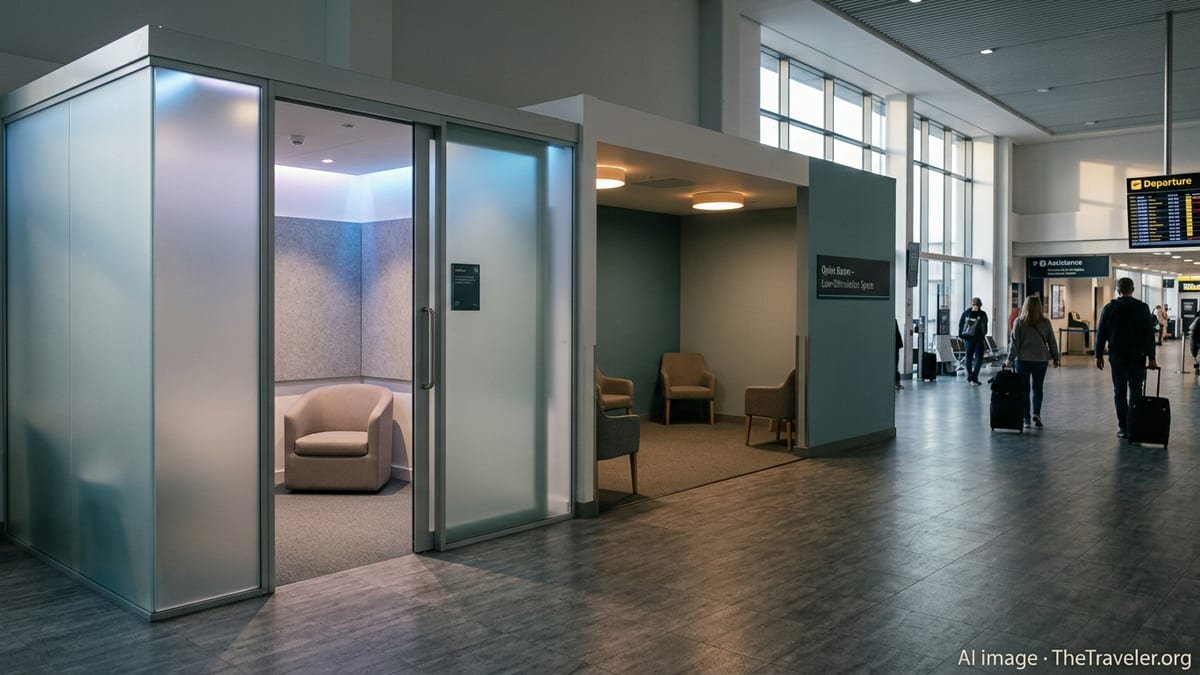
CalmPod sensory pod adds new layer of airport accessibility
Recent updates to East Midlands Airport’s terminal facilities highlight the planned rollout of a wheelchair-accessible sensory pod designed for passengers who benefit from reduced noise, controlled lighting and limited visual distractions before boarding. Publicly available information indicates that the CalmPod-style unit will sit within the airport’s assisted travel zone, forming part of a wider focus on quieter, lower-stress preflight spaces for people with non-visible disabilities, including autism and anxiety.
Airport planning documents and accessibility updates describe the new pod as a self-contained environment intended to deliver calmer sensory inputs than the surrounding departure lounge. While detailed specifications have not been widely published, similar sensory pods typically feature dimmable lighting, soft seating, acoustic damping and simple controls that allow users to tailor the space to their own comfort level. Positioning such a pod close to assisted travel support points is intended to make it easier for passengers who may already be navigating mobility or communication challenges.
The introduction of this technology aligns with a broader industry trend in which airports are experimenting with multi-sensory rooms, prayer and reflection spaces, and low-stimulation waiting areas to reduce the burden of air travel for people who find crowded terminals difficult. East Midlands Airport’s decision to invest in a dedicated pod suggests a move beyond basic quiet corners toward purpose-built environments that can be clearly signposted and pre-planned into a journey.
Reports on airport wellness facilities indicate that enclosed pods can offer significantly lower ambient sound levels than even premium lounges, providing meaningful relief from public address systems, trolley noise and crowd chatter. For passengers who are sensitive to such stimuli, a short period in a controlled space can make security checks, boarding and in-flight time more manageable.
Refreshed quiet room repositions East Midlands in inclusive travel
The CalmPod installation is part of a larger refresh of East Midlands Airport’s quiet room offer, which is being relocated and upgraded within the terminal. The airport already promotes dedicated quiet rooms before and after security as part of its guidance for passengers travelling with autism, describing them as spaces away from bright lights, commercial areas and the main departure lounge traffic.
Recent accessibility forum notes and corporate updates point to a strategy of integrating the quiet room more visibly into the wider assisted travel experience while retaining its low-profile character. That approach reflects feedback from disabled passengers who often report that quiet spaces exist but are hard to find, poorly signed, or not clearly marked as appropriate for neurodivergent users as well as those seeking privacy for prayer or reflection.
At East Midlands, the refreshed quiet room is expected to work in tandem with the CalmPod. The room offers a larger, shared setting where families or support workers can remain together, while the pod can provide an even more controlled environment for a single traveler who needs deeper sensory reduction. Combining both in one assisted travel zone allows staff to direct passengers to the option that best suits their needs without requiring them to traverse busy parts of the terminal.
This repositioning also supports East Midlands Airport’s broader objective of improving the overall arrivals and departures journey. Alongside upgrades to immigration, baggage reclaim, toilets and wayfinding, a modernised quiet space sends a signal that terminal design is being considered not only from a commercial or aesthetic perspective but also from the viewpoint of travellers who may otherwise avoid flying.
Building on existing support for non-visible disabilities
The CalmPod and quiet room developments build on an established accessibility framework at East Midlands Airport. The airport already provides a green lanyard scheme for passengers with non-visible disabilities, as well as recognition of the widely used Hidden Disabilities Sunflower symbol. These identifiers help staff recognise when a traveller may need extra time, clearer instructions or a calmer route through the building.
Assisted travel services at the airport encourage passengers to pre-book support with their airline, allowing staff to arrange alternatives to busier zones such as large duty-free stores or crowded queuing areas. Published guidance for travelling with autism notes that the team can help passengers bypass particularly stimulating environments, and that quiet rooms form a core component of that alternative route through the terminal.
Information shared through accessibility channels also highlights familiarisation visits, sometimes called “try before you fly” sessions, which allow individuals and families to rehearse the airport journey in advance. For many autistic passengers, simply knowing where a quiet room is located or how to access a sensory pod can drastically lower anxiety before the day of travel.
By layering calm spaces, tailored assistance and clearer wayfinding, East Midlands Airport is positioning its CalmPod and quiet room as one part of a continuum of support rather than a standalone feature. This integrated model is increasingly seen as best practice, as it recognises that sensory overload is influenced by the entire journey from curb to gate, not just the minutes before boarding.
Part of a wider shift in airport design for neurodivergent travelers
The move by East Midlands Airport comes as more hubs worldwide experiment with sensory rooms, calming spaces and autism-friendly initiatives. Studies and case reports from airports in North America, Asia and Europe describe multi-sensory rooms with adjustable lighting, soft furnishings and interactive but gentle visual features designed to support self-regulation.
Within this context, the addition of a CalmPod-style unit at a regional UK airport is significant. It suggests that such facilities are moving from flagship global hubs into mid-sized terminals that serve leisure travellers, families and package holiday customers, groups that often include children and adults with support needs who may not have access to premium lounges.
Industry coverage of sensory rooms also notes that these facilities tend to benefit a wider audience than initially targeted. While conceived primarily for neurodivergent passengers, quiet rooms are often used by people coping with migraine, panic, grief or simple exhaustion. The discretion and neutrality of spaces like the East Midlands quiet room, combined with clear guidance that they are available to those who need a calmer environment, help normalise the idea that it is acceptable to step away from the main crowds.
As more airports track usage and gather structured feedback, the performance of individual installations such as the CalmPod and the refreshed quiet room at East Midlands may inform future design choices elsewhere in the UK. Elements such as all-ability access, intuitive controls, sound insulation and proximity to assisted travel desks are likely to feature prominently in assessments of what works well for passengers who find the modern terminal experience overwhelming.
Setting expectations for travelers using the new facilities
While final operational details have yet to be widely publicised, early information suggests that East Midlands Airport will signpost the CalmPod and quiet room through its assisted travel communications, online accessibility pages and in-terminal signage. Passengers with non-visible disabilities are encouraged to flag their needs when booking and again with their airline at least 48 hours before travel, which can help ensure that access to quiet facilities is included in the support plan.
Experience from comparable airport sensory spaces indicates that stays in pods and quiet rooms are typically time-limited so that more passengers can benefit, especially at peak travel periods. Travelers can expect these spaces to be low-stimulation rather than entirely silent, with soft ambient lighting and minimal visual clutter. Many passengers find it helpful to bring personal comfort items such as headphones, weighted accessories or familiar sensory tools to use alongside the facilities provided by the airport.
For those planning a journey through East Midlands Airport in 2026 and beyond, the emerging CalmPod and inclusive quiet room offer an additional layer of predictability in what is often an unpredictable environment. For families travelling with autistic children, adults with anxiety or anyone who finds the sights and sounds of a terminal difficult to manage, knowing that a dedicated calm space is built into the airport’s design may make the difference between avoiding air travel and choosing to fly.
As these facilities come online and are integrated into daily operations, their visibility and usage will likely be watched closely by campaigners, accessibility specialists and other airports seeking practical models for more inclusive travel infrastructure. East Midlands Airport’s investment signals that quieter, more regulated spaces are no longer niche extras but an increasingly expected part of the modern passenger experience.