

More news on this day
Rail passengers across Cambridge and wider Cambridgeshire face significant disruption over the Easter 2026 bank holiday, as major engineering works close key routes and trigger widespread timetable changes.
Get the latest news straight to your inbox!
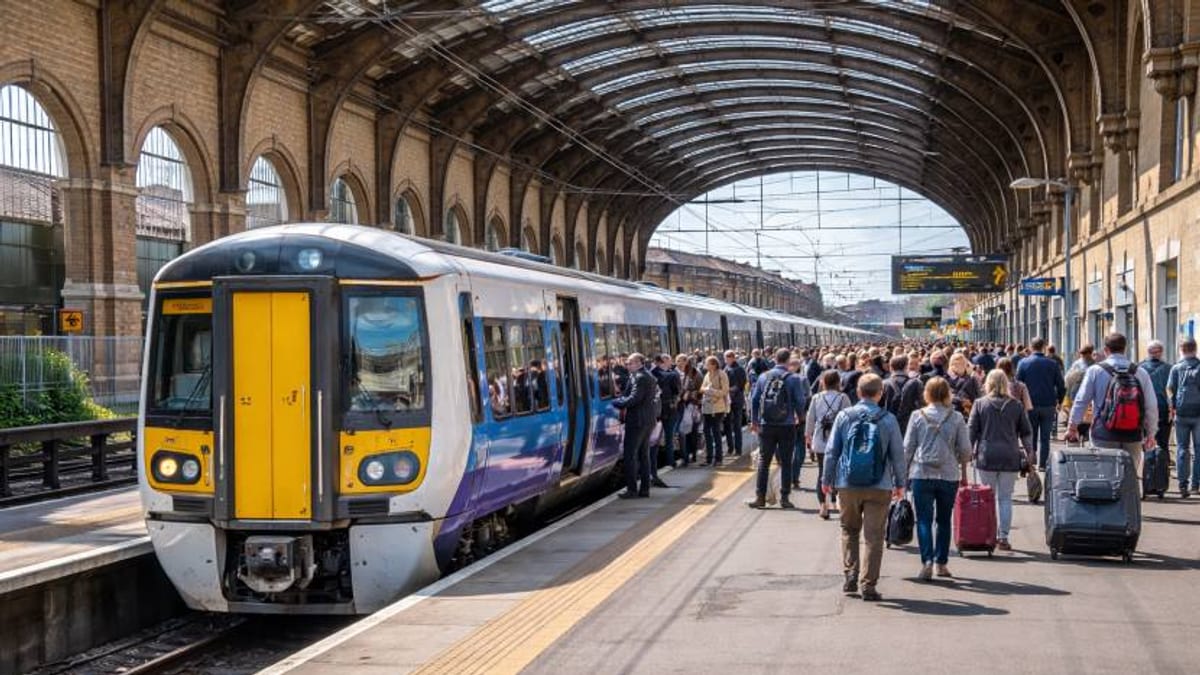
Image by Latest International Railway News, Global Rail Industry News
When and where the biggest disruption will hit
The Easter 2026 bank holiday runs from Friday 3 April to Monday 6 April, and publicly available information shows that this four day window is being used for intensive rail works across the region. National rail planning summaries indicate that one of the most disruptive schemes will be between Cambridge and Ely, extending towards King’s Lynn and Bury St Edmunds.
According to advance engineering notices, all lines between Cambridge and Ely and between Cambridge and Bury St Edmunds are scheduled to be closed from Good Friday through Easter Monday. Trains that normally run on the Fen Line between King’s Lynn, Ely and Cambridge, and on the cross country corridor between Peterborough, Ely, Bury St Edmunds and Ipswich, will not be able to follow their usual routes for the duration of the closure.
Service information indicates that Greater Anglia trains will continue to run between Stratford or London Liverpool Street and Cambridge, and between Peterborough and Ipswich, but passengers heading north or east from Cambridge will need to transfer to rail replacement buses. Great Northern and Thameslink services that usually continue beyond Cambridge towards Ely and King’s Lynn are also expected to terminate at Cambridge, with onward journeys provided by road transport.
These works coincide with wider Easter engineering programmes on main lines into London and across East Anglia, creating a complicated picture for anyone travelling to or from Cambridgeshire over the long weekend.
What the engineering works are aiming to deliver
Network planning documents and recent upgrade summaries for Anglia suggest that the Easter 2026 works around Cambridge and Ely form part of a longer term programme to modernise infrastructure in the region. Previous Easter periods have been used to renew track, improve junctions and upgrade signalling equipment to increase reliability and capacity on busy corridors into Cambridge.
The stretch between Cambridge and Ely is particularly important, carrying a mix of commuter, interregional and freight traffic that connects the Fen Line to King’s Lynn, the route to Norwich via the Breckland Line, and cross country services toward Peterborough and the Midlands. Industry briefings have repeatedly highlighted the need to tackle congestion and bottlenecks in this area, especially as new projects such as the East Coast digital signalling upgrades and the future Bedford to Cambridge section of East West Rail reshape traffic flows.
At the same time, work continues around the under construction Cambridge South station on the southern side of the city, which is due to open in early 2026. While the Easter closure is centred to the north and east of Cambridge, the rail industry has been clear in previous updates that consolidating multiple schemes into bank holiday blocks reduces the number of separate occasions when lines must be shut.
For passengers, the immediate effect is several days of inconvenience. The longer term expectation, based on similar schemes in East Anglia in recent years, is a more resilient railway with fewer speed restrictions, reduced signal failures and more capacity to handle growing demand into Cambridge and the surrounding science and business parks.
How services and replacement buses will operate
Altered timetables for Easter 2026 show that a layered operation is planned across Cambridgeshire, combining shortened rail services with extensive bus links. Between Cambridge and Ely, rail replacement buses are expected to run in both directions, calling at Waterbeach and serving connections onto trains at Ely for King’s Lynn in the north and for Norwich and Ipswich via regional routes.
A separate bus network is due to cover the Cambridge to Bury St Edmunds corridor, providing links to Newmarket and intermediate stations. Passengers travelling from London or Cambridge towards Bury St Edmunds, Stowmarket or Ipswich are likely to be routed by train as far as Cambridge or Peterborough and then transferred to buses for the closed section before rejoining rail services.
Great Northern and Thameslink passengers who usually enjoy direct electric services between King’s Lynn, Ely, Cambridge and London King’s Cross will see their journeys split, with the Cambridge to London leg expected to run broadly as normal but with altered departure times to slot around national engineering works. Travellers using Greater Anglia services to and from London Liverpool Street will also need to check carefully for revised timings, platform changes and extended journey times where connections interface with the closed sections.
Rail operators and journey planning tools are advising that journey times through Cambridge and Ely will be significantly longer than usual, with some itineraries requiring multiple changes between train and bus. Crowd levels on both modes are also likely to be higher, as Easter is a peak leisure travel period and some passengers may divert from other disrupted routes onto those still operating.
Knock on effects across the wider network
Although the main focus of the Cambridgeshire works is the Cambridge to Ely and Cambridge to Bury St Edmunds corridors, the impact will ripple across a wider area. Services from King’s Lynn, for example, are expected to start and terminate at Ely rather than continuing to Cambridge, forcing passengers to complete the final leg of their trip by bus. This will also affect onward connections to London King’s Cross and Gatwick Airport that normally run as through trains via Cambridge.
Cross country routes linking Peterborough with Ipswich and Norwich may see alterations to stopping patterns and connection times, as operators attempt to maintain a viable network around the blockade. While trains between Peterborough and Ipswich are due to continue operating, the loss of the direct Ely to Cambridge link reduces flexibility for diversions and could lead to tighter margins for connections if services are delayed.
The works also interact with other Easter engineering programmes on trunk routes into London, including major schemes on the West Coast Main Line and East Coast Main Line. Travellers from Cambridgeshire heading to the Midlands, northern England or Scotland may find that both their local route to the capital and the onward intercity line are affected by separate projects, increasing the risk of missed connections or longer alternative routings.
In practice, this complex overlay of closures, diversions and altered timetables means that passengers travelling through Cambridge, Ely, Peterborough or Bury St Edmunds over Easter should expect a less predictable journey than usual. Many itineraries that appear straightforward on a normal weekend will be subject to extended journey times and extra changes.
Practical advice for travellers over Easter 2026
Journey planners and official disruption summaries are already flagging Easter 2026 as a period when passengers in Cambridgeshire should check their travel plans repeatedly in the run up to departure. Timetables for replacement buses, in particular, are often confirmed closer to the date and can change at short notice if road conditions, staffing or other projects require adjustments.
Travellers are being encouraged via public information channels to verify their route on the morning of travel, especially if they are connecting to flights, ferries or long distance trains from London or the Midlands. Leaving extra time for transfers at Cambridge, Ely and Peterborough is advisable, as queues for buses, busy station concourses and the need to navigate unfamiliar platforms can all add minutes to a journey.
Those with flexible plans may wish to consider travelling outside the core Easter bank holiday dates, either earlier in the week before Good Friday or after services return to normal from Tuesday 7 April. For some local trips within Cambridgeshire, scheduled bus services or car sharing may prove more reliable than attempting to thread through multiple layers of rail disruption.
For now, the message for anyone planning to use trains in and around Cambridge and Cambridgeshire at Easter 2026 is clear: expect significant disruption, study the altered timetables in detail and be prepared for a slower, more complicated journey than usual.