

More news on this day
Rail passengers in Cambridge and across Cambridgeshire face significant disruption over the Easter 2026 bank holiday, as extensive engineering works close key routes and trigger rail replacement buses, longer journeys and crowded alternative services.
Get the latest news straight to your inbox!
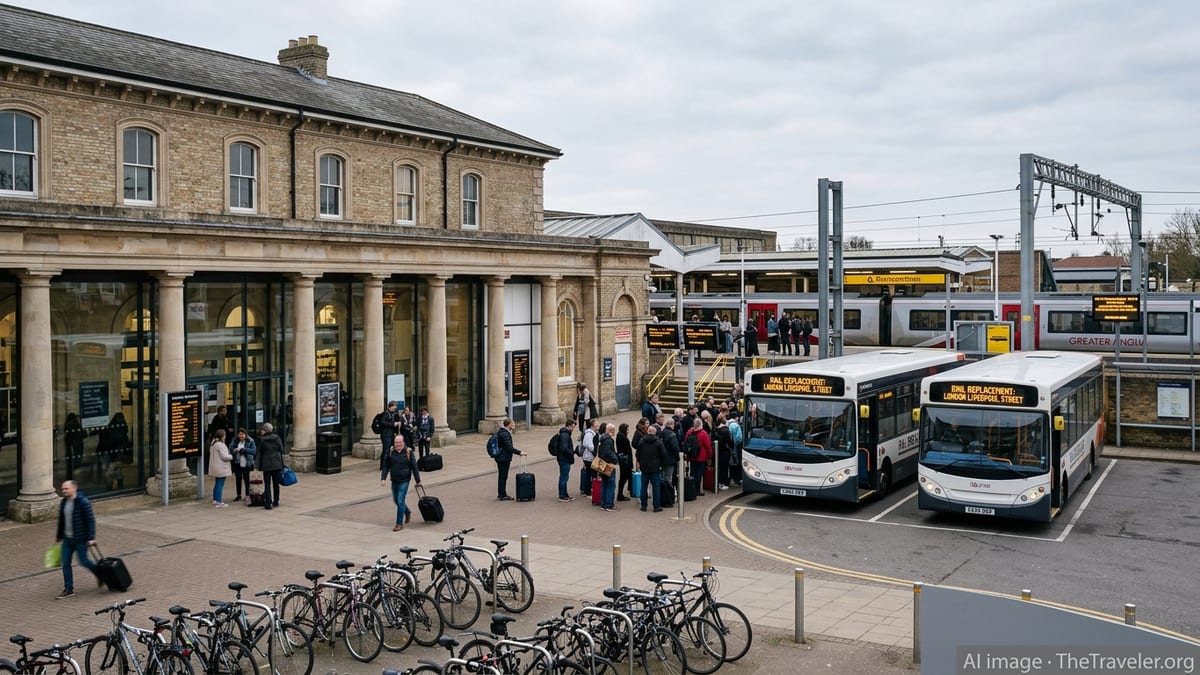
When and where the Easter 2026 disruption will hit
Publicly available timetables and engineering work notices show that major works are scheduled across the Easter bank holiday from Friday 3 April to Monday 6 April 2026. National rail information indicates that Cambridge sits at the heart of one of the more heavily affected areas, with lines to Ely and Bury St Edmunds fully closed for track and signalling upgrades over the four-day period.
National Rail’s spring disruption overview highlights Easter 2026 as a concentrated window for engineering activity nationwide, with hundreds of projects compressed into the long weekend. Within that programme, the Cambridge and wider Anglia works stand out for the scale of closures and the importance of the affected routes for commuters, airport travellers and weekend leisure trips.
According to the dedicated Easter 2026 engineering notice for Cambridge and Ely, all lines between Cambridge and Ely, and between Cambridge and Bury St Edmunds, will be shut to trains for the duration of the bank holiday. Services that normally run through this corridor will either be replaced by buses, diverted via alternative routes or curtailed short of their usual destinations.
Operators and routes most affected around Cambridge
The disruption will primarily affect Greater Anglia services that link Cambridge with London Liverpool Street, Stansted Airport, Ipswich and Norwich, as well as regional services through Ely. The engineering notice lists multiple Greater Anglia routes as amended, including trains between London Liverpool Street or Bishops Stortford and Cambridge North, between Stansted Airport and Norwich, and between Cambridge and Ipswich.
On these routes, the train plan for Easter 2026 indicates that services will either terminate at stations south of the works or run only on the open portions of line, with replacement buses filling gaps between Cambridge, Ely and Bury St Edmunds. This is expected to affect not only long-distance journeys into East Anglia but also local travel within Cambridgeshire, including trips to key interchange points such as Ely.
Great Northern and Thameslink services that serve Cambridge are not listed as having full route closures of the same scale on the Anglia-focused notice, but broader spring updates published by the operators and Network Rail point to timetable alterations and possible diversions on some cross-country and London-bound trains. Passengers using King’s Cross and St Pancras routes are advised in public travel information to check individual services carefully, as departures and stopping patterns may change at short notice to accommodate the engineering access.
With Cambridge South station expected to open later in 2026 following significant resignalling work in the area, industry commentary suggests that the Easter 2026 blockade is part of a phased upgrade package designed to modernise the busy rail corridor through the city. That strategic context, however, offers limited comfort to passengers facing crowded buses and disrupted journeys over the holiday weekend.
What the engineering works are trying to achieve
Network Rail’s national Easter briefings describe the 2026 programme as a push to renew ageing infrastructure, replace worn track and modernise signalling on key commuter and intercity routes. In Anglia, previous Easter work in 2025 focused on upgrading track and signals to improve reliability; the 2026 Cambridge and Ely blockade appears to be a continuation of that multi-year effort.
Published material on Anglia route investment points to a long-term strategy of increasing capacity around Cambridge, supporting growth in passenger demand linked to the city’s expanding science and technology cluster and preparing the network for new stations and a more intensive timetable. Enhancing signalling and track layouts around Cambridge and Ely is seen as essential to running more frequent services and reducing delays caused by infrastructure faults.
Although the immediate impact for travellers is inconvenience, rail planners argue in public documents that concentrating heavy works into a single holiday period reduces the need for repeated weekend closures across the year. By scheduling continuous possessions from Good Friday through Easter Monday, engineers can complete complex tasks that would be difficult to deliver in overnight shifts alone.
The Easter 2026 works also align with a wider national pattern: railway calendars released in advance highlight the bank holiday as one of the few points in the year when widespread access to the network is possible, because commuter demand is lower and freight flows can be more easily rerouted.
What passengers in Cambridge and Cambridgeshire should expect
For passengers, the most visible consequence of the Easter 2026 programme will be the replacement buses running between Cambridge, Ely and Bury St Edmunds, alongside amended Greater Anglia services on lines to London, Stansted Airport, Ipswich and Norwich. Journey planners for that period are expected to show longer travel times, early finishes on some routes and less frequent services, particularly in the evenings.
Weekend leisure travellers heading from Cambridge to coastal destinations or family visits in Norfolk and Suffolk may find that their usual direct trains are split into multiple legs, with a mix of trains and buses. Reports from previous Easter works in Anglia indicate that connections can be tight and some replacement buses may become crowded at peak holiday times, especially on Good Friday and Easter Monday.
Commuters who normally use the Cambridge to Ely corridor for work or education and anyone with airport journeys via Stansted over the long weekend are strongly advised by publicly available guidance to build in extra time, check for last-minute changes on the day and consider travel outside the core closure dates if possible. Those with booked advance tickets should monitor operator updates, as some services may be re-timed or re-routed.
Local residents can also expect increased road traffic around Cambridge station, Ely and key interchange points as rail replacement buses operate and more people switch to cars or coaches. Experience from earlier holiday works suggests that car parks near stations may fill quickly and bus stops for rail replacement services can become congested, particularly at busy times of day.
How to plan ahead and minimise disruption to your trip
National Rail’s spring travel pages and the Easter 2026 engineering notice for Cambridge and Ely both stress the importance of checking journeys before setting out. Passengers are encouraged to use journey planners close to their travel date, as timetables during major works can be updated repeatedly as plans are refined.
For those in and around Cambridge, the most effective strategy is to avoid essential long-distance rail travel on the core closure days from 3 to 6 April 2026 where possible, especially on routes that usually pass through Ely or towards Bury St Edmunds. Travellers who must journey during the works may wish to look at alternative rail routes via Peterborough or alternative London terminals, bearing in mind that other parts of the national network will also host engineering projects over Easter.
Published travel advice for previous Easter periods suggests simple practical steps: allow extra time for transfers between trains and buses; travel earlier in the day to reduce the risk of missed connections; and be prepared for limited catering and facilities on some replacement services. Passengers with reduced mobility are urged in public information to check accessibility arrangements for replacement buses well ahead of time.
With Easter 2026 shaping up to be a particularly intensive period of rail engineering work nationwide, Cambridge and Cambridgeshire travellers who plan ahead, stay flexible and keep a close eye on real-time information will be best placed to navigate the temporary chaos on the rails.