

More news on this day
Holidaymakers heading to Spain for Easter are being urged to prepare for disruption, as strike action by airport workers at many of the country’s busiest hubs is expected to cause delays and possible cancellations during one of the peak travel periods of the year.
Get the latest news straight to your inbox!
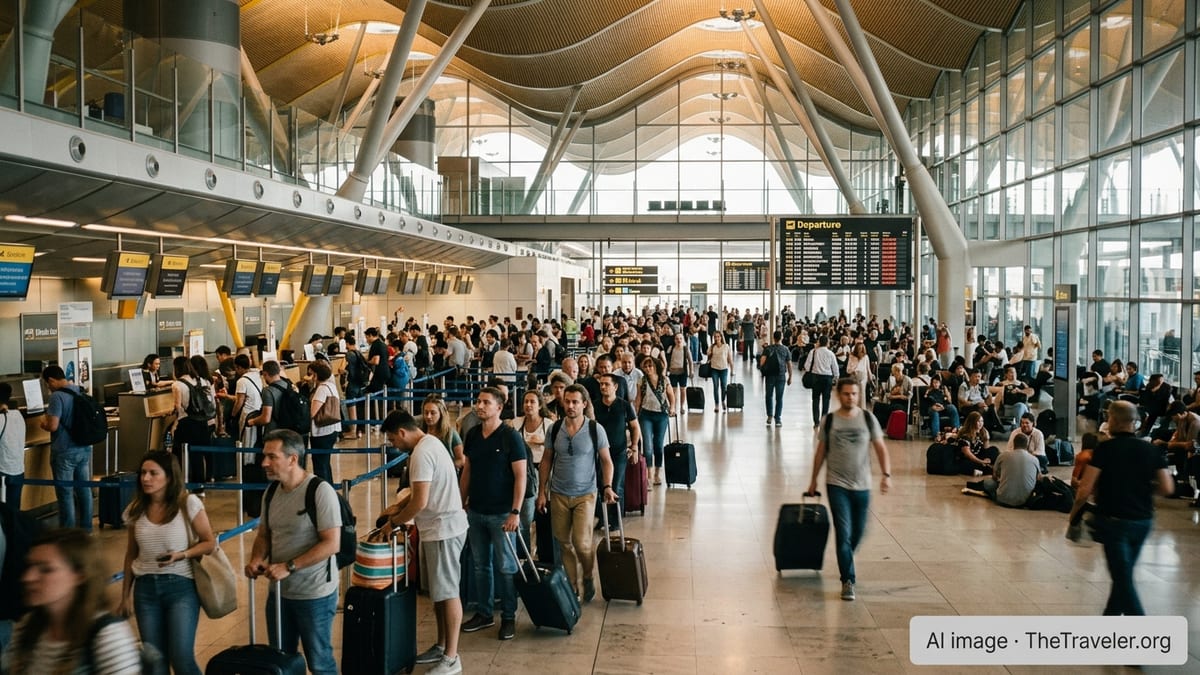
Strike Action Timed for Spain’s Easter Travel Rush
Publicly available information from union announcements and travel-industry coverage indicates that airport staff at multiple Spanish airports have called strikes coinciding with the Easter holiday period in late March and early April 2026. The walkouts are planned to overlap with Spain’s Semana Santa, when passenger volumes surge on domestic and international routes.
The industrial action is understood to involve ground handling and related airport service staff rather than airline pilots or cabin crew. These workers are responsible for key operations such as baggage handling, aircraft turnaround on the apron, and some customer-service functions on the ground. As a result, the impact is expected to be felt mainly through delays on departure and arrival, longer queues, and slower baggage delivery, even where flights are able to operate.
Reports indicate that the stoppages are scheduled across several days rather than as a single 24-hour shutdown, with partial walkouts and limited service windows likely at some airports. The fragmented nature of the strike calendar may soften the overall impact but makes it harder for passengers to predict which specific departures will be affected.
The timing coincides with a period when many European schools break for Easter holidays and when domestic travel for religious processions and family visits reaches its annual peak. Industry observers note that even minor operational disruption during Semana Santa can rapidly cascade into widespread delays because terminals and airside infrastructure are already running close to capacity.
Major Spanish Hubs Among the Airports at Risk
According to recent coverage in Spanish and international media, the strike calls affect a broad network of airports across Spain’s mainland and island regions. The list includes Adolfo Suárez Madrid Barajas and Josep Tarradellas Barcelona El Prat, the country’s two busiest hubs by passenger numbers, as well as key leisure gateways on the Mediterranean coast and in the Canary and Balearic Islands.
Among the airports flagged in reports as likely to see disruption are Málaga Costa del Sol, Alicante Elche, Palma de Mallorca, Valencia and Ibiza, which together handle tens of millions of passengers annually and serve as primary entry points for visitors from across Europe. On the islands, Gran Canaria, Tenerife Sur and Tenerife Norte, Lanzarote and Fuerteventura are also cited, raising the prospect of knock-on effects for travellers connecting via mainland hubs to popular beach destinations.
Traffic statistics compiled in recent European airport reports show continued growth at these Spanish hubs, with Madrid and Barcelona together processing well over 120 million passengers a year and strong recovery in leisure-focused airports such as Málaga and Palma de Mallorca. In this context, any reduction in ground handling capacity during a high-demand period can have an outsized impact on punctuality, as there is limited spare bandwidth in terminal facilities and ramp operations.
While airlines retain overall control of their schedules, many rely on third-party handling and service providers at Spanish airports. This makes them vulnerable to disputes between those contractors and their employees, even when airline staff are not directly involved in the industrial action.
Airlines Prepare Contingency Plans as Disruption Looms
Airlines serving Spain are monitoring the situation closely and are expected to activate standard contingency measures used during previous rounds of industrial action in Europe. These may include consolidating lightly booked services, adjusting aircraft rotations to minimise overnight disruption, and increasing turnaround times where possible to absorb delays on the ground.
Public information from recent strike episodes across the continent suggests that carriers are likely to prioritise maintaining long-haul and high-demand trunk routes, while trimming some frequencies on shorter regional sectors if staffing shortages become acute. Where contractual obligations permit, some airlines may seek alternative handling arrangements at affected airports, though capacity for such workarounds is limited during peak holiday traffic.
Travel analysts note that, even in the absence of large-scale cancellations, airport strikes often manifest as extensive same-day delays, missed connections and late baggage delivery. For passengers, the most visible effects are typically longer queues at check in, security and baggage reclaim, as well as aircraft waiting for stands, steps or pushback services once they arrive or are ready to depart.
Spain’s position as a leading European leisure destination means that any sustained disruption over Easter could ripple across airline networks in neighbouring countries, particularly where aircraft and crews are scheduled to operate multi-leg rotations linking Spanish airports with hubs elsewhere in Europe.
What Easter Travellers to Spain Should Expect
For travellers planning Easter trips to Spain, the prospect of strike action means building extra flexibility and contingency into itineraries. Industry guidance typically recommends allowing additional time at the airport for check in, bag drop and security, particularly at busy hubs such as Madrid and Barcelona where terminal congestion can quickly build during holiday peaks.
Passengers with tight connections through Spanish airports may face the highest risk of disruption. Travel advisers frequently recommend opting for longer layovers where possible, especially if a journey involves a change between Schengen and non Schengen flights that requires additional security or border checks. Those connecting to island destinations could also consider earlier departures on the same day to create a buffer against delays.
Package holiday customers are likely to receive guidance from tour operators, which can rearrange transfers and accommodation if schedules change. Independent travellers, especially those with separate tickets on different airlines, may need to pay closer attention to the terms and conditions of their bookings, including minimum connection times and rebooking rules in the event of disruption beyond the airline’s direct control.
For those yet to book, some travel professionals suggest considering less congested times of day at the busiest airports or, where feasible, flying into alternative gateways within driving distance of their final destination. However, in practice, Easter capacity on popular routes is often heavily sold in advance, limiting scope for major last minute changes.
Practical Steps to Minimise the Impact of Strikes
Consumer organisations and travel advisers generally highlight a series of practical steps that can help reduce the inconvenience caused by airport strikes. Staying informed is central: passengers are encouraged to monitor airline apps and notifications closely in the days leading up to departure and on the day of travel itself, as schedules may be adjusted at short notice.
Where airlines permit, travelling with hand luggage only can reduce reliance on baggage handling services and lowers the risk of bags being delayed if ground operations slow down. For travellers who must check bags, clearly labelling suitcases and keeping medication and essential items in carry on bags can mitigate the impact of any delay in reclaiming luggage on arrival.
Arriving at the airport earlier than usual is widely advised during strike periods, with suggested lead times often extending to three hours or more for short haul flights and up to four hours for long haul, depending on the airport and time of day. Passengers should also be prepared for longer waits at food outlets and restrooms inside terminals if congestion increases.
Travel insurance with robust disruption cover may offer additional reassurance, although policies vary significantly. Consumers are encouraged to review their coverage for missed connections, extra accommodation and transport costs. Public information from previous strike events in Europe indicates that compensation rules can depend on the cause of the disruption, the jurisdiction and the specific circumstances of each case.