

More news on this day
Travellers heading away for the Easter bank holiday are being warned to expect significant disruption across air, road and rail networks, as engineering works, industrial action and severe weather alerts combine with record getaway traffic.
Get the latest news straight to your inbox!
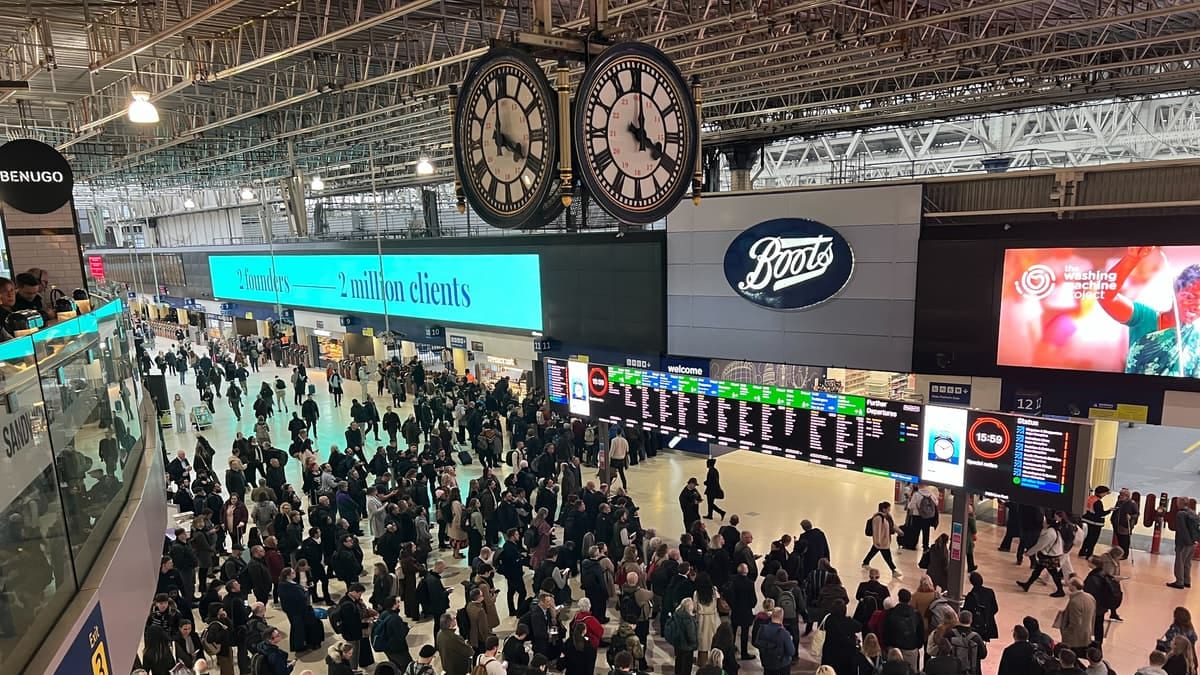
Image by London Evening Standard
Rail upgrades and closures reshape Easter routes
Rail passengers face some of the most widespread Easter bank holiday disruption in years, with extensive engineering works planned across key intercity and commuter corridors. National Rail guidance for the 2026 Easter weekend highlights a “considerable” programme of projects scheduled between Friday 3 April and Monday 6 April, including track, signalling and station upgrades on several of the country’s busiest routes.
On the West Coast Main Line, work linked to a wider multiyear investment programme will limit services and alter journey patterns at peak holiday times. Reports indicate there will be no trains between Preston and Lancaster on Easter Saturday and Sunday while new signalling and power equipment is installed, with delays also expected on sections between Preston and Carlisle as infrastructure is renewed. Passengers are being advised to plan for longer journey times and potential use of replacement buses on affected stretches.
Further south, London Euston is one of several major hubs affected by improvement work, with some long-distance and regional services diverted or terminating early over the long weekend. Separate projects in the South East, including line upgrades and station works highlighted in recent rail industry briefings, are expected to reduce capacity into and out of London on certain routes, placing additional pressure on alternative main lines and commuter services.
Localised disruption is also forecast around Oxford and the Chilterns, where published timetables show train services being replaced by buses on selected routes for up to six days from Good Friday. Transport commentators note that while the works are designed to improve reliability in the longer term, the cumulative impact over a compressed holiday period will push more travellers onto already congested roads.
Roads braced for heaviest Easter traffic in years
Britain’s strategic road network is preparing for what motoring organisations describe as one of the busiest Easter bank holiday getaways since before the pandemic, with up to 20 million or more leisure journeys expected between Good Friday and Easter Monday. Forecasts compiled by automotive and travel analysts suggest Good Friday will be the single busiest day on the roads, as day-trippers, families beginning longer breaks and those diverting from disrupted rail routes all set off.
Traffic models indicate particular pressure on sections of the M25, M1, M5 and M6, along with key holiday approaches such as the A303 towards the South West. Junctions around major urban centres including Birmingham, Bristol and the outer London orbital routes are expected to see prolonged queues, especially during late morning and mid-afternoon peaks. Analysts note that higher-than-usual domestic holiday demand and cautiousness about overseas travel are likely to intensify these patterns.
National Highways has confirmed that roadworks have been lifted on the vast majority of motorways and major A-roads for the bank holiday period, leaving more than nine in ten miles of its network free of lane closures. However, remaining schemes, emergency repairs and local authority works are still expected to create bottlenecks in some areas. Coverage from regional broadcasters has highlighted a recent surge in vehicle breakdowns around London and the South East, prompting renewed calls for drivers to carry out basic checks before joining long holiday queues.
Approach roads to major airports and ferry ports are also likely to be under strain. At Bristol Airport, guidance issued ahead of the holiday warns that the A38 and surrounding local roads routinely experience heavy congestion at peak times, potentially backing up into terminal drop-off and car park areas. The Port of Dover has similarly cautioned of extended processing times at border controls if traffic builds through the weekend.
Airports navigate strikes, weather and packed schedules
Air travel demand over the Easter bank holiday remains high, with airports across the UK preparing for passenger numbers close to or above recent records. This surge coincides with a series of operational challenges, among them targeted industrial action at specific airports and handling agents, as well as potential knock-on effects from overseas disputes and staffing pressures.
At London Gatwick, previously announced industrial action by ground handling and support staff is expected to affect a limited range of airlines over the Easter period. Airport statements and independent travel advice indicate that disruption is likely to focus on a “small number” of carriers, with passengers warned to check updated departure information and allow extra time for check-in and baggage processing. Other airports are operating without major planned strikes but remain vulnerable to staff shortages, air traffic control constraints and weather-related delays.
Beyond the UK, strikes by ground staff at several major Spanish airports scheduled from the start of the main Easter getaway period are adding uncertainty for holidaymakers connecting through or flying to popular Mediterranean destinations. Consumer-rights and flight-compensation specialists report that while such action does not always trigger statutory compensation, passengers should still be entitled to rebooking, refunds or basic assistance if flights are heavily delayed or cancelled.
Industry data shared in recent travel briefings points to Good Friday as a particular pressure point for aviation, with more scheduled departures and arrivals than on any other single day of the holiday weekend. Airlines and airport operators are encouraging passengers to arrive earlier than usual, complete as many formalities as possible online and be prepared for longer queues at security and border control, especially at peak early-morning and evening waves.
Severe weather warnings threaten further disruption
Adding to planned works and operational pressures, forecasters have issued strong wind warnings covering large parts of the UK for the core Easter bank holiday period. Weather alerts published in recent days indicate that gusts could reach damaging speeds, particularly across Scotland, Northern Ireland, North Wales and parts of northern England from Saturday evening through to midday on Easter Sunday.
Meteorologists note that these conditions could lead to difficult driving on exposed routes, with a heightened risk of overturned high-sided vehicles, fallen branches and temporary bridge or road closures. Previous windstorms in recent winters have prompted full closures of cross-border routes and major estuary crossings at short notice, raising concerns that similar action could be necessary if forecast gusts materialise over the busy getaway weekend.
Rail, ferry and air services may also be affected. Publicly available guidance from transport operators and national forecasters suggests that strong winds and heavy rain can force speed restrictions on rail lines, temporary suspension of some coastal or cross-channel ferry departures and diversions or go-arounds for aircraft attempting to land at exposed airports. Passengers are being encouraged to monitor real-time updates closely, especially for journeys scheduled on Saturday night and Easter Sunday morning.
Travel commentators warn that the interaction of severe weather with already altered timetables and full services could amplify disruption. Reduced railway capacity due to engineering works, for example, leaves fewer options for rerouting services if lines are blocked by fallen trees or overhead line damage, while congested roads make it harder for replacement buses to keep to schedule when trains are cancelled.
How travellers can navigate the Easter getaway
With disruption expected across all major modes, transport planners and travel advisers are urging passengers to build additional resilience into their Easter journeys. Practical recommendations in recent travel guides include travelling outside peak hours where possible, checking for planned works on both outward and return legs, and allowing substantial buffer time for connections between different forms of transport.
For rail users, official bank holiday advice from operators stresses the importance of consulting journey planners before departure and checking again on the day for late changes. Replacement buses, platform alterations and short-notice cancellations are more common during intensive engineering programmes, and seating on diverted services can be limited as multiple trains are combined into a single formation. Travellers with advance tickets are being reminded to confirm whether their reservations are valid on alternative services if disruption occurs.
Motorists are being encouraged to plan routes that incorporate potential escape options if traffic builds on the most popular motorways, and to factor in extended breaks to avoid fatigue in slow-moving queues. Guidance from motoring organisations highlights the benefits of travelling early in the morning or later in the evening, carrying water and basic supplies in case of lengthy delays, and checking fuel prices and availability before setting out on longer rural routes.
At airports, passengers are advised to complete check-in and baggage drops as early as permitted, prepare for enhanced security screening, and keep airline apps or text alerts switched on for up-to-date gate and delay information. With the combination of strikes, weather and volume leaving little slack in the system, analysts suggest that flexibility, patience and careful pre-planning will be essential for anyone attempting to make the most of the Easter bank holiday break.