

More news on this day
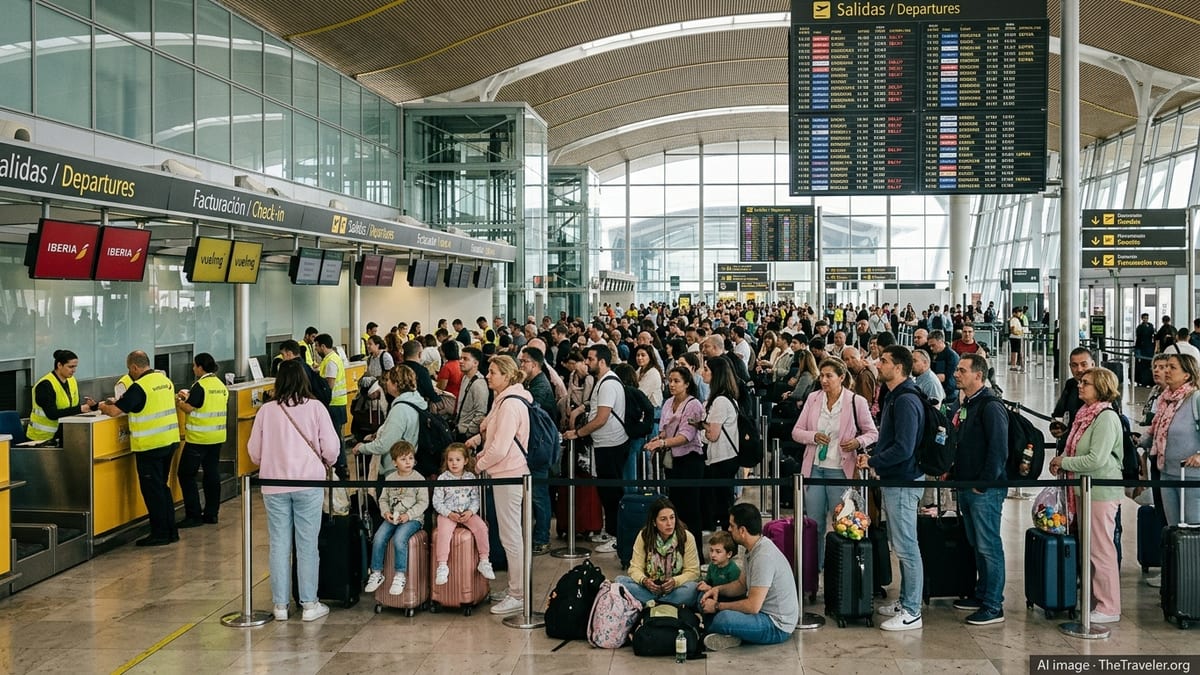
Travellers heading to Spain for Easter face potential disruption as long-running airport ground staff and baggage handler strikes intersect with one of the busiest travel periods of the year, raising the risk of delays, missed connections and baggage backlogs across the country’s main holiday gateways.
Get the latest news straight to your inbox!
Where and when disruption is most likely
Industrial action affecting airport ground handling and baggage services has been concentrated at Spain’s busiest tourist hubs, including Madrid, Barcelona, Málaga, Alicante, Valencia, Palma de Mallorca, Ibiza, Tenerife South, Lanzarote, Girona, Santiago de Compostela and Gran Canaria. Publicly available information indicates that these walkouts, many linked to contractor Azul Handling and other service providers, have been scheduled repeatedly across peak leisure days and are set to shadow operations through the end of March, overlapping with Holy Week getaway traffic.
Holy Week in 2026 runs from Palm Sunday on 29 March through Easter Monday on 6 April, a period when Spanish airports typically see some of their highest passenger volumes outside the core summer season. Previous traffic data released by airport operator Aena for Semana Santa showed tens of thousands of additional flights across its network compared with non-holiday weeks, underlining how even limited staffing shortfalls at check in, security or baggage can quickly cascade into wider disruption.
The current strike calendar focuses on specific time windows on high-demand days such as Fridays, Sundays and key holiday dates, when outbound and inbound flows are most intense. While minimum service rules in Spain oblige operators to maintain a significant share of scheduled flights, past strike waves have still produced long queues, slower baggage delivery and isolated cancellations at some of the same airports now preparing for the Easter surge.
For travellers, the risk is not limited to flights that originate or terminate in Spain. Low cost carriers in particular rely on fast aircraft turnarounds and tight rotations across Europe, so ground handling delays in Madrid, Barcelona or Málaga can ripple outward to services linking the United Kingdom, Ireland, Germany and the Nordic countries with Spanish coastal and island destinations.
How Spain’s minimum service rules shape the impact
Spain’s transport rules require minimum service levels during industrial action in essential sectors, including aviation. In earlier airport strikes, decrees have set thresholds above 80 percent of scheduled flights at major hubs, aiming to protect core connectivity while allowing staff to strike. Public documentation from previous walkouts shows minimums around 86 percent at Barcelona and close to 90 percent at Málaga on some strike days, limiting the number of flights that can be cancelled outright.
These protections mean widespread, across-the-board cancellations during Easter are considered unlikely at the largest Spanish airports. Instead, disruption is more likely to appear as slower-moving check in and bag drop queues, longer waits at baggage reclaim and occasional knock-on delays where airlines struggle to turn aircraft around within their scheduled ground time.
Ground handling companies and airlines have highlighted contingency measures such as reallocating staff, using alternative service providers at some airports, and encouraging greater use of self-service kiosks to keep holiday traffic flowing. However, published coverage of last year’s peak-summer walkouts indicates that even with such measures in place, some travellers still encountered queueing times well above normal, particularly at the height of the day’s strike windows.
Because many of the announced strikes are limited to certain hours rather than full-day shutdowns, the exact impact can vary significantly from flight to flight. Early morning departures, late evening arrivals or services scheduled directly within strike windows are typically more exposed, while flights outside those windows may move more smoothly if the day’s operations have not already fallen behind.
Airports and airlines most exposed to Easter pressure
Airports that combine heavy holiday demand with a high share of leisure carriers are likely to feel the greatest strain if staffing is reduced. Barcelona El Prat, Málaga Costa del Sol, Alicante Elche, Palma de Mallorca, Tenerife South and Lanzarote rank among Spain’s key gateways for Northern European tourists seeking sun destinations over Easter, and many are directly referenced in recent strike notices and travel advisories.
Ryanair, Europe’s largest low cost airline, has been particularly tied to the disputes involving Azul Handling, which provides ground services at more than twenty Spanish airports. Public statements from the airline have repeatedly downplayed the operational impact of these strikes, pointing to Spain’s minimum service rules and alternative arrangements. Even so, traveller reports and specialist travel bulletins from last summer’s actions documented scattered delays, longer check in lines and occasional baggage issues on some routes.
Legacy and holiday carriers that rely on the same airport infrastructure can also be affected even if their own staff are not on strike. Shared security lanes, baggage systems and stands mean that any bottleneck in one part of an airport can quickly spill over into others, especially during Easter peaks when spare capacity is limited. Flights connecting through Madrid Barajas or Barcelona El Prat to long haul destinations may be particularly sensitive to even modest departure delays.
Regional and island airports such as Ibiza, Girona, Santiago de Compostela and Gran Canaria, which feature in several strike-related summaries, face an additional challenge: fewer daily frequencies on many routes. When a flight is significantly delayed or cancelled from these smaller gateways, options for same-day rebooking can be more limited than at Madrid or Barcelona, leaving travellers more dependent on hotel accommodation and next-day departures.
What travellers can do before departure
Travellers with Easter bookings to Spain are being advised by consumer bodies and travel specialists to prepare as if delays were likely, even if their specific flight is not yet flagged as disrupted. Public guidance typically emphasises carrying essential items, medication and at least one change of clothes in hand luggage, reducing reliance on checked bags that may be slowed by ground handling disputes.
Arriving at the airport earlier than usual is another consistent recommendation. For short haul European flights during Easter, that can mean aiming for at least three hours before departure at large hubs such as Madrid, Barcelona, Málaga or Palma de Mallorca, and longer for long haul itineraries or for families travelling with children. Earlier arrival increases the chances of clearing any extended check in or bag drop queues while still leaving time for security and boarding.
Travellers are also urged to monitor their booking closely in the week before departure and on the day of travel. Airline apps, flight tracking tools and airport social media feeds can provide early indications of emerging delays, gate changes or baggage issues. Travel news outlets have been publishing rolling updates on strike calendars, and package holiday operators often push notifications when schedules are adjusted or consolidations are required.
Where possible, travel insurers recommend building extra buffer time into itineraries that involve connections, especially when transferring between separate tickets. Choosing longer connection windows, avoiding the last flight of the day on critical legs, and considering more direct routings can all help limit the risk that a localised delay at a Spanish airport turns into a missed onward flight or an unplanned overnight stay.
Know your rights if flights are delayed or cancelled
Under European passenger rights rules, travellers departing from or arriving in the European Union on EU carriers benefit from protections in the event of significant delay, cancellation or denied boarding. Public information from consumer agencies in Spain and across the bloc notes that compensation may be payable in some circumstances, depending on factors such as notice period, length of delay and whether the disruption is deemed within the airline’s control.
Even when strikes are involved, airlines are generally required to offer re-routing or refunds when flights are cancelled, and to provide care such as meals and accommodation during long delays, especially when passengers are stranded overnight. Official guidance stresses the importance of keeping boarding passes, booking confirmations and receipts for reasonable out-of-pocket expenses to support any later claim.
Travellers booking for Easter are encouraged to review the terms of both their airline ticket and any travel insurance policy, paying attention to how each treats strike-related disruption. Some policies classify industrial action as a known risk if announced before purchase, which can affect eligibility for certain benefits, while others include specific cover for missed connections or extended delays caused by labour disputes.
Given the evolving nature of Spain’s airport strikes and the high demand typical of Easter travel, experts recommend checking for updated information in the days before departure and keeping flexible plans where possible. With careful preparation, many travellers can still complete their Easter journeys, but the prospect of queues, schedule changes and slower baggage handling remains a key consideration for anyone flying through Spain’s busiest airports this season.