

More news on this day
Easter holidaymakers across Europe and the Middle East faced severe disruption as British Airways and Pegasus Airlines struggled to keep key routes running amid bad weather, airspace restrictions and heavy holiday demand.
Get the latest news straight to your inbox!
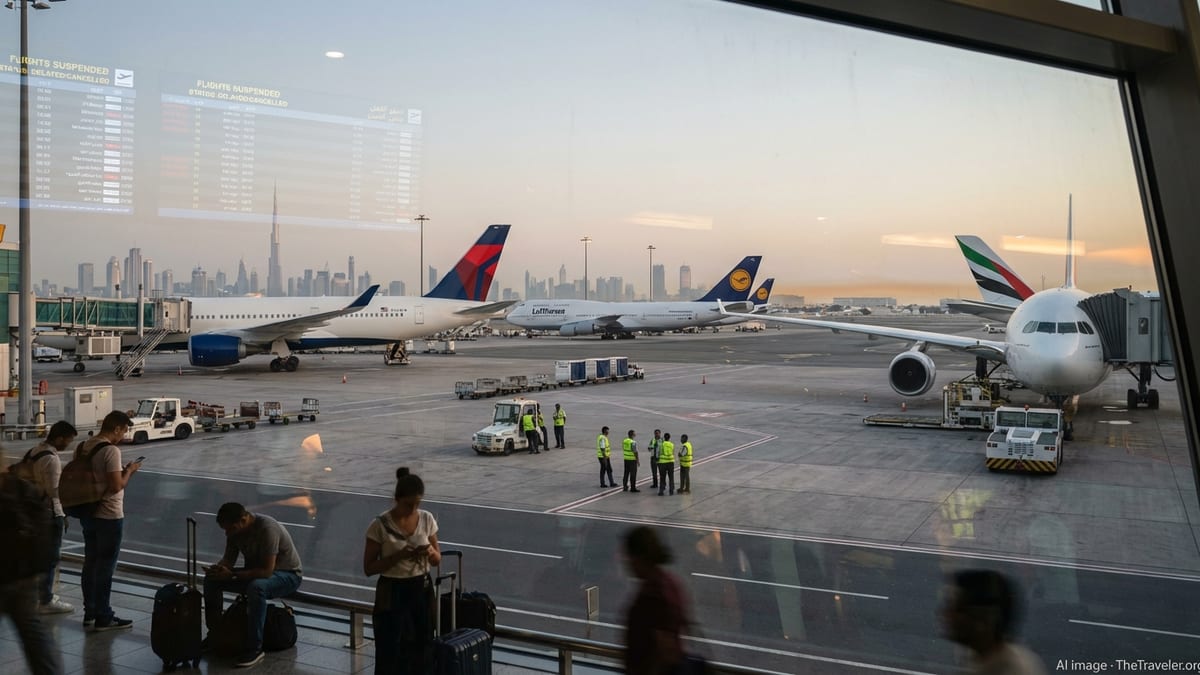
Holiday Getaways Collide With Fragile Flight Networks
The Easter period in late March and early April 2026 has emerged as one of the most challenging travel windows of the year, with airlines already under pressure from storms, strike threats and lingering schedule instability. Industry-focused coverage in the United Kingdom indicates that Easter 2026 coincides with peak school holiday traffic, pushing airports and carriers close to capacity before any disruption begins.
Against this backdrop, British Airways services at London Heathrow have been hit by rolling delays and cancellations tied to wider European operational problems. Aviation tracking analyses for late March report hundreds of delays across major hubs such as Heathrow, Paris Charles de Gaulle and Zurich, with British Airways among the carriers most affected on long haul and European feeder routes.
In Türkiye, Pegasus Airlines has faced its own Easter-time strain. Adverse weather across key coastal and regional airports and congestion at Istanbul’s Sabiha Gökçen Airport have combined with a series of recent operational challenges, creating bottlenecks for domestic and international passengers heading to and from Europe for the holidays.
The result for many travelers on both carriers has been missed connections, last‑minute schedule changes and overnight stays far from their intended Easter destinations, reinforcing concerns about the resilience of airline networks during peak periods.
British Airways Disruption Ripples Across Heathrow and Beyond
Publicly available operational summaries for late March show that Heathrow experienced significant knock‑on delays after a series of bad weather systems and staffing issues hit European aviation. One industry data report counted thousands of delayed flights across the continent on a single day in late March, with British Airways services from Heathrow among those affected, particularly on routes that feed long haul departures to Asia and North America.
Travel industry analysis suggests that British Airways has had to juggle aircraft availability and crew positioning as the disruption spread, creating a cascade of schedule changes. Some cancellations have been concentrated on shorter European sectors, where aircraft can be redeployed or rotations reset, but passengers using these flights to connect onto long haul services have experienced extended rebooking windows and, in some cases, overnight stays.
Consumer rights and aviation law commentators note that many of the Easter‑period cancellations fall under Europe’s compensation regime for airline‑controlled disruption, although weather‑related delays and air traffic control congestion can complicate claims. Passengers who accepted alternative flights or vouchers may find that their rights to cash compensation depend on the precise reason for the disruption recorded in airline systems.
For Heathrow itself, the busiest UK hub, the Easter problems have underscored how quickly small operational failures at a dominant carrier can spread across the wider airport environment. Long queues at security, overflowing departure lounges and baggage delays have been widely reported on social media as the holiday weekend progressed.
Pegasus Faces Weather and Airspace Pressures in Türkiye
In Türkiye, Pegasus Airlines has contended with a different but equally disruptive mix of pressures. National media reports from late March describe severe weather affecting Istanbul and several major resort regions, with low visibility and heavy rainfall prompting restrictions at Sabiha Gökçen Airport and other key gateways.
On one recent stormy day, Turkish aviation coverage recorded dozens of cancellations by carriers operating from Sabiha Gökçen, including a substantial number attributed to Pegasus. Some flights were diverted to Istanbul Airport, while others were simply scrubbed, leaving passengers to queue for rebooking and hotel assistance as holiday departures unravelled.
These weather problems have landed on top of wider regional airspace complications. In early March, Turkish carriers including Pegasus suspended multiple routes to parts of the Middle East following airspace closures tied to geopolitical tensions. Publicly available statements at the time showed that services to destinations such as Lebanon, Syria, Iraq, Iran and Jordan were paused, reshaping Pegasus’s route network just weeks before the Easter rush.
Together, the storms, diversions and regional closures have reduced flexibility in Pegasus’s schedule. Aircraft and crews that would usually be able to cover for delays have been more tightly constrained, meaning that relatively small timetable changes can rapidly escalate into long waits and missed onward connections for Easter travelers.
Knock‑On Effects for Key Holiday Routes
The combined disruption at British Airways and Pegasus has had an outsized impact on certain high‑demand corridors this Easter. British Airways is a crucial connector between UK regional airports, London Heathrow and long haul leisure destinations in North America, Africa and Asia. When short‑haul feeder flights are delayed or cancelled, families heading to popular holiday locations can find themselves stuck in London or forced to route via alternative hubs.
Similarly, Pegasus plays a central role for cost‑conscious travelers moving between European cities and coastal destinations in Türkiye, as well as for those reaching onward points in the Middle East and Central Asia. Cancellations on domestic Turkish legs and weather‑related disruptions at Istanbul can sever these itineraries, particularly for passengers who book separate tickets to save on fares.
Financial commentary has highlighted that repeated travel disruption in March and April has potential implications for listed airline groups, including the parent company of British Airways. Analysts note that prolonged operational instability during a key holiday period may weigh on customer satisfaction scores and booking patterns later in the year, even if the immediate revenue impact is limited.
For tourism‑reliant destinations, unstable air links at the start of the spring season are also a concern. Hoteliers and local tourism operators in both the Mediterranean and the Middle East are monitoring the situation closely as they attempt to forecast arrivals and staffing needs for the coming summer.
What Easter Travelers Can Expect Next
With school holidays in England and Wales scheduled to run through the first half of April, industry forecasts suggest that pressure on British Airways and Pegasus operations is unlikely to ease immediately. Travel advisories focused on the Easter period continue to warn of possible delays related to staffing shortages, weather systems and residual congestion from earlier disruption.
Consumer advocates are encouraging passengers to build in additional buffer time for connections, travel with essential items in hand luggage and monitor flight status repeatedly in the days and hours before departure. Experience from recent storms and airspace closures indicates that airlines may adjust schedules at short notice as they attempt to stabilise operations.
Publicly available guidance from aviation regulators and passenger organisations also stresses the importance of understanding compensation rights. Travelers affected by cancellations or long delays on British Airways and Pegasus should retain boarding passes, receipts and written communication from the airlines, which may be required when filing claims under European or UK rules.
For now, the Easter disruptions involving British Airways at Heathrow and Pegasus across Türkiye illustrate how quickly a mix of weather, geopolitical tensions and capacity constraints can converge. As peak summer approaches, the events of this holiday weekend are likely to inform both airline planning and passenger travel strategies for the rest of 2026.