

More news on this day
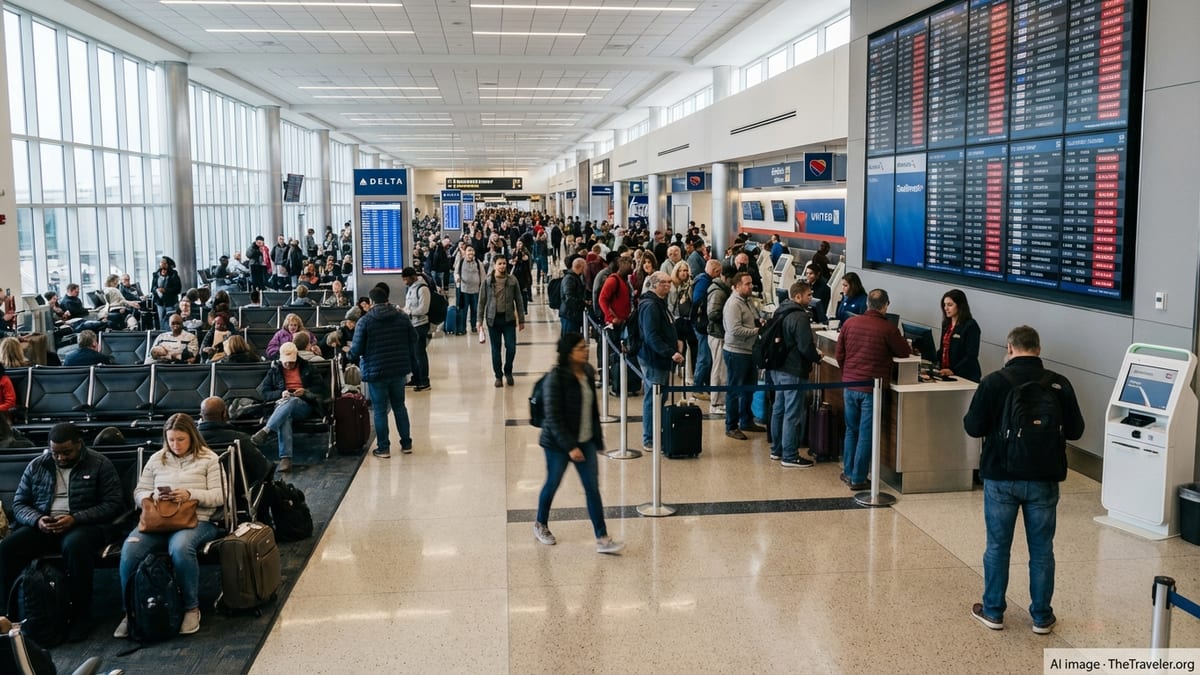
Thousands of air travelers across the United States faced abandoned itineraries and overnight airport stays on Easter Monday, as major hubs from Los Angeles and Atlanta to Boston, Chicago, Houston, Orlando and New York reported hundreds of cancellations and more than four thousand delays affecting nearly every major domestic carrier.
Get the latest news straight to your inbox!
Network Under Strain After Holiday Surge
Flight-tracking data and published aviation coverage for April 6 indicate that U.S. airlines collectively scrubbed just over 200 departures while delaying more than 4,000 additional flights, creating a rolling wave of disruption across the national network. The pattern built on an already difficult Easter weekend in which over a thousand flights were cancelled and tens of thousands were delayed, leaving carriers with little spare capacity to absorb new problems.
Major hubs including Los Angeles International, Hartsfield–Jackson Atlanta, Boston Logan, Chicago O’Hare, Houston’s main airports, Orlando International and New York’s LaGuardia and JFK all reported clusters of delayed departures and arrivals through the day. Reports indicate that even modest weather constraints and air traffic flow programs at a few key nodes were enough to trigger widespread knock-on effects, as tightly timed schedules left minimal room to re-route aircraft and crews.
Additional coverage from industry and travel outlets describes Easter 2026 as one of the most heavily traveled spring periods since before the pandemic, with planes operating at or near capacity across many routes. That surge has amplified the impact of every scrubbed departure: when an aircraft is pulled from service or a long delay develops, there are few empty seats elsewhere in the system for displaced passengers.
Airlines Hit Across the Board
According to publicly available tracking boards and news reports, the strain has been widely shared across the country’s largest airlines. American Airlines, Delta Air Lines, Southwest Airlines, United Airlines, Spirit Airlines, Alaska Airlines and Frontier Airlines all appeared repeatedly among the carriers posting clusters of late or cancelled flights at the busiest hubs.
Coverage of operations at airports such as Chicago, Dallas, Atlanta, Orlando, Miami and San Francisco over the long weekend shows that no single airline has been immune from cascading disruptions. Legacy network carriers have struggled with congested hubs and crew repositioning, while low cost and ultra low cost carriers have been squeezed by the limited number of spare aircraft available when a technical or weather issue takes a plane out of rotation.
Industry analyses published in recent months highlight how interdependent U.S. airline schedules have become. Code-share arrangements and banked hub structures can magnify localized issues, meaning that a relatively small number of cancellations or congestion at one airport can quickly ripple into missed connections and late arrivals at distant cities.
Regional Flashpoints From Coast to Coast
On the West Coast, reporting from California indicates that airports including Los Angeles and San Francisco saw persistent gate and runway congestion over the holiday period, with dozens of late-running flights compounding each other across the day. Even when outright cancellations remained limited on some routes, rolling delays left passengers facing missed connections to destinations such as New York, Chicago and international gateways.
In the Southeast, Atlanta and Orlando emerged as particular hotspots over Easter weekend and into Monday. Aviation data cited in media coverage show that both airports have recorded large numbers of late departures as storms and low cloud at times forced the use of traffic management initiatives designed to meter takeoffs and landings. Those measures, while intended to keep operations safe and orderly, also slowed the rate at which airlines could clear backlogs of waiting flights.
Farther north, New York’s LaGuardia and JFK, along with Boston Logan, have reported average delays stretching toward or beyond an hour on some departure banks during the busiest periods. Travelers connecting through these airports onto long-haul services have been among the most vulnerable, with missed transatlantic or transcontinental flights often requiring rebooking a full day or more later.
Why a Few Hundred Cancellations Can Strand Thousands
Although nationwide tallies of roughly 200 cancelled flights may appear relatively modest in the context of the thousands of services that operate daily in U.S. skies, experts and regulators have long warned that such numbers can still leave large numbers of passengers stranded. A single cancelled narrow-body aircraft can disrupt the plans of well over 150 people, while a scrubbed wide-body service on a busy corridor may affect hundreds more.
U.S. Department of Transportation data on typical load factors and airline schedules show that major carriers now operate with extremely high seat occupancy, particularly during peak holiday periods. When a flight is removed from the schedule, those passengers must compete for limited spare capacity on remaining departures, often across multiple carriers. After a weekend of heavy disruption, the number of customers already seeking new itineraries multiplies rapidly.
Academic research into delay propagation across the U.S. aviation network has also documented how late-arriving aircraft and crews can create a chain reaction of schedule slippage through the day. Once early-morning banks are affected, subsequent rotations face growing risk of further delay, especially where aircraft are scheduled to operate four or more legs in a single day.
What Stranded Passengers Can Expect
For travelers already en route, publicly available guidance from federal transportation agencies notes that passengers are entitled to a refund when a flight is cancelled and they choose not to travel, regardless of the underlying cause. However, compensation for hotel stays, meals or alternative transport in the United States typically depends on individual airline policies rather than uniform national rules.
Airline customer service pages and recent regulatory discussions encourage passengers to monitor flight status frequently through carrier apps, enroll in text or email alerts, and seek rebooking options as early as possible when delays start to mount. Same-day changes, stand-by lists and reroutes through less congested hubs can sometimes shorten disruptions, but options are often limited once large-scale delays spread through peak periods.
Consumer advocates also stress the importance of documenting expenses, retaining boarding passes and confirmation emails, and reviewing the terms of credit card travel protections or independent travel insurance. In a volatile operating environment, such records can be critical when pursuing refunds or reimbursement for incidental costs once immediate travel emergencies have passed.