

More news on this day
A volatile storm pattern colliding with one of the year’s busiest getaway periods has exposed deep vulnerabilities in North America’s travel system, as Easter-weekend disruptions cascaded across airlines, highways and power grids from the Midwest to Atlantic Canada.
Get the latest news straight to your inbox!
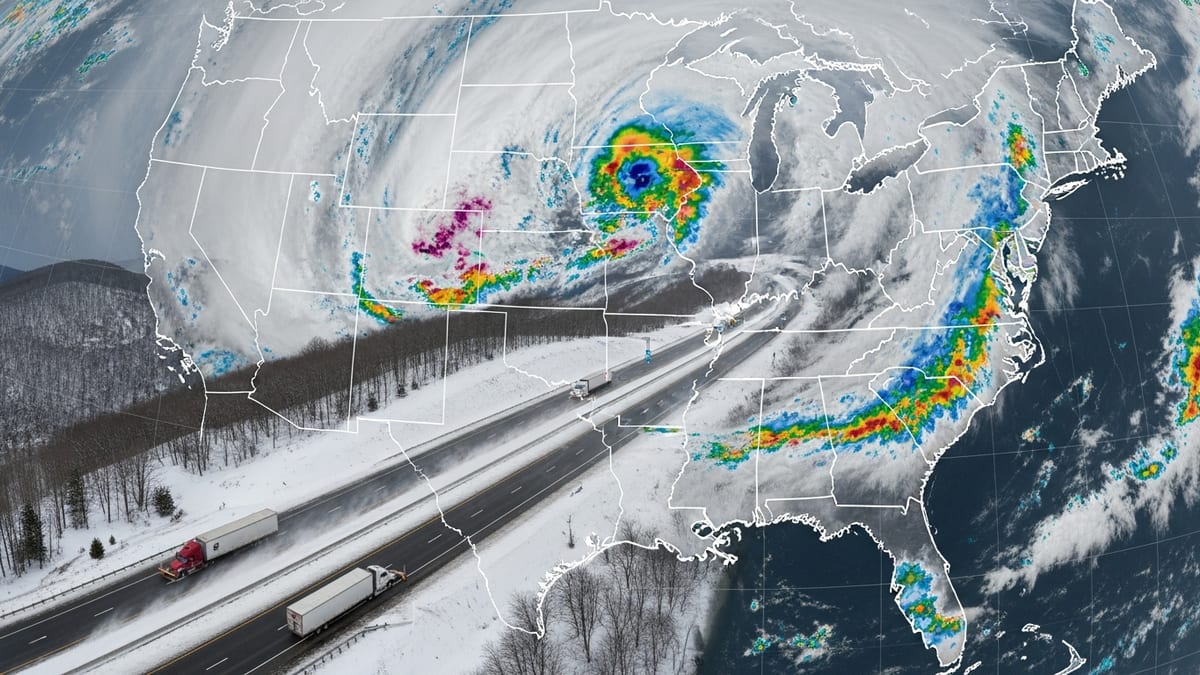
A Holiday Travel Surge Meets a Hyper-Active Storm Track
The 2026 Easter period arrived on the heels of an already punishing late-winter season, with blizzards, severe thunderstorms and tornado outbreaks repeatedly striking major population centers. Insurance and weather data point to a late March outbreak from March 29 to March 31 that inflicted billions of dollars in economic losses across the United States, setting the stage for a fragile transportation network just as holiday travel peaked.
By the final week of March, aviation trackers were reporting thousands of delays and hundreds of cancellations on multiple days as severe storms marched from the Plains into the Midwest and Northeast. Several analyses note that the United States aviation grid logged more than 3,000 delays and over 100 cancellations on March 31 alone, with flash flooding, lightning and low visibility disrupting operations at key hubs such as Chicago, New York and Boston.
Multiple airlines implemented rolling travel waivers around Chicago O’Hare and East Coast airports through mid and late March, effectively acknowledging that schedules would likely be unreliable as convective storms pulsed across the region. As Easter weekend began, many carriers were still working through crew and aircraft imbalances left over from earlier weather episodes.
On the ground, interstates across the Upper Midwest and central Canada faced a mix of lingering snow, freezing rain and standing water, compounding the risk for drivers heading to family gatherings or vacation departures. Prior winter storms had already forced temporary closures along portions of major routes such as I-29 and I-90 and left pockets of the region wary of another round of hazardous travel.
Airports from Miami to Toronto Buckle Under Cascading Disruptions
Air travel impacts over the Easter period were felt across an unusually wide geographic swath, from sun destinations in Florida to snowbound hubs in central Canada. At Miami International Airport, TheTraveler.org’s own reporting documented one of the airport’s busiest Easter travel weekends in years, with passenger volumes surging between March 28 and March 31 and social media feeds showing long lines, packed gate areas and clusters of delayed departures to domestic and Latin American cities.
Further north, repeated March storm systems had already pushed airports such as Chicago O’Hare, New York’s LaGuardia and Boston Logan into near-gridlock, with consumer-rights sites tallying well over a thousand delays on some peak days. Ground-stop programs and extended arrival holds rippled through the network, sending disruption into secondary airports in Denver, Houston, San Francisco and Las Vegas as aircraft and crews struggled to get back in position.
Canada’s major hubs then faced a fresh wave of turmoil as unsettled Easter weather lingered into early April. Business media coverage on April 5 indicated that severe late-season winter conditions triggered at least 423 flight delays and more than 80 cancellations in a single day across Canadian airports, with Toronto, Montreal, Vancouver and Halifax especially affected. Air Canada recorded dozens of cancellations and scores of delays, while other carriers wrestled with icy tarmacs, snow removal and de-icing queues.
The result was a cross-border patchwork of disruptions that stranded travelers in multiple countries at once. Passengers attempting to connect between U.S. and Canadian cities, or onward to Europe and the Caribbean, often encountered misaligned schedules and missed connections as airlines struggled to maintain predictable flows through their hubs.
Storms Reveal Structural Weaknesses in Airline and Infrastructure Planning
Although the immediate trigger for the Easter chaos was weather, travel analysts note that the scale of disruption reflects deeper structural issues in North America’s transport network. Several recent storm events in March produced cancellation and delay totals comparable to some of the worst days of the early pandemic era, despite far lower public-health constraints on operations.
One recurring theme is the limited margin for error built into airline schedules. Operational data from late March show ultra-tight aircraft turnarounds amplifying even modest thunderstorms into network-wide delays, with some carriers posting hundreds of late departures but very few cancellations. That pattern suggests a reluctance to proactively thin schedules, even when forecasts point to significant storm potential over multiple days.
Infrastructure stresses are evident as well. Airport surface systems, including de-icing capacity, ramp operations and ground transportation links, were repeatedly strained by the combination of heavy precipitation and strong winds. In some metropolitan areas, prior winter storms had already weakened power infrastructure, and new rounds of high-impact weather again produced outages affecting both airport facilities and nearby communities.
These pressures come amid a broader shift toward more volatile shoulder-season weather in North America, with late-winter blizzards, severe convective outbreaks and rapid freeze-thaw cycles increasingly overlapping with school holidays and religious travel peaks. Experts who study weather and risk emphasize that recurring patterns of multi-day disruption are no longer rare anomalies but emerging seasonal features.
Travelers Bear the Brunt While Protection Rules Lag Behind
For travelers, the Easter storm cycle translated into missed family events, abandoned vacations and unexpected overnight stays in crowded terminals. Consumer-oriented legal and advisory sites catalogued cases of travelers enduring delays of three hours or more, sometimes without clear information about the root cause or expected timeline for recovery.
Regulatory protections remained uneven across the continent. In Canada, passenger rights rules provide for compensation in certain delay and cancellation scenarios, but the classification of events as weather-related or within the airline’s control continues to be contested. In the United States, federal rules focus more heavily on refunds after cancellations than on compensation for lengthy delays, leaving many passengers reliant on airline goodwill policies, credit-card benefits or travel insurance for relief.
The Easter disruptions also highlighted how quickly irregular operations can overwhelm customer-service channels. Online reports described multi-hour waits for phone support, limited availability of same-day rebooking and inconsistent application of travel waivers between carriers and routes. Some advisory outlets urged travelers to lean on real-time flight-tracking tools and to monitor inbound aircraft movements, noting that public departure boards at times displayed optimistic departure times for flights whose planes had not yet reached the airport.
Ground travelers saw fewer formal protections. Highway closures and treacherous conditions in snow and ice zones left motorists facing detours or extended stops at roadside accommodations, with limited recourse beyond standard insurance coverage. Power outages in several regions added another layer of uncertainty for those relying on electric vehicle charging networks during long-distance trips.
Calls Grow for Climate-Resilient Planning Before the Next Holiday Peak
In the aftermath of the Easter storm turmoil, transport and climate specialists are renewing calls for a more systematic approach to weather resilience across North America’s travel sector. Recent winter and early-spring events, including historic blizzards and multi-day thunderstorm outbreaks, have repeatedly strained airline and highway systems that were optimized for efficiency rather than redundancy.
Proposals emerging in public discussions include more conservative scheduling around high-risk periods, additional reserve aircraft and crew capacity, and upgrades to airport drainage, de-icing and backup power systems. Urban planners and utility analysts point to the need for hardening energy and communications networks that support both aviation and ground transportation, particularly as mixed winter and spring hazards become more common.
For individual travelers, the Easter episode is reinforcing a shift in behavior that has been building since the pandemic. Advice circulating through consumer publications and online communities now routinely recommends booking early-morning flights, building extra buffer days into important trips and prioritizing nonstop routes over complex connections during storm-prone seasons.
With the next wave of summer and holiday travel only months away, the Easter storm disruption is being viewed as another warning signal that the continent’s travel grid remains highly exposed to weather shocks. How airlines, regulators and infrastructure operators respond in the coming months may determine whether future holiday weekends play out as routine peaks or repeat episodes of rolling gridlock.