

More news on this day
Severe spring storms over the Easter holiday have rippled through airports across the United States and Canada, disrupting thousands of flights and underscoring how vulnerable North America’s travel network remains to increasingly volatile weather.
Get the latest news straight to your inbox!
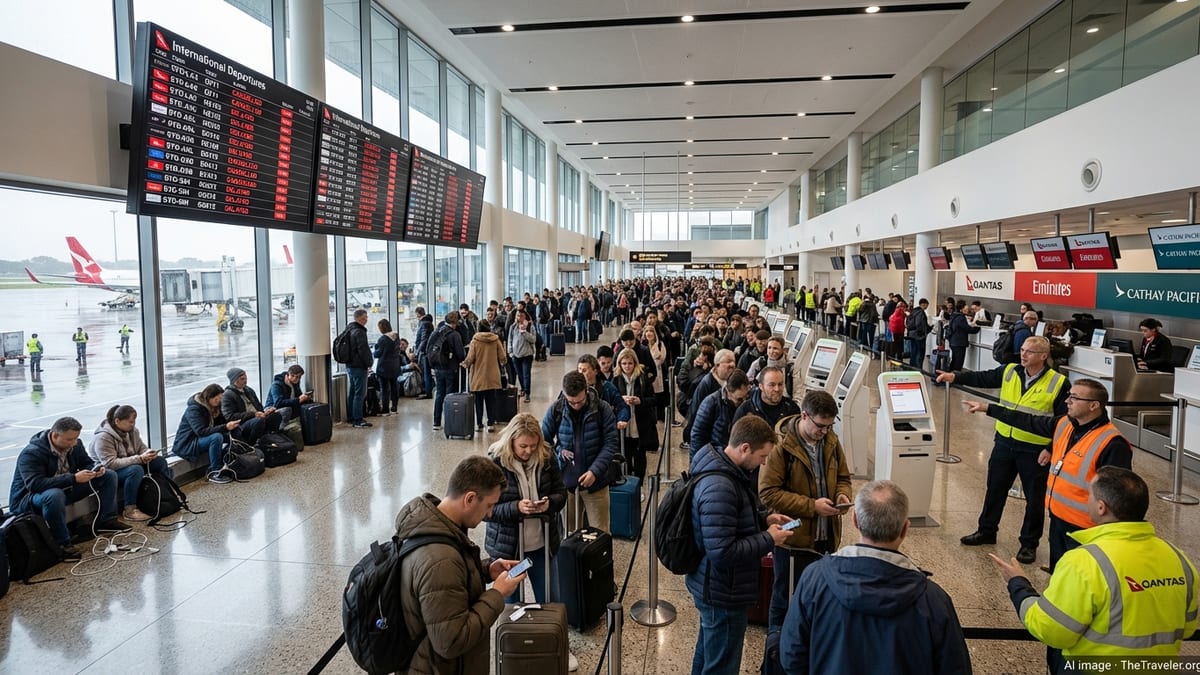
Holiday storms collide with peak travel demand
Across the long Easter weekend and into Easter Monday on April 6, 2026, storm systems moving across the continent met one of the busiest travel periods of the spring, creating a cascade of delays and cancellations. Publicly available flight tracking data and media tallies indicate that between Thursday and Easter Sunday, tens of thousands of flights in North America were delayed and well over 2,000 were cancelled, with some of the worst disruption recorded on Easter Saturday as severe weather hit multiple hubs simultaneously.
Coverage of the period points to a familiar pattern. Thunderstorms, heavy rain, late season snow and high winds affected major corridors from the southern Plains and Gulf Coast to the Great Lakes and Atlantic seaboard. At various points over the weekend, airports serving New York, Chicago, Atlanta and Miami reported elevated levels of disruption as storm cells passed through and air traffic managers imposed flow restrictions for safety.
By Easter Monday, airlines on both sides of the border were still working through backlogs. Reporting focused on the lingering impact of Winter Storm Kadence and a Colorado Low system, which limited capacity at several airports and left aircraft out of position despite the end of the most intense weather in some regions.
The timing amplified the impact. With leisure travelers returning home at the close of the holiday and business travel ramping up for the week, even modest operational constraints translated into crowded terminals, long customer service queues and limited rebooking options on already full flights.
Canada’s major hubs struggle to recover
The Easter storm sequence was particularly punishing in Canada. Publicly available data summarized by national outlets suggest that on Sunday, April 5, 2026 alone, Canadian airports recorded more than 400 flight delays and over 80 cancellations as snow, freezing rain and low visibility affected operations from the Prairies to Atlantic Canada. The disruption continued into Monday as unsettled conditions persisted and airlines attempted to reposition aircraft and crews.
Reports highlight that travelers at major hubs including Toronto, Montreal, Calgary and Vancouver faced rolling delays, missed connections and overnight stays. While some flights managed to depart once conditions improved, tight aircraft utilization meant that earlier cancellations created gaps in schedules that could not be filled quickly. With Easter return traffic pushing passenger numbers higher than a typical early April weekend, rebooking spillover extended into Monday and, for some itineraries, later in the week.
Canada’s experience over Easter fits into a broader pattern observed over the past two winter and spring seasons, in which successive storms have repeatedly challenged airport resilience. Analyses of earlier events in February and March 2026 point to multiple days where weather systems generated hundreds of delays at key Canadian gateways, often coinciding with peaks in school break or holiday travel.
The cumulative effect is that even when individual storms are relatively short lived, their impact on passengers can persist for days, especially when connections involve cross border itineraries that depend on tight coordination between Canadian and US schedules.
US aviation grid hit by a month of rolling weather shocks
The Easter chaos did not occur in isolation. March 2026 had already been marked by several severe weather episodes that stressed the US aviation system before the holiday period began. Industry briefings and weather summaries describe a late March outbreak that produced damaging thunderstorms, flash flooding and winter weather across multiple regions between March 29 and March 31, generating more than 3,000 flight delays and well over 100 cancellations in a single day as storms intersected key hubs.
Earlier in the month, a blizzard across parts of the central United States and southern Canada and separate tornado outbreaks in the Midwest and Southern Plains had already forced airlines to cancel or delay hundreds of flights. At one point, available data on Denver operations indicated that more than 1,300 flights were affected during a single storm period, highlighting how quickly a major hub can become a bottleneck when snow and low visibility persist.
Additional reports from Texas and the Northeast describe significant gridlock at airports in Dallas, Houston, Boston and New York on multiple dates in March, as thunderstorm lines and winter weather bands triggered ground delay programs. On some of these days, carriers collectively cancelled around 200 flights and delayed several thousand more, according to collated figures from flight tracking services.
By the time Easter weekend arrived, airlines were therefore entering another high demand period following weeks of repeated schedule shocks. Aircraft maintenance windows, crew rotations and contingency reserves had already been adjusted several times to cope with earlier storms, reducing flexibility when the holiday weather systems developed.
Structural weak points: hub concentration and thin buffers
The Easter disruptions have intensified scrutiny of how North America’s air transport system is structured. Analysts and trade press coverage increasingly emphasize that the concentration of traffic through a relatively small number of megahubs makes the network acutely sensitive to local weather at those nodes. When storms affect multiple hubs at once, or strike a single airport that serves as a dominant connecting point for one or more major carriers, the outages spread rapidly along connecting routes.
Observers also point to thin operational buffers as a driver of systemic risk. Airlines rely on tight aircraft turn times and complex crew scheduling to maximize efficiency. In stable conditions, this allows more flights to be operated with the same fleet and staff. However, when storms force extended ground stops or diversions, crews can quickly reach regulated duty limits and aircraft end up at the wrong airports. The result is that recovery can lag long after skies clear.
Recent seasons have shown that these dynamics are no longer confined to winter blizzards or rare once in a decade events. Climate and catastrophe reports for early 2026 characterize severe convective storms and late season winter systems as both more frequent and more clustered in time, creating back to back disruption windows rather than isolated incidents.
For travelers, this means that weather is now one part of a broader systemic exposure that includes aging infrastructure at some airports, limited slack in air traffic control staffing and ongoing constraints in the availability of pilots and technicians in certain markets. Together, these factors increase the likelihood that a single storm over a holiday weekend will translate into continent wide disruption.
Implications for travelers, insurers and regulators
The Easter storm period is drawing particular interest from the travel insurance and risk management sectors, which see in the latest disruption a clear illustration of rising weather related operational risk. Specialist publications focusing on insurance trends note that severe storm outbreaks over peak travel dates can drive significant claims volumes for trip interruption, missed connections and additional accommodation, especially when disruptions extend across borders.
Insurers and travel risk analysts are also examining how quickly airlines and airports communicate evolving conditions to passengers. Some reporting suggests improvements in the rollout of proactive travel waivers and fee free rebooking options ahead of forecast storms, particularly on United States domestic routes where carriers now routinely issue region specific advisories when major systems approach.
At the same time, the Easter experience is likely to fuel ongoing debates over passenger protections. In both Canada and the United States, regulators have updated or clarified compensation frameworks in recent years, but there remains a distinction between disruptions caused by controllable airline issues and those attributed to weather. As storms become more frequent and their indirect causes more complex, consumer advocates are pressing for clearer standards on what support travelers should receive when weather combines with scheduling or staffing weaknesses.
For individual travelers planning future holidays, industry coverage around Easter 2026 reinforces a set of emerging best practices. These include building longer connection times into itineraries that cross storm prone regions, traveling a day earlier than strictly necessary around peak weekends, and considering travel insurance products that explicitly cover weather related delays. The Easter storms have shown that in North America’s current travel environment, treating disruption as a likely scenario rather than an exception may be the most realistic strategy.