

More news on this day
Severe spring storms over the Easter 2026 holiday shredded airline schedules and strained roads and rails across North America, exposing how vulnerable the region’s travel network has become to weather-driven shocks.
Get the latest news straight to your inbox!
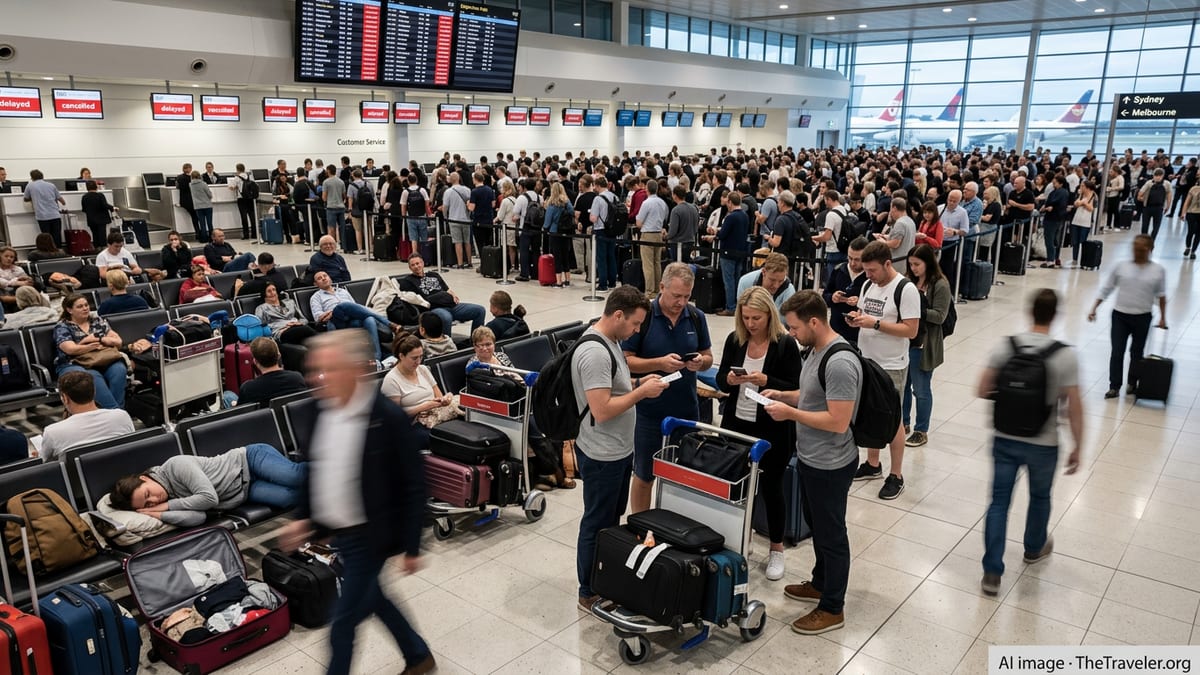
Holiday storm triggers continent-wide disruption
Severe thunderstorms, late-season snow and high winds converged on major population corridors in the United States and Canada over the Easter weekend, hitting just as travel volumes reached one of their highest peaks of the year. Publicly available flight-tracking data cited in multiple news reports indicate that more than 5,000 flights were delayed on the busiest travel days, with disruption building to over 15,000 delays and thousands of cancellations between Good Friday and Easter Monday.
The worst of the turbulence was concentrated in a belt from the central United States to the Eastern Seaboard, where powerful storm cells brought lightning, low cloud ceilings and wind shear to some of the continent’s most important aviation hubs. Reports from outlets drawing on FlightAware data describe widespread knock-on delays at airports in Chicago, Atlanta, Dallas, New York and Toronto as airlines reduced arrivals and departures to keep operations within safety limits.
On the ground, the same storm system produced heavy snow and near-blizzard conditions in parts of the upper Midwest and southern Canada, while torrential rain and localized flooding affected portions of the South and Mid-Atlantic. State and provincial transportation agencies warned of hazardous driving conditions, with stretches of interstate highways closed or restricted and regional rail services running reduced timetables as crews worked around downed trees and power lines.
The Easter disruption followed a sequence of high-impact weather episodes in February and March, including major blizzards in the Northeast and upper Midwest and several severe thunderstorm and tornado outbreaks in the central United States. Meteorological analyses highlight how these systems repeatedly combined snow, ice and convective storms along major travel corridors, turning what might once have been isolated events into a persistent operational challenge for airlines and ground transport operators.
Airline networks buckle under cascading delays
While the immediate trigger for the Easter chaos was adverse weather, industry reporting underscores how structural features of modern airline networks amplified the impact. North American carriers rely heavily on hub-and-spoke models, in which a small number of large airports handle disproportionate volumes of connecting traffic. When storms slow or halt operations at these hubs, aircraft and crews quickly fall out of position, setting off a chain reaction of missed connections and equipment shortages hours or even days after conditions improve.
Analyses of FlightAware and similar datasets referenced in media coverage show that delays spread far beyond the regions actually under severe weather warnings. Flights between relatively unaffected city pairs were held or canceled because incoming aircraft were trapped behind weather-related ground stops at earlier points in their rotations. In some cases, regional affiliates and smaller airports experienced some of the highest cancellation rates, as mainline carriers prioritized limited resources for trunk routes.
The Easter weekend coincided with a sharp seasonal rise in demand. Trade group figures for the broader spring period point to more than 170 million passengers expected on U.S. carriers between March and April, modestly above last year’s record volumes. With load factors already high and spare aircraft scarce, carriers had limited flexibility to rebook disrupted passengers, intensifying crowding in terminals and pushing some trips into midweek.
Operational constraints layered onto the weather challenge. Publicly available staffing and scheduling information shows that air traffic control facilities in several regions were already operating close to capacity before the storms, while airlines continued to manage tight pilot and maintenance rosters. When thunderstorms forced traffic into narrower routing windows, these constraints left less room to absorb delays, increasing the likelihood of cancellations as the weekend progressed.
Power grids, surface transport and the multi-hazard problem
The Easter storms did not hit aviation in isolation. Weather summaries from recent U.S. and Canadian events describe a recurrent pattern in which strong frontal systems simultaneously threaten electricity networks, roads and rail lines across wide areas. High winds and heavy, wet snow have repeatedly knocked down transmission lines and distribution infrastructure in 2026, leaving hundreds of thousands of customers without power during several major storms.
When outages coincide with peak travel, the effects ripple through multiple modes. Traffic signals fail, electronic tolling and ticketing systems stall and some rail infrastructure, including signaling, can be affected. Reports from recent late-winter storms detail how impassable highways and closed mountain passes forced long detours for freight and intercity buses, adding pressure to already strained logistics chains and in some cases delaying fuel deliveries to airports and critical facilities.
Academic and industry research into weather-related infrastructure risk points to a growing recognition that these hazards are interconnected. Studies of electricity network vulnerabilities and severe convective storms emphasize that the same mesoscale systems that generate tornadoes and hail can also produce damaging straight-line winds over hundreds of miles. As Easter weekend showed, when such systems intersect with densely used transport corridors, disruption often extends far beyond the narrow footprint of the most extreme weather.
For travelers, this multi-hazard environment means that even when a flight is operating, journeys may still be jeopardized by local road closures on the way to the airport or by power-related issues at hotels and transit hubs. The Easter storms highlighted how difficult it can be for individuals to gauge real risk in real time, as conditions and advisories changed quickly across state and provincial lines.
Climate trends and the intensifying spring travel squeeze
Climatological assessments and insurance-industry reporting on recent North American winters indicate an emerging pattern of more frequent and, in some cases, more intense late-season storms. Warmer background temperatures can contribute to higher moisture content in the atmosphere, which in turn supports heavier snowfalls in cold sectors and more energetic thunderstorm development along frontal boundaries. This pattern was visible across early 2026, when the same storm complexes that produced blizzard conditions in the Plains and Great Lakes also generated severe thunderstorms and tornadoes farther south.
These developments collide directly with the travel calendar. Spring has become a major leisure and family travel season across North America, with Easter, school breaks and the lead-up to summer holidays concentrating demand into a relatively short window. The Easter 2026 storms arrived after weeks of already elevated disruption, leaving airlines, airports and passengers with less margin to absorb another shock.
Insurance and risk analytics firms that track so-called secondary perils, including severe convective storms and winter weather, have highlighted rising loss totals for these hazards across North America. Their reporting suggests that the economic cost of repeated travel interruptions, accommodation claims and missed connections is growing, even when storms fall short of the damage associated with hurricanes or major coastal events.
At the same time, publicly accessible data from meteorological agencies show that forecasting skill for many types of severe weather has improved, offering earlier warning of potential high-impact periods. The Easter episode nonetheless illustrated a persistent gap between forecast awareness and operational readiness, as carriers, infrastructure operators and travelers struggled to translate multi-day storm outlooks into concrete contingency plans.
Calls for resilience in policy, planning and passenger behavior
The scale and timing of the Easter 2026 disruption are prompting renewed discussion among policymakers, industry groups and consumer advocates about how to strengthen the resilience of North America’s travel system. Commentaries in trade and insurance publications argue that weather-related delays and cancellations of this magnitude can no longer be treated as rare anomalies, but instead need to be built into planning assumptions for airlines, airports, rail networks and highways.
Proposals range from investments in more flexible aircraft and crew scheduling systems that can reoptimize networks in near real time to upgrades in airport infrastructure that allow for faster recovery after temporary ground stops. Some analysts suggest that greater coordination between aviation authorities, meteorological services and power utilities could help reduce the risk of simultaneous failures, for example by prioritizing grid restoration around key transport hubs during major storms.
For travelers, the Easter storms served as a reminder of the value of contingency planning, travel insurance and flexible itineraries. Public-facing advice from consumer organizations increasingly emphasizes the importance of avoiding last-flight-of-the-day bookings during high-risk periods, allowing extra connection time and monitoring forecasts and airline alerts closely in the days before departure.
As North America moves deeper into a year already marked by notable winter storms and severe convective outbreaks, the Easter holiday has emerged as a case study in how complex and fragile the continent’s travel ecosystem has become. The question now being raised in policy circles and industry analysis is not whether similar disruptions will occur again, but how prepared the region will be when the next major storm collides with a peak travel weekend.