

More news on this day
Easter holiday bookings in Egypt are colliding with a protracted energy crunch, as rolling power cuts, higher electricity tariffs and fuel constraints prompt hotels, tour operators and city authorities in Cairo, Luxor, Hurghada and Sharm el-Sheikh to rethink how they keep visitors cool, connected and moving.
Get the latest news straight to your inbox!
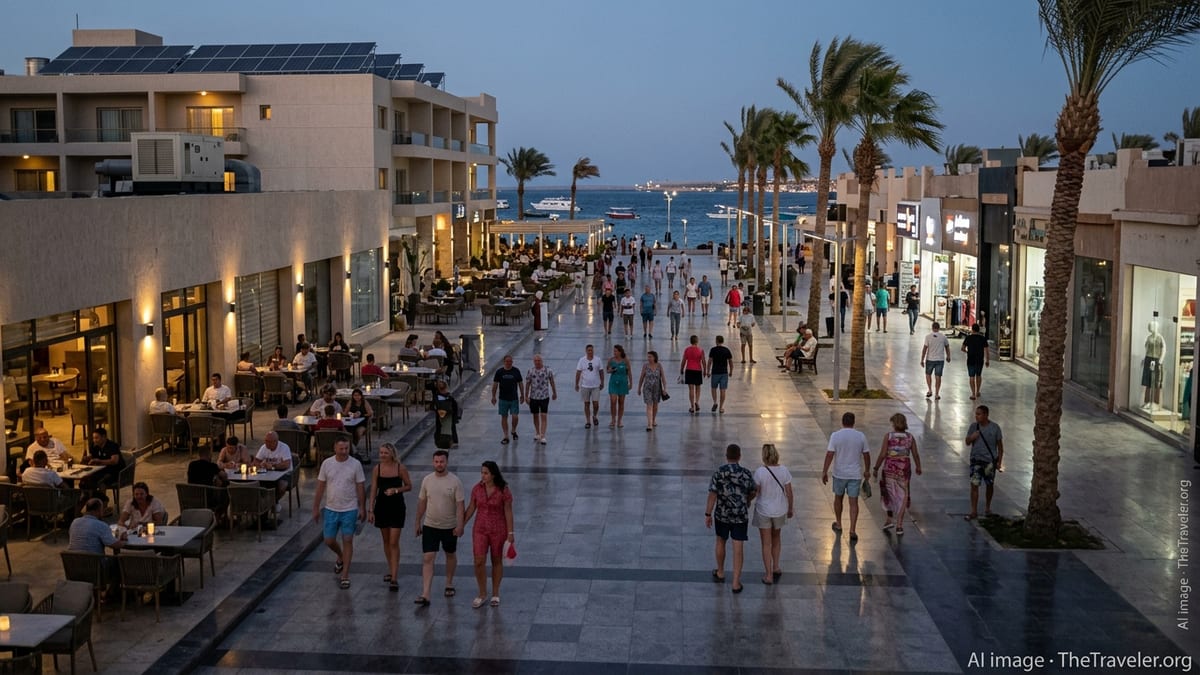
Electricity Strains Collide With a Key Holiday Season
The run-up to Easter is traditionally a strong period for Egypt’s tourism industry, with European and regional visitors combining religious observances with Nile cruises, Red Sea beach stays and city breaks. This year, the Easter calendar coincides with ongoing electricity load shedding and concerns over natural gas supplies, amplifying anxiety among travelers and local businesses.
Since mid-2023 Egypt has been managing a rolling blackout regime to curb domestic demand and free up gas for export. Published coverage traces the introduction of daily one to two hour cuts, later extended in parts of 2024 to around three hours as temperatures soared and gas production slowed. Analysts note that the structural issues behind the shortages, from aging infrastructure to a heavy reliance on natural gas, have not been fully resolved despite recent efforts to secure additional liquefied natural gas cargoes and diversify energy sources.
For tourism, the timing is sensitive. Hospitality operators describe Easter as part of a wider spring surge that helps bridge winter and summer high seasons. Any disruption to climate control, lighting, kitchen operations or digital services during peak hours can quickly translate into guest complaints, rebookings or last-minute cancellations, particularly among first-time visitors wary of regional instability.
Publicly available information indicates that national authorities have sought to reassure residents and investors that the worst of the crisis is under control, pointing to new gas imports and capacity additions intended to limit the scale of blackouts in 2025 and beyond. Yet observers also stress that load shedding schedules remain a key tool for balancing the grid during heatwaves, meaning that even a moderated regime can intersect awkwardly with travel peaks such as Easter.
Cairo Hotels Race to Shield Guests From Blackouts
Cairo, Egypt’s primary air gateway and a centerpiece of Christian and cultural itineraries, has been among the urban centers most exposed to power rationing. Reports from the capital during the 2024 summer highlighted alternating outages across districts, with some neighborhoods experiencing longer or more frequent cuts than officially advertised. While essential services and select business districts have been prioritized, residential and mixed-use areas hosting mid-range hotels and guesthouses have faced periodic interruptions.
Industry commentary suggests that higher-end properties around central Cairo and newer eastern suburbs have generally been able to cushion visitors from the worst effects using backup generators, voltage regulators and upgraded cooling systems. Some hotel chains have reportedly invested in larger fuel tanks and automated switching equipment to ensure that elevators, air conditioning, kitchen facilities and key digital systems remain operational when grid power drops.
Smaller hotels and budget accommodations have had to be more selective. Operators describe focusing limited generator power on essential functions such as lighting, water pumps and limited air conditioning, while temporarily curtailing nonessential services. Guests have been advised that certain amenities, including some on-site restaurants, rooftop venues or spa facilities, may follow adjusted operating hours aligned with local load shedding schedules.
Travel advisers monitoring conditions in Cairo recommend that Easter visitors pay close attention to hotel communications on backup power, and that tour organizers build flexibility into daily programs. Shifting indoor museum visits, Coptic Cairo tours and Nile-side activities away from known outage windows, where schedules are published, is emerging as a pragmatic way to preserve comfort while reducing last-minute disruption.
Luxor’s Heritage Sites Adjust to Energy Realities
In Luxor, where Easter often brings an influx of visitors for church services, temple tours and Nile cruises, the energy crunch carries different implications. The city’s economy is heavily reliant on tourism, but many visits center on outdoor or naturally ventilated sites such as Karnak Temple, the Valley of the Kings and riverside promenades, which are less directly dependent on continuous electricity than Cairo’s high-rise hotels.
Nonetheless, published analyses of Egypt’s rolling blackouts indicate that Upper Egypt has at times experienced longer or less predictable outages than coastal hubs. For Luxor’s hotels and cruise operators, this has meant enhanced reliance on diesel generators to maintain air conditioning, refrigeration and lighting, particularly during hot afternoons and evening dining hours that align with visitor routines.
Some heritage-focused properties and boutique guesthouses have been promoting recent investments in solar water heating, efficient lighting and partial photovoltaic systems as a way to reassure guests concerned about both comfort and sustainability. Academic and policy papers on Egypt’s energy transition point to pilot projects in the tourism sector, including solar-powered facilities in historic districts, as examples of how hospitality can reduce strain on the grid while keeping services stable.
Tour companies coordinating Luxor-based Easter programs are also adapting. Operators are reported to be scheduling early-morning or late-afternoon visits to major archaeological sites to hedge against high midday temperatures that put additional pressure on the grid. Evening sound-and-light shows and Nile cruises continue to operate, but organizers are monitoring local power patterns closely and advising clients that timings may shift at short notice if energy-saving measures tighten.
Hurghada and Sharm el-Sheikh Lean on Generators and Renewables
On the Red Sea coast, Hurghada and Sharm el-Sheikh remain central to Egypt’s strategy for capturing Easter and spring holiday demand from Europe and the Middle East. These resort cities, built around large hotel complexes, dive centers and water sports facilities, are intensely energy-dependent. Air conditioning, desalination plants, heated pools and extensive lighting all contribute to significant electricity consumption.
According to regional energy and tourism reporting, Red Sea resorts have historically been less affected by visible power cuts than interior cities, partly because many large hotels invested early in robust generator capacity to ensure continuity for international guests. During the 2024 wave of extended load shedding, travel forums and local commentary pointed to major properties in Hurghada and Sharm el-Sheikh continuing to offer largely uninterrupted service by switching seamlessly to backup power.
At the same time, the cost of running large diesel generators for prolonged periods has risen as fuel prices and currency pressures have intensified. Sector analyses note that some resorts have tempered nonessential energy use by dimming decorative lighting, consolidating under-occupied room blocks and limiting certain high-consumption amenities during off-peak visitor periods. These quiet adjustments are becoming more visible as the Easter season approaches and occupancy climbs.
Renewable energy is gradually entering the picture. Official and academic documents highlight Egypt’s growing solar and wind capacity, including large-scale projects near Aswan and along the Red Sea coast. A number of resorts around Hurghada and in South Sinai are publicly promoting rooftop solar arrays and solar-heated water systems as both a sustainability credential and a hedge against future energy volatility. While these measures are not yet sufficient to fully replace grid power, they are starting to soften the operational impact of blackouts on the tourism product.
Travelers Navigate Uncertainty With New Planning Habits
For travelers considering Easter trips to Egypt, the energy situation is adding a new layer of trip-planning calculus to more familiar questions about visas, security and weather. Consumer-facing reports and online travel forums increasingly feature discussions about blackout schedules, hotel generator capacity and the resilience of essential services such as airports, hospitals and transportation networks.
Airports in Cairo and on the Red Sea are prioritized for continuous electricity and are widely reported to have multiple layers of backup systems, so direct impacts on flight operations remain limited. The more common pinch points for visitors arise in urban mobility and in-destination comfort: metro stations operating at reduced frequencies during some outages, street lighting interruptions in older neighborhoods, or delays in restaurant service when kitchens pause during a cut.
Seasoned visitors recommend pragmatic steps rather than trip cancellations. These include selecting accommodation that transparently outlines its energy backup arrangements, carrying portable battery packs, downloading offline maps and being prepared for short periods without air conditioning. Tour organizers are similarly embedding flexibility into itineraries, leaving more time between activities and incorporating shaded or indoor options that can be swapped in if power-dependent attractions face temporary closures.
Despite the headwinds, tourism data through early 2025 indicates that Egypt continues to post solid visitor numbers, supported by a weaker currency that makes holidays relatively affordable for many international travelers. For now, the energy crunch is less a deterrent than a complicating factor, pushing both visitors and the tourism industry in Cairo, Luxor, Hurghada and Sharm el-Sheikh to adapt in real time as Easter approaches under the shadow of an unresolved power challenge.