

More news on this day
Millions of Easter holidaymakers have faced mounting disruption across air, rail, road and sea networks this weekend, as severe weather, engineering works, strikes and surging demand combined to stretch transport systems in Europe and North America.
Get the latest news straight to your inbox!
Storms and Strikes Trigger Flight Disruption
Air travel has borne the brunt of the holiday turmoil, with spring storm systems sweeping across the United States and parts of Europe just as passenger numbers peaked. Flight-tracking data cited in recent coverage indicates that over the Easter period more than 5,000 flights were delayed or cancelled in North America alone, with hubs including Chicago, Atlanta, Houston and Miami reporting particularly heavy disruption.
Published reports describe long queues at rebooking counters, crowded terminals and rolling delays as thunderstorms and strong crosswinds forced airlines to slow operations, reroute aircraft and temporarily suspend departures. Miami International, already one of the busiest gateways for Latin America and Caribbean connections, saw around 175 flights disrupted over the core Easter weekend, amplifying knock-on effects across regional networks.
In Europe, industrial action and staffing pressures have compounded the weather challenges. Travel industry analyses highlight a series of recent or threatened strikes among ground staff, security personnel and airline crews at major hubs, including airports in Spain, Italy and Germany. While many walkouts were announced in advance, allowing some pre-emptive rebooking, the concentration of cancellations during the Easter peak has meant alternative seats were limited and fares on remaining services quickly climbed.
Forecasts from aviation groups suggest that passenger volumes for March and April 2026 are running several percentage points above last year, leaving systems with little spare capacity to absorb disruption. As a result, relatively localized storms or targeted strikes have translated into widespread delays for travellers connecting across continents over the long weekend.
UK Rail Closures and Engineering Works Hit Easter Getaways
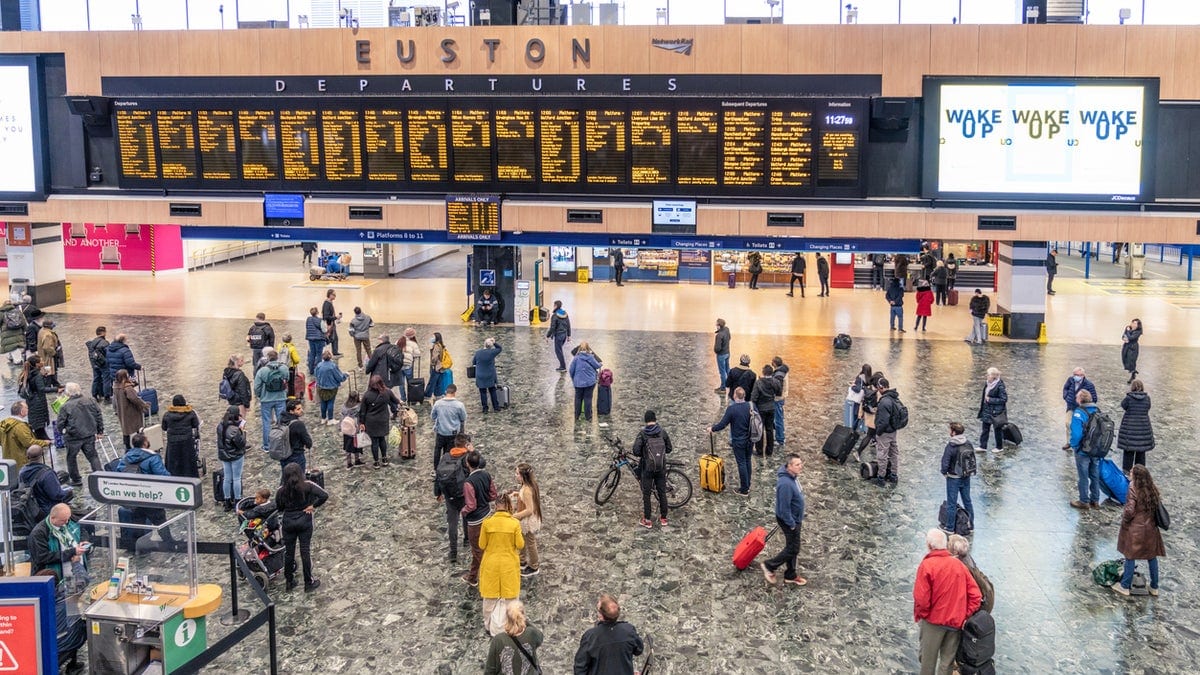
On the ground, rail passengers in the United Kingdom have faced some of the most severe disruption of the Easter period. According to detailed timetables and operator statements collated by travel sites, services on the key West Coast Main Line have been heavily curtailed as part of a six-day closure affecting London Euston, one of the country’s busiest intercity hubs.
Between Good Friday and the middle of the following week, long-distance Avanti West Coast trains are not running into or out of Euston, with many services terminating at Milton Keynes Central instead. Network Rail has scheduled major bridge replacement, signalling upgrades and track renewals during the shutdown, routing passengers onto replacement buses and alternative operators where possible. Industry summaries describe “near-total” Euston closure across the heart of the Easter getaway, with knock-on congestion on parallel routes.
Separate rail engineering works have also affected other parts of the network, including sections of the Great Western and East Coast corridors, leading to reduced timetables, diversions and further use of rail-replacement buses. Passenger groups and motoring organisations report that the combination of curtailed trains and good holiday weather has pushed more travellers onto the roads, intensifying congestion on key arteries such as the M1, M6 and M25.
While rail managers stress that carrying out large-scale works over a bank holiday can reduce weekday commuter disruption, this year’s extensive Easter programme has coincided with a sharp rise in leisure demand. Surveys cited in recent travel coverage suggest more than 12 million people in the UK planned an Easter getaway in 2026, increasing pressure on every remaining rail and road option.
Road Gridlock and Port Queues Intensify Holiday Pressures
Road traffic has surged across several countries as families switched from rail or air to car travel or attempted to reach airports and ferry ports despite delays. Forecasts from UK motoring bodies identified Easter 2026 as likely to be the busiest holiday driving period in several years, reflecting pent-up demand for domestic breaks and visits to friends and relatives.
By the start of the long weekend, live traffic data and media reports showed lengthy queues building on routes linking London and the Midlands to coastal gateways. In south-east England, roads into the Port of Dover and the Channel Tunnel terminal at Folkestone were repeatedly highlighted as pinch points, with tailbacks forming as border checks, high demand and weather-related schedule changes interacted.
Similar patterns have emerged elsewhere in Europe, where high winds and intermittent sea conditions have forced ferry operators to trim timetables or consolidate sailings. This has left motorists waiting longer at terminals and, in some cases, missing carefully timed connections to onward accommodation or flights. Travel analysts note that when ferry capacity is constrained just as road traffic peaks, relatively minor schedule changes can cascade into hours of delay for cross-border travellers.
In North America, the same storm systems that disrupted flights also created difficult driving conditions across parts of the Midwest and Southeast, with heavy rain, localized flooding and low visibility reported on key interstate corridors. State transport updates and local news coverage have pointed to multiple collisions and temporary road closures, further complicating long-distance Easter journeys by car.
Sea and Cross-Channel Links Strained by Weather and Demand
Sea travel, often seen as a pressure valve when air and rail networks struggle, has faced its own challenges this Easter. Shipping forecasts and port advisories across the English Channel and North Sea regions have highlighted periods of rough seas and strong winds, obliging operators to adjust speed or cancel certain crossings. Passenger accounts and local port coverage describe some services running significantly behind schedule and others consolidated onto fewer departures.
On the busy cross-Channel routes, these changes have interacted with heightened checks and tight turnaround times, leading to queues of cars and coaches waiting to board in both directions. Travel correspondents monitoring the situation report that some passengers with tightly timed itineraries have seen planned same-day onward rail or air connections disrupted, particularly where delays of more than an hour pushed arrivals beyond last-train or last-flight cut-offs.
Ferry routes within the Mediterranean and between mainland Europe and island destinations have also come under pressure. In Spain, where strike action among airport staff has focused attention on aviation, passenger advice from regional authorities and operators has emphasised the potential for knock-on effects at ports, as travellers diverted from disrupted flights seek alternative ways to reach popular coastal and island resorts over the school holidays.
Industry observers suggest that the convergence of labour disputes, strong leisure demand and unsettled weather has exposed how vulnerable peak-period ferry schedules can be to relatively small disruptions. With many sailings already close to full, there is limited scope to rebook passengers from cancelled crossings without triggering overcrowding and longer waits at terminals.
Travellers Face Limited Options as Networks Remain Fragile
Across modes, this Easter’s disruption has underlined how little slack remains in heavily used transport systems when multiple stress factors hit simultaneously. Aviation groups were anticipating record or near-record passenger numbers for the spring period, driven by robust demand for both domestic and international travel. Rail infrastructure managers in the UK and elsewhere scheduled extensive maintenance during what is traditionally a quieter commuter window, while ferry operators and road authorities prepared for seasonal peaks.
Yet severe weather, targeted strikes and concentrated engineering works have combined to test those plans. Reports from passenger advocacy organisations describe long rebooking queues, limited spare capacity on alternative services and travellers struggling to obtain clear, consistent information as conditions changed rapidly. Online discussions and travel forums over the weekend have been filled with accounts of missed connections, extended airport stays and improvised overnight stops.
Analysts point out that many of the individual disruptions, taken alone, would have been manageable. What has distinguished Easter 2026 is the way problems in one part of the system have quickly propagated to others, especially where airports double as rail hubs, ferries link directly to motorway networks, or holiday traffic is already running close to maximum capacity.
Looking beyond the holiday weekend, transport planners and industry commentators are likely to focus on whether network resilience can be improved ahead of the next major peak periods. Proposals under discussion in recent policy papers and industry briefings include spreading essential engineering work more evenly across the year, refining weather-response plans and strengthening contingency arrangements between airlines, train operators and ferry companies when large-scale disruption strikes.