

More news on this day
Millions of holidaymakers across Europe are facing worsening disruption over the Easter period as pressure on air, rail, road and ferry networks converges with strikes, engineering works and unsettled weather.
Get the latest news straight to your inbox!
Airports Struggle With Demand, Strikes and Weather
Air travel is bearing the brunt of the Easter getaway, with passenger numbers surging at major hubs such as Gatwick, Heathrow and Manchester in the UK and at key leisure gateways in Spain. Publicly available airport forecasts indicate that Good Friday, Easter Sunday and Easter Monday are among the busiest days of the year, with aircraft operating at or near full capacity and terminal queues extending into public areas at peak times.
Reports from aviation and travel outlets describe a complex mix of factors behind the disruption. High demand is colliding with airspace constraints linked to ongoing geopolitical tensions in the Middle East, forcing longer routings on some services. At the same time, rolling industrial action by ground staff at Spanish airports and staffing pressures in parts of the European aviation system are contributing to delays, missed connections and sporadic cancellations on popular holiday routes between the UK and Mediterranean resorts.
Weather is adding a further layer of uncertainty. Forecasts highlight spells of heavy rain and strong winds across parts of western Europe during the long weekend, conditions that typically reduce runway capacity and require increased spacing between aircraft. Travel analysis published in recent days notes that some airlines have issued proactive warnings of potential schedule changes, urging passengers to monitor flight status closely and arrive early to clear security and border controls.
New border procedures at some European entry points are also lengthening processing times for non-EU nationals, particularly at peak inbound periods. While airports stress that contingency plans and additional staff are being deployed, observers note that any incident on the day, such as a temporary systems outage or a weather-related runway closure, can quickly cascade into wider disruption when terminals are already operating at their limits.
Rail Networks Hit by Engineering Closures and Capacity Squeeze
On the railways, a combination of long-planned engineering works and rising leisure demand is creating significant headaches for Easter travellers. In Britain, extensive projects on key intercity corridors are closing some routes entirely and diverting others onto slower lines, stretching journey times and reducing resilience across the network. Travel trade coverage highlights a six-day shutdown of a major section of the West Coast Main Line over the holiday period, curtailing fast services linking London with the Midlands and northwest England.
Similar patterns are reported in Ireland, where Iarnród Éireann has scheduled track and signalling upgrades on busy interurban routes linking Dublin with Galway, Westport, Ballina, Cork, Cobh and Midleton. Replacement buses, reduced frequencies and altered stopping patterns are in place across the long weekend, complicating connections for passengers heading to and from airports and ferry ports. Advisories aimed at tour operators and independent travellers alike stress the importance of checking revised timetables rather than relying on usual departure times.
Engineering work is a regular feature of Easter holiday schedules, when operators traditionally take advantage of lower commuter traffic to tackle major infrastructure projects. However, travel analysts point out that this year’s programme coincides with particularly strong leisure demand, leaving fewer spare seats for passengers displaced from affected lines. With many services already fully booked, travellers facing cancellations are often being advised to stand by for later trains or reroute via slower alternatives.
Across mainland Europe, published information from transport ministries and rail companies shows a similar squeeze. High-speed networks in France and Spain are operating at high occupancy as families travel between major cities and coastal regions. Any incident, from a signalling fault to storm damage on overhead lines, risks triggering knock-on delays across long distances, adding to perceptions of a system under intense strain.
Road Traffic Surges as Drivers Avoid Trains and Planes
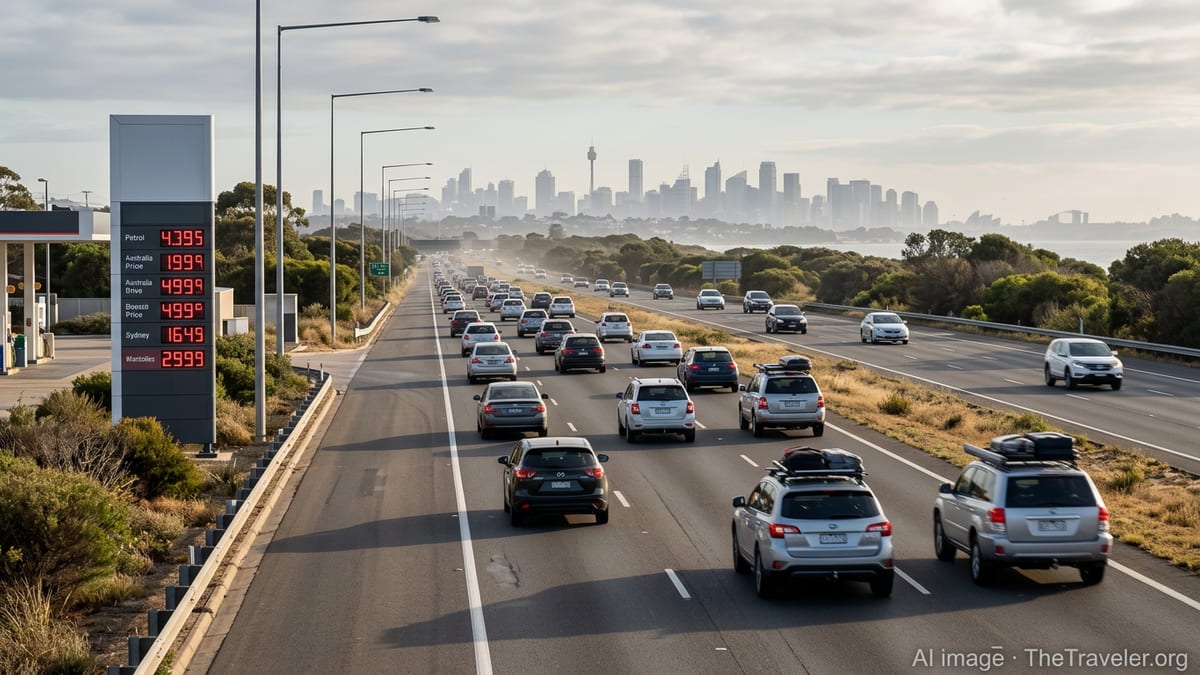
Road networks across the UK and parts of continental Europe are experiencing some of the heaviest Easter traffic since before the pandemic. Motoring organisations and highway agencies have warned of tens of millions of leisure journeys over the extended weekend, with particular pressure on traditional pinch points such as the M25 orbital motorway around London, major holiday routes into the south-west of England, and cross-channel approaches leading to the Port of Dover and the Channel Tunnel.
Forecasts compiled in recent days suggest that rail engineering closures and uncertainty around flight punctuality are pushing more travellers onto the roads. Some drivers who might otherwise opt for rail or air are choosing to travel by car to retain greater control over departure times and to avoid the risk of being stranded by cancellations. This diversion of demand is amplifying congestion on already busy routes, particularly on Good Friday and Easter Monday, when outbound and return flows overlap.
Weather is again a significant factor. Yellow-level rain and wind warnings have been issued for parts of south-west England, south Wales and sections of Ireland during the holiday period, raising the prospect of surface water, reduced visibility and temporary speed restrictions on exposed stretches of motorway. Road safety bodies are urging motorists to allow extra time, take more frequent breaks and be prepared for sudden slowdowns near accident sites or breakdown lanes already crowded with assistance vehicles.
Fuel costs are compounding frustrations for some drivers. Consumer reports note that average pump prices remain higher than at the same point last year in several European markets, adding to the overall expense of Easter getaways. Nevertheless, anecdotal evidence from service areas and tourist routes indicates that many families are pressing ahead with long-planned trips despite the financial and logistical challenges, contributing to intense pressure on parking, rest facilities and roadside services.
Ferry and Port Operations Strained by Weather and Volume
Sea crossings are also feeling the pressure of the Easter rush. Cross-Channel ferry operators and Irish Sea routes are reporting very high load factors, with vehicle decks close to capacity on peak sailings. Port authorities have warned of heavy traffic on approach roads, particularly on Good Friday morning and the main return days, as tens of thousands of cars, coaches and freight vehicles funnel through limited check-in and border control points.
Recent coverage of maritime operations notes that unsettled conditions in the English Channel and Irish Sea have already prompted isolated schedule changes, including the consolidation or cancellation of some sailings when winds or sea states have exceeded safe operating thresholds. While the majority of services are running, journey planners are advising passengers to build in extra time in case earlier delays cascade through the day’s timetable.
Ports handling a mix of freight and leisure traffic are having to balance commercial imperatives with passenger expectations. With Easter coinciding with busy freight movements, restricted berth availability can mean limited options for recovering lost time when earlier departures are held back by weather or late-running road traffic. In some cases, cars and coaches have been held in extended queues in port parking areas while vessels are turned around, adding to the perception of widespread holiday disruption.
On continental routes, including services between France, Spain and North Africa and crossings in the western Mediterranean, strong seasonal demand and periodic high winds are producing similar strains. Publicly available port bulletins in the region refer to temporary suspensions or altered sailing times on selected routes when conditions deteriorate, with passengers advised to maintain flexible plans where possible.
Holidaymakers Weigh Alternatives as Chaos Spreads
The convergence of challenges across air, rail, road and sea is reshaping how many travellers approach the Easter period. Travel industry commentary suggests a noticeable shift toward earlier departures, midweek travel and off-peak sailing times among those with flexible schedules, as people try to sidestep the worst of the congestion. Others are opting to stay closer to home, trading long-distance trips for shorter breaks within their own regions to reduce exposure to disruption.
For those already committed to long-haul or cross-border journeys, publicly available guidance from transport operators and tourism bodies emphasises preparation and contingency planning. Recommended steps include allowing significantly longer transfer times between different modes, travelling with essential supplies in case of extended waits, and ensuring that booking details are easily accessible on mobile devices in the event of last-minute rebooking.
Observers also point to the broader implications of this year’s Easter experience. The combination of structural pressures on transport networks, mounting climate-related weather extremes and rising demand for peak-period leisure travel is fuelling debate about capacity, resilience and investment priorities. As the holiday unfolds, operators and policymakers are likely to scrutinise performance data and passenger feedback to identify where systems buckled most severely, and where relief measures proved most effective.
For now, however, the immediate reality for many travellers is one of queues, delays and improvised routes. With the peak of the holiday period still working its way through Europe’s interconnected transport systems, there is little sign that the Easter travel chaos has yet reached its final chapter.