

More news on this day
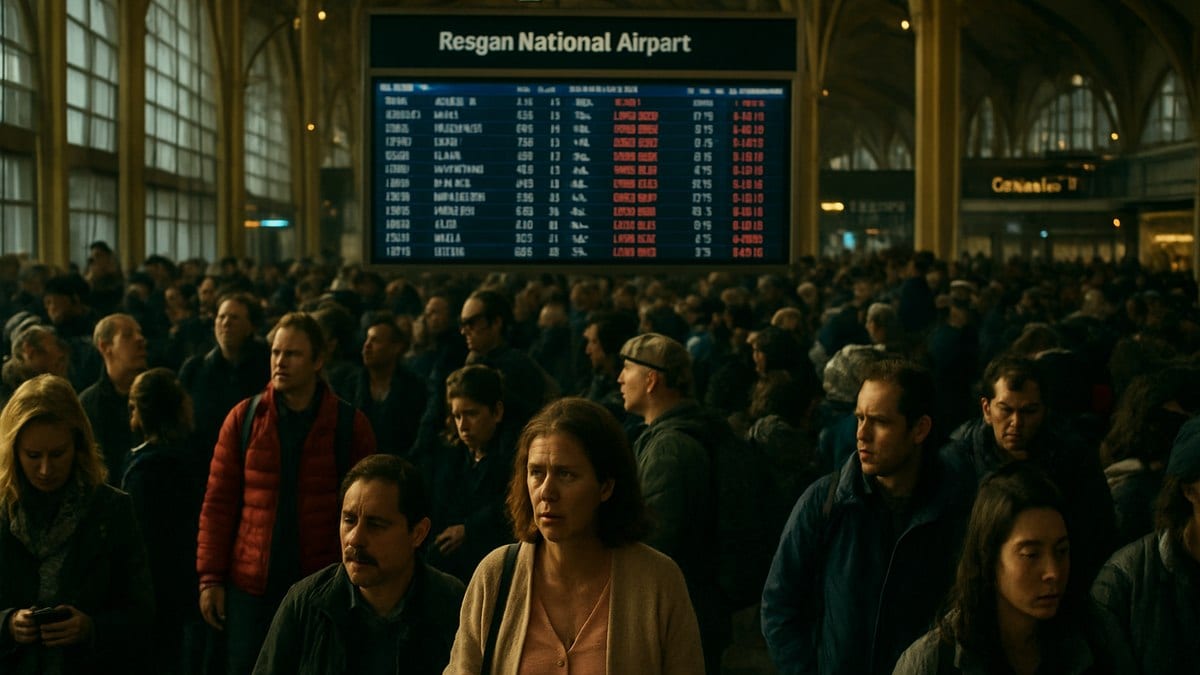
Thousands of Easter weekend travelers passing through Ronald Reagan Washington National Airport are encountering major delays, as a convergence of severe weather, tight capacity and wider network disruptions turns one of the year’s busiest travel periods into an exercise in endurance.
Get the latest news straight to your inbox!
Severe Weather and Network Disruptions Converge
Reports from aviation tracking services and industry outlets indicate that flight delays at Reagan National escalated sharply from Easter Saturday into Easter Sunday, with average hold times stretching well beyond an hour for many departures. A volatile spring weather pattern across the Mid-Atlantic and Midwest has forced airlines to recalibrate schedules, with bottlenecks at major hubs rippling along the East Coast.
Coverage from travel industry publications points to Chicago O’Hare as a key driver of this disruption during the 2026 Easter period, with stormy conditions and heavy traffic there sending late-arriving aircraft into Reagan National and other downline airports. As aircraft and crews miss planned rotations, Reagan’s tightly managed schedule has had little room to absorb the shock, pushing delays into peak holiday windows.
Locally, passengers have also been contending with intermittent thunderstorms and strong winds in the Washington region in recent weeks, which have already prompted ground delays and extended arrival spacing at Reagan National. Those weather-sensitive constraints are colliding with Easter demand, leaving many travelers stuck at the gate or circling holding patterns over the capital area.
Data compiled over the past year show that Reagan National has struggled with on-time performance even outside of holiday peaks, leaving the airport particularly vulnerable when national weather systems and hub disruptions strike during a busy travel weekend.
Easter Crowds Meet a Strained Operation
Publicly available passenger statistics show that Reagan National has been counting on spring break and Easter travel to help reverse a recent traffic slump. That strategy means more seats in the market and dense schedules at popular times, including early morning departures and late-afternoon banked flights to key business and leisure destinations.
On Easter weekend, that added volume has translated into crowded terminals and longer waits as delayed inbound flights compress departure banks. Social media posts and first-hand accounts describe departure boards filled with rolling delay estimates, with some passengers reporting multiple gate changes as airlines shuffle aircraft to keep at least part of the schedule moving.
The airport’s compact footprint and strict slot system limit how many flights can be handled each hour, particularly during adverse weather or when air traffic control reduces arrival and departure rates. When those limits are reached, regional flights to nearby cities are often among the first to be delayed or cancelled, creating a cascade of stranded travelers across the Mid-Atlantic and Northeast.
While some early-morning travelers have reported relatively swift security processing on quieter days, the Easter surge has exposed the fragility of operations at peak times, where any upstream disruption can quickly swell into terminal-wide congestion.
Recent Storms and Winter Chaos Set the Stage
This Easter’s turbulence comes on the heels of a bruising winter for Washington-area air travel. In late January, a powerful winter storm shut down departures from Reagan National, with thousands of flights cancelled nationwide and aircraft and crews scattered across the network. Aviation records show that the shutdown ranked among the most severe single-day aviation disruptions since the early pandemic period.
Additional winter systems in February brought more snow and high winds to the capital region, contributing to a spike in delays and cancellations at Reagan National. Separate reporting highlights that the airport’s on-time performance sagged during 2025 as well, affected by both weather and new safety constraints in the wake of a fatal mid-air collision involving a military helicopter near its airspace.
These repeated weather and safety-related slowdowns have left airlines little slack heading into the spring holiday season. Aircraft that might previously have been available as operational reserves have instead been tied up in recovery efforts from earlier storms, raising the stakes when another major travel weekend such as Easter arrives.
Travel analysts note that when a heavily scheduled airport like Reagan National experiences full shutdowns or severe slowdown events, the effects can linger for days as carriers reposition jets, crews and spare parts back into place, making it harder to present a robust schedule for the next surge of demand.
Staffing Pressures and Federal Disruptions Add Friction
Operational challenges at Reagan National are unfolding against a wider backdrop of aviation staffing concerns and federal budget disputes. National air traffic control staffing has been under scrutiny for several years, and published assessments warn that high workloads and aging facilities can complicate efforts to manage tight traffic flows at busy airports serving sensitive airspace like Washington, D.C.
More recently, a partial shutdown affecting the Department of Homeland Security has contributed to uncertainty around airport staffing and resources nationwide. Public reports on the shutdown describe longer security lines and service disruptions at some airports, as key personnel work without pay or under temporary arrangements. While impacts vary by location, travelers at Reagan National over Easter weekend have reported arriving extra early as a precaution, further crowding ticketing and checkpoint areas during peak departure waves.
Local coverage and community discussions in the Washington region in late March also highlighted inconsistent wait times at airport security, with some travelers encountering minimal lines at off-peak hours and others facing unexpectedly long queues during busy periods. Those swings point to an operation that is still highly sensitive to staffing levels, time of day and the broader federal funding environment.
The combination of constrained air traffic control capacity, potential staffing strain at security checkpoints and the unique security requirements of the nation’s capital adds additional friction to Easter travel at Reagan National, especially when sudden weather-related reroutes and holding patterns strain the system.
What Easter Travelers Are Facing On the Ground
For passengers moving through Reagan National this Easter weekend, the practical consequences of these layered disruptions are showing up in missed connections, long hours in departure lounges and last-minute changes to holiday plans. Industry dashboards tracking delays indicate that a significant share of flights are departing late, some by more than two hours, with knock-on effects for travelers trying to reach family gatherings or vacation destinations.
Families with children and travelers without direct alternatives have been particularly hard hit, as limited gate space and full flights leave few opportunities for same-day rebooking. In many cases, delays stem from late-arriving aircraft or flow-control measures in the national airspace system, categories that airlines and regulators classify as outside the carrier’s direct control.
Consumer guidance from national outlets notes that U.S. regulations do not require airlines to compensate passengers with meals or hotels when delays are caused by weather or other uncontrollable events. Instead, relief typically depends on individual airline policies, which vary in generosity. Over Easter weekend, that has left many Reagan National passengers relying on rebooking apps, airport customer service desks and travel insurance to manage the disruption.
Travel experts are urging passengers flying through Reagan National in the coming days to monitor their flight status frequently, build in substantial connection times and consider early-morning or late-evening departures, which can be less vulnerable when afternoon storms and congestion build. For those already caught in the Easter travel chaos, patience and flexibility remain the most valuable commodities as the airport and national aviation system work through another high-stress holiday period.