

More news on this day
UK holidaymakers heading to Spain for Easter face a turbulent getaway as strike action at major Spanish airports collides with the phased rollout of new EU border controls, raising the risk of longer queues, delays and disrupted journeys at one of the busiest travel periods of the year.
Get the latest news straight to your inbox!
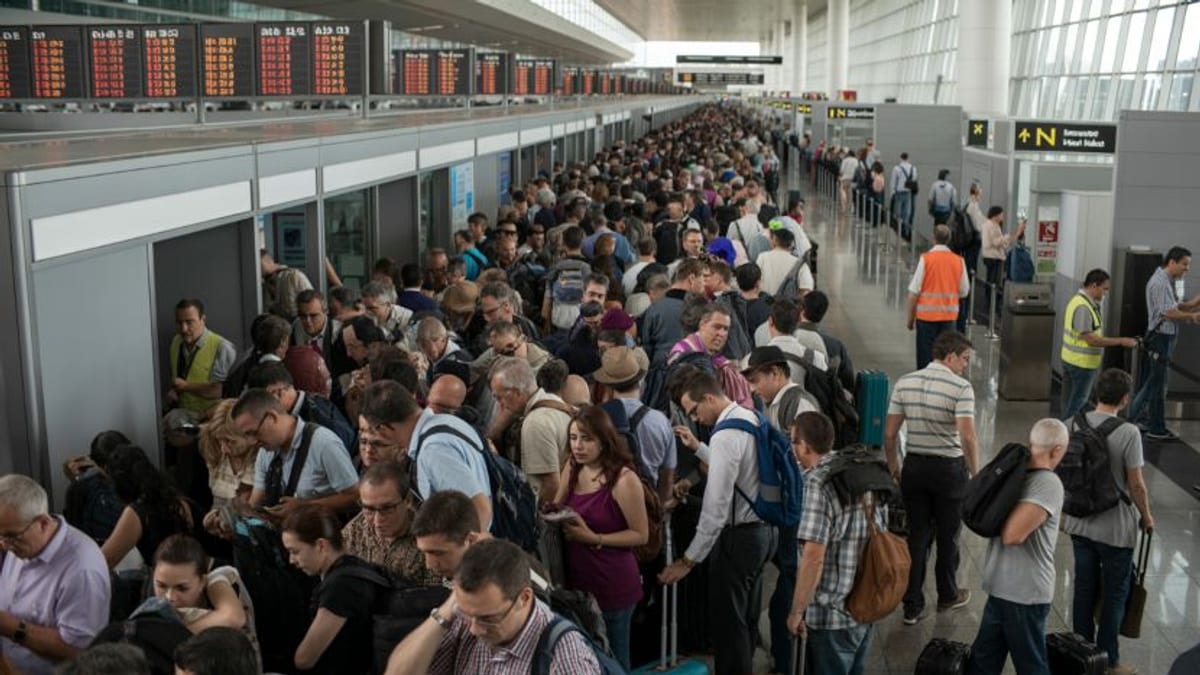
Image by Travel And Tour World
Ground staff strikes threaten Spain’s busiest holiday hubs
Spanish airports serving the UK market are bracing for disruption after unions representing thousands of ground handlers called industrial action over pay and conditions in the run-up to Holy Week. Publicly available notices indicate that staff employed by handling company Groundforce, which operates at major gateways including Madrid, Barcelona, Alicante, Valencia, Palma de Mallorca, Ibiza, Málaga and several Canary Islands airports, have announced an indefinite campaign of stoppages overlapping with the Easter rush.
The action, involving workers responsible for check-in, baggage loading and aircraft turnarounds, is structured around partial walkouts across several peak-day time bands. Industry coverage suggests stoppages are concentrated in early-morning, midday and late-evening windows, precisely when Easter leisure services between the UK and Spain are heaviest. Airlines fear even short gaps in staffing at those times could trigger knock-on delays that last well beyond the official strike periods.
At Málaga-Costa del Sol Airport, one of Spain’s leading gateways for British visitors, nearly 6,000 flights are scheduled between late March and early April, with the majority classified as international operations. Airport traffic forecasts show daily movements rising steadily across Easter week, with several days expected to handle well over 550 flights. Even modest disruption to turnaround times could therefore quickly translate into crowded departure halls, longer waits at baggage belts and missed connections.
Spanish tourism and hotel associations have warned in domestic media that extensive delays at the start of the European holiday season risk damaging the country’s image, just as international arrivals climb after the winter lull. They argue that the combination of labour disputes and a tight staffing market leaves little room for contingency, particularly in coastal regions and islands that rely heavily on UK visitors.
New EU border system adds time at passport control
Alongside labour unrest, British travellers landing in Spain this Easter are encountering a changing regime at the Schengen border. The EU’s Entry/Exit System (EES), a new digital platform designed to record the movements of non-EU nationals, is being progressively introduced at external borders ahead of full activation in April 2026. The system captures fingerprints and facial images on a traveller’s first entry and replaces traditional passport stamps with electronic records.
According to European policy briefings and trade reports, the transition period has already produced longer queues at several busy airports across the Schengen area, as border guards adapt to new hardware and procedures. Separate data compiled by travel industry bodies notes that airports with a high proportion of British leisure traffic, such as Alicante and Spanish island gateways, have been among those reporting pressure at passport control during recent holiday peaks.
Spanish media coverage has highlighted concerns from police unions about staffing levels at Alicante Airport, where officials warn that a combination of the EES rollout and sustained demand from UK visitors could push border facilities to breaking point on peak days. Similar worries have been voiced by airline and airport groups at EU level, which have urged Brussels to allow member states to scale back or temporarily suspend EES checks during the busiest travel windows if queues become unmanageable.
For now, EES registration is only required at certain lanes and crossings, and not all Spanish airports are applying the system in the same way. However, passenger groups say the partial rollout can create confusion, with some non-EU travellers being directed to biometric kiosks while others proceed through traditional desks. The added processing time, even if only a few minutes per passenger on the first visit, can quickly multiply when several UK flights arrive simultaneously.
Warnings for UK tourists: expect queues, build in extra time
In the UK, broadcasters and newspapers have begun flagging the twin risks of strikes and new EU border checks to Easter travellers. Recent coverage by national television outlets has explained how the EES operates, who it applies to and why it is expected to slow down border processing, particularly for first-time registrants from Britain and other non-EU countries.
Consumer travel commentators are advising passengers flying to Spain to arrive at UK departure airports earlier than usual, monitor airline apps for schedule changes and allow generous time between connecting services. While airlines are legally responsible for rebooking passengers in the event of cancellations or missed connections on a single ticket, industry figures stress that self-connecting travellers on separate bookings may have little protection if they are held up by queues at security or passport control.
UK-based travel agents report that questions about queues and documentation are now among the most common from customers heading to Spain for Easter and early summer. They say many holidaymakers remain unsure about the distinction between EES registration and the separate European Travel Information and Authorisation System, or ETIAS, which is not due to take effect until late 2026. Industry briefings emphasise that, for now, British tourists visiting Spain still travel visa-free, but must be prepared for additional biometric checks and stricter enforcement of the 90-days-in-180 rule for stays in the Schengen area.
Holiday companies are also reminding customers to double-check passport validity rules that have tightened in recent years. Guidance summarised by travel advisory services notes that most Schengen states, including Spain, require UK passports to be less than ten years old on the date of entry and valid for at least three months beyond the intended departure, with airlines increasingly enforcing these conditions at check-in.
Economic stakes high for Spain’s tourism hotspots
The timing of the disruption is particularly sensitive for Spain, where Easter traditionally marks the first major wave of international tourism after winter. Industry data show that destinations such as the Costa del Sol, the Balearic Islands and the Canary Islands depend heavily on UK visitors, with some resorts reporting that British nationals account for a significant share of arrivals in March and April.
Hotel and hospitality federations quoted in national coverage have urged all parties involved in the industrial dispute to reach a rapid settlement, warning that scenes of crowded terminals and missed flights could encourage travellers to consider non-Schengen destinations unaffected by the EES, or to switch to rival Mediterranean markets. They argue that after several years of volatility linked to the pandemic and evolving border rules, both airlines and accommodation providers are seeking greater predictability as they plan staffing and pricing.
Airline groups and airport associations at European level have issued separate joint statements pressing EU institutions and member states to take a pragmatic approach to the EES rollout. They contend that while the long-term goal of more secure and efficient borders is widely shared, the current implementation risks undermining confidence if passengers associate European travel with persistent queues and complex procedures at entry points.
For Spain’s regional economies that rely on British holidaymakers, even a modest dip in arrivals during the shoulder season can have ripple effects for local employment and investment. Tour operators warn that prolonged disruption over Easter would not only affect this year’s bookings but could influence demand patterns into summer 2026 if travellers decide to avoid airports perceived as bottlenecks.
How UK travellers can navigate a challenging Easter getaway
Travel planners suggest that British tourists bound for Spain this Easter should adopt a more cautious approach to timing and route selection. Where possible, advisers recommend choosing direct flights rather than itineraries involving tight connections within the Schengen area, which could be vulnerable to border-control delays on the first point of entry.
Passengers are also being encouraged to familiarise themselves with airport layouts, especially at major hubs such as Madrid and Barcelona, where long walks between arrival gates and passport control can add to overall transit times. Keeping travel documents to hand, removing hats and glasses before approaching biometric kiosks and following staff instructions at EES checkpoints are among the practical steps cited in guidance produced by travel-information providers.
While some UK travellers may hope that disruption will be short-lived, industry observers caution that both the industrial dispute and the border-system transition could extend beyond Easter if no swift resolutions are found. With the EU targeting April 2026 for full EES activation across the Schengen area and Spain’s tourism sector pushing for structural staffing improvements, the pressures highlighted this Easter are likely to shape the wider European travel experience in the coming seasons.
For now, the message from travel experts is that holidays in Spain remain viable but may require more patience and preparation. Arriving early at departure airports, allowing extra time after landing, and staying alert to airline and airport updates could make the difference between a smooth start to a spring break and a holiday overshadowed by queues and cancellations.