

More news on this day
Travellers heading away for the Easter holidays are facing a growing web of disruption as a deepening global fuel crisis forces airlines and transport operators from the UK to New Zealand, Scandinavia, Vietnam and other regions to trim schedules, reroute services and raise prices at one of the busiest travel periods of the year.
Get the latest news straight to your inbox!
UK Easter Getaways Under Pressure From Fuel Costs
In the UK, the traditional Easter getaway is colliding with sharply higher fuel prices linked to turmoil in Middle East energy supplies and longer flight routings around restricted airspace. Published coverage indicates that carriers operating long haul services from Britain to Asia and the Pacific are facing significantly higher jet fuel bills and extended flight times, prompting tighter capacity management and selective fare increases on popular routes.
Airports serving major holiday markets, including London’s hubs and key regional gateways, are reporting busy terminals but leaner schedules on some long haul sectors as airlines focus on routes and departure times that can be operated most efficiently. Publicly available timetables show minor reductions in frequency on certain transcontinental services and adjustments to aircraft types, with some widebody jets redeployed from marginal routes to higher yielding Easter sun and family travel destinations.
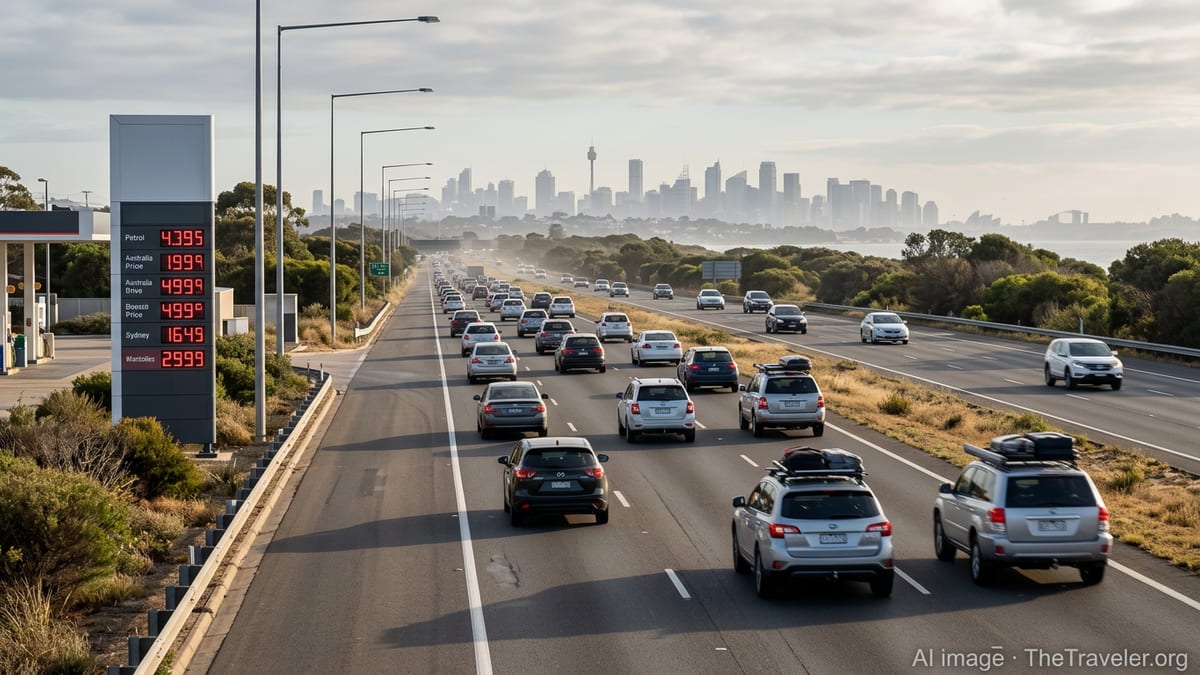
Rail and road travel are also exposed to higher fuel costs. UK motoring organisations have warned that petrol and diesel prices remain elevated heading into the holiday period, increasing the cost of domestic road trips. Coach operators and some regional rail services have highlighted higher operating costs in recent trading updates, although most are maintaining Easter timetables to capture peak demand.
While the UK has not announced formal fuel rationing for civil aviation, analysts note that the combination of higher wholesale prices, insurance costs on rerouted flights and strong seasonal demand is creating conditions in which even relatively small disruptions can ripple through Easter travel plans. Passengers are being advised by airlines and travel agents to monitor booking portals closely for schedule changes and to arrive earlier at airports where security queues are expected to lengthen.
New Zealand Balances Fuel Security With Holiday Mobility
On the other side of the world, New Zealand is entering the Easter and early autumn travel period while actively managing fuel security. Government information and economic commentary indicate that the country holds several weeks of onshore fuel stocks, supported by additional supplies already at sea, but planners have activated a formal response framework designed to conserve fuel if international shortages worsen.
Recent public statements outline a staged fuel disruption plan for New Zealand that could, at higher alert phases, prioritise fuel for critical services and freight. For now, officials describe the situation as stable but finely balanced, with the focus on ensuring that airlines serving key domestic trunk routes and essential inter-island links have sufficient jet fuel through the Easter peak and into the southern hemisphere winter.
Domestic travel patterns remain robust, particularly on routes connecting Auckland, Wellington, Christchurch and major tourism centres. However, industry briefings suggest that airlines are limiting additional ad hoc services and are cautious about launching new routes while monitoring jet fuel shipments. Travellers planning Easter road trips are being urged by local media and travel advisories to factor in potentially higher pump prices, longer queues at popular service stations and the possibility of targeted conservation measures if international supply tightens further.
New Zealand tourism operators are watching developments closely, as Easter traditionally marks the tail end of the peak summer tourism season. Any prolonged constraint on fuel availability or sharp escalation in prices would risk dampening late bookings and could complicate transport logistics for remote destinations reliant on small aircraft and long road transfers.
Scandinavian Carriers Trim Schedules Amid European Fuel Squeeze
Across Scandinavia, airlines are adjusting Easter operations in response to a broader European fuel squeeze and elevated jet fuel costs. Industry reports and regional coverage indicate that at least one major Nordic carrier has cancelled or consolidated a number of short haul services, particularly on domestic routes in Norway where alternative ground transport is available.
These changes are relatively limited in absolute numbers but are concentrated on off peak frequencies, meaning that travellers may find fewer departure time options and more crowded remaining flights during the Easter period. For some passengers, this is resulting in rebookings onto earlier or later departures and longer overall journey times, especially when connecting through hub airports in Denmark and Sweden.
Aviation analysts in northern Europe note that the region’s carriers were already focused on improving profitability after several challenging years and that the current fuel crisis has accelerated decisions to remove marginal routes. Easter, with its mix of leisure and family traffic but limited corporate demand, is seen as a period where selective capacity reductions can be implemented without losing key market share.
Rail networks in Scandinavia are seeking to absorb some of the displaced demand, particularly on heavily travelled corridors linking major cities. However, higher diesel prices for non electrified segments and increased electricity costs for rail operators are also feeding through to ticket prices, creating a broader rise in holiday travel costs across the region.
Vietnam and Wider Asia Face Direct Fuel Shortages
Vietnam is among the countries experiencing some of the most visible aviation disruption linked directly to fuel supply constraints. According to Vietnamese media and industry statements, the Civil Aviation Authority of Vietnam has warned of potential jet fuel shortages from early April, just as regional travel demand surges around Easter and other holidays.
Publicly available information indicates that Vietnamese airlines have already announced cuts to domestic and short haul international services for the second quarter, in some cases amounting to a reduction of up to one fifth of scheduled flight pairs. Regulators have proposed fuel surcharges and higher fare caps in an effort to keep airlines financially viable as jet fuel prices in regional trading hubs have climbed to levels that significantly increase operating costs.
Passengers are reporting growing uncertainty around flight schedules, with less popular domestic routes and secondary airports most exposed to cancellations or reduced frequencies. Separate from the fuel issue, at least one regional airport has temporarily closed for runway works, further concentrating traffic on major hubs and limiting alternative routing options for travellers caught by last minute schedule changes.
The fuel crunch is not confined to Vietnam. Aviation and travel outlets across Asia describe a pattern of capacity cuts, fare increases and tightened fuel management in markets including Thailand, Singapore, South Korea and India, driven by constrained jet fuel availability and elevated prices linked to shipping disruptions through the Strait of Hormuz. For travellers, this is translating into fewer seats, longer connection times and higher prices for Easter and early summer itineraries across the region.
What Travellers Should Expect and How to Prepare
Across all affected regions, the common thread for Easter travellers is heightened uncertainty around timetables and costs. With fuel markets volatile and airlines attempting to conserve supplies while protecting revenue, relatively small changes in global supply or regional policy can translate quickly into revised flight plans, altered ferry sailings or amended long distance rail services.
Travel industry guidance emerging in recent days emphasises the importance of flexibility. Passengers are being encouraged to build longer connection windows into multi segment journeys, to pay close attention to carrier notifications and to consider travel insurance products that explicitly cover disruption linked to schedule changes and cancellations, subject to policy terms. For travellers in New Zealand and remote parts of Scandinavia, contingency plans for road or rail alternatives may be prudent if short haul flights are consolidated.
In Vietnam and neighbouring Asian markets where direct fuel shortages are a concern, prospective passengers are being advised through local media and online travel communities to avoid tight same day connections, to reconfirm domestic flights several days before departure and to monitor announcements regarding possible fuel surcharges. Those planning Easter holidays from the UK to Asia Pacific hubs are likewise being pointed toward earlier booking and the selection of routes with multiple daily frequencies, which can offer more rebooking options if one service is cut.
With the underlying causes of the fuel crisis tied to broader geopolitical and energy market tensions, analysts suggest that travel disruptions could extend beyond the Easter period into the northern summer season. For now, airlines and transport operators are attempting to keep core holiday travel corridors open, but passengers from the UK to New Zealand, Scandinavia, Vietnam and several other regions should be prepared for a more unpredictable Easter travel experience than in recent years.