

More news on this day
easyJet is set to launch new non-stop flights between Liverpool John Lennon Airport and Seville in summer 2026, adding a fresh Andalusian city break option to the airline’s growing network from the North West of England.
Get the latest news straight to your inbox!
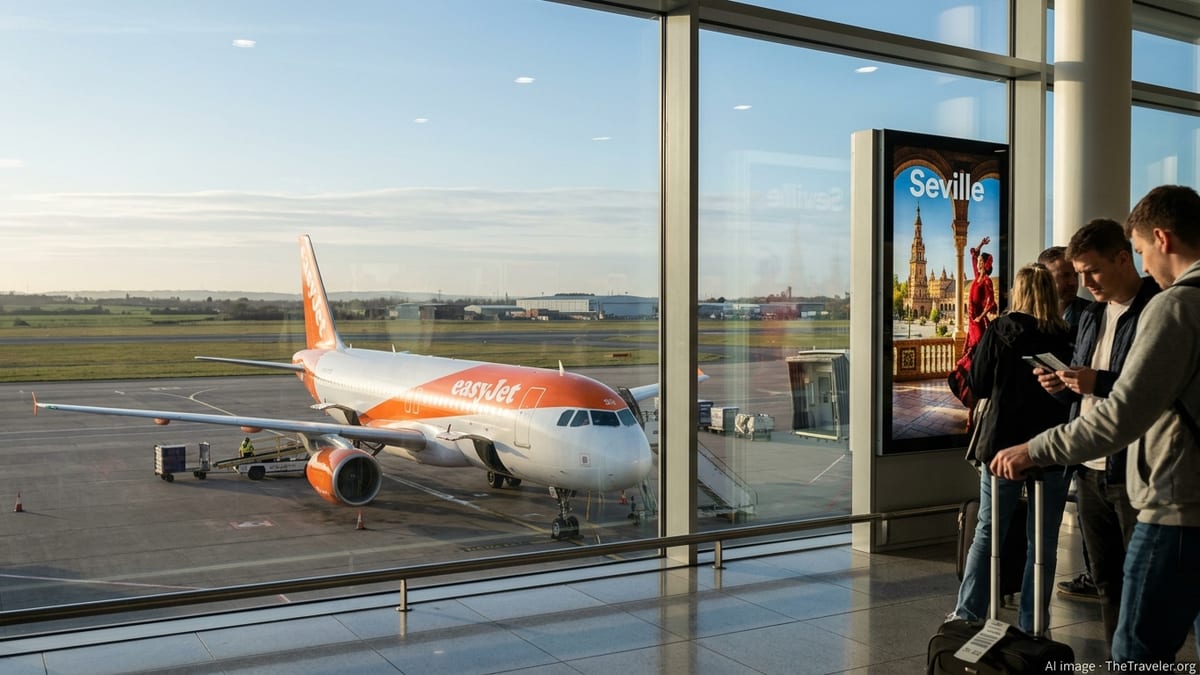
New city pairing strengthens Liverpool’s Spanish network
The planned Liverpool to Seville route will link one of the UK’s fastest-growing regional airports with the capital of Andalusia, a destination that has seen a steady rise in international visitor numbers in recent years. Publicly available information on airport schedules shows that easyJet has been steadily expanding its Liverpool base for 2025 and 2026 with additional sunshine and city destinations across Europe, and Seville is expected to slot into that broader growth strategy.
Liverpool John Lennon Airport already offers easyJet services to a range of Spanish destinations, including popular coastal and island resorts as well as major cities. Industry schedules for 2026 indicate new southern European routes such as Lisbon and additional Mediterranean links being added from Liverpool, underlining the airline’s focus on leisure-led demand from the region. The Seville link would give Merseyside and North West travellers a further option that combines cultural tourism with warm-weather breaks.
While exact start dates and weekly frequencies for the Liverpool–Seville operation have yet to be fully detailed in public timetables, summer 2026 planning data suggests the service is expected to operate during the core holiday months when demand for Spain traditionally peaks. Travel trade reporting on easyJet’s upcoming seasons has highlighted the carrier’s strategy of fine-tuning capacity towards high-demand periods, suggesting that the new route is likely to feature convenient timings for long weekend breaks as well as week-long stays.
From a network perspective, the announcement continues a trend of low-cost carriers linking medium-sized UK cities directly with secondary Spanish airports, bypassing traditional hubs. For Liverpool, which has been positioning itself as a convenient, low-hassle alternative to larger airports in the North West, a direct connection to Seville fits with efforts to widen its European footprint beyond the most established sun routes.
Seville’s growing appeal as a year-round short break
Seville Airport, serving the wider Andalusian region, has been recording consistent growth in passenger traffic, helped by the arrival of more low-cost capacity from across Europe. Recent schedule data shows an expanding portfolio of routes with airlines such as easyJet, Ryanair and others using the airport to connect northern European cities with southern Spain’s cultural heartlands. The addition of Liverpool would bring another UK region into Seville’s catchment, complementing existing links from larger British gateways.
The city itself has become a staple of European city break rankings, with tourism boards and travel operators promoting its historic centre, cathedral, Alcázar complex and renowned flamenco scene. Climate patterns in Andalusia mean that spring and early summer departures from the UK often coincide with comfortable sightseeing conditions before the peak heat of high summer. For travellers based in Liverpool and surrounding areas, the new route is likely to be marketed as an alternative to coastal resorts, appealing to visitors looking for food, culture and nightlife rather than a purely beach-focused holiday.
Travel industry coverage notes that Seville has also benefitted from improved onward connections to other Andalusian destinations by rail and road, making it a gateway for touring holidays that include Córdoba, Cádiz or the nearby sherry-producing towns. A direct Liverpool flight would simplify access for independent travellers who currently route via other Spanish hubs or rely on multi-leg itineraries to reach the region.
Tour operators and online travel agencies typically move quickly to package new routes into short-break products once schedules are confirmed. Based on patterns seen when other UK–Spain links have been introduced, Liverpool–Seville departures are expected to feature prominently in dynamic packages that bundle flights with centrally located hotels and guided experiences such as tapas tours or flamenco evenings.
Opportunities for Liverpool’s outbound and inbound tourism
The new route is likely to support both outbound tourism from the UK and inbound visits to Merseyside. Liverpool’s tourism organisations have been working to raise the city’s profile in key European markets, and additional direct air links provide another way for overseas visitors to access attractions such as the waterfront, music heritage sites and Premier League football. Industry observers often note that new low-cost routes can stimulate two-way flows, particularly when both cities have strong cultural appeal.
For travellers in and around Seville, the connection opens up Liverpool as an entry point to northern England and North Wales. Surface transport links from Liverpool John Lennon Airport to nearby cities and coastal areas have been a focus of recent local investment, and tourism marketing frequently highlights the ease of combining a stay in Liverpool with excursions to destinations such as Chester, the Lake District or Snowdonia.
Airport strategy documents and regional economic reports frequently underline the role of new air services in supporting local hospitality and service sectors. While the Liverpool–Seville route will operate on a relatively small scale compared with major hub connections, additional summer flights generally translate into higher passenger throughput, increased spending in terminal facilities and more seasonal jobs linked to handling and retail.
From an environmental perspective, airlines have been under growing scrutiny regarding the expansion of short-haul networks. easyJet has previously publicised fleet modernisation efforts and efficiency initiatives designed to reduce emissions per passenger. Industry analysts suggest that newer, more fuel-efficient aircraft and high load factors are central to the economics of routes such as Liverpool–Seville, particularly at a time when fuel prices and airport costs remain under pressure.
Competitive dynamics in the UK–Spain market
The UK to Spain leisure market is one of Europe’s most competitive, with carriers including easyJet, Ryanair, Jet2 and established full-service airlines all vying for share. Route announcements for summer 2026 show an ongoing push into secondary and regional airports, as airlines seek to tap into demand beyond London and the largest metropolitan areas. In that context, Liverpool–Seville can be viewed as part of a broader pattern of carriers adding thinner, point-to-point routes that can be sustained by targeted pricing and strong ancillary revenue.
According to published timetables and booking engine data for 2025 and early 2026, easyJet has been incrementally expanding its Spanish offering from several UK bases, adding both coastal and inland cities. Analysts note that routes like Liverpool–Seville help diversify the network mix, balancing classic beach destinations with culture-focused city breaks that can attract travellers outside the main school holiday peaks.
Competing airlines also maintain a significant presence in Andalusia, particularly at nearby airports such as Málaga, which serves as a major gateway to the Costa del Sol. For price-sensitive travellers in the North West, the decision between a flight to Málaga and a direct service to Seville is likely to hinge on itinerary priorities, travel time to accommodation and the relative cost of ground transport. Market watchers will be monitoring how the new route is priced against existing services to ensure it captures sufficient demand.
Capacity trends suggest that carriers are willing to experiment with schedule adjustments in response to booking patterns, so aviation analysts will be watching how Liverpool–Seville performs in its first season. If load factors prove robust, the service could be extended into shoulder seasons or gain additional weekly rotations in subsequent years, reinforcing Seville’s status as a fixture in the UK short-break market and further embedding Liverpool’s role as a key regional gateway.