

More news on this day
An easyJet flight from Corfu to London Gatwick was forced to divert to Rome after encountering sudden turbulence shortly after entering Italian airspace, injuring two flight attendants and prompting an investigation by Italian aviation authorities.
Get the latest news straight to your inbox!
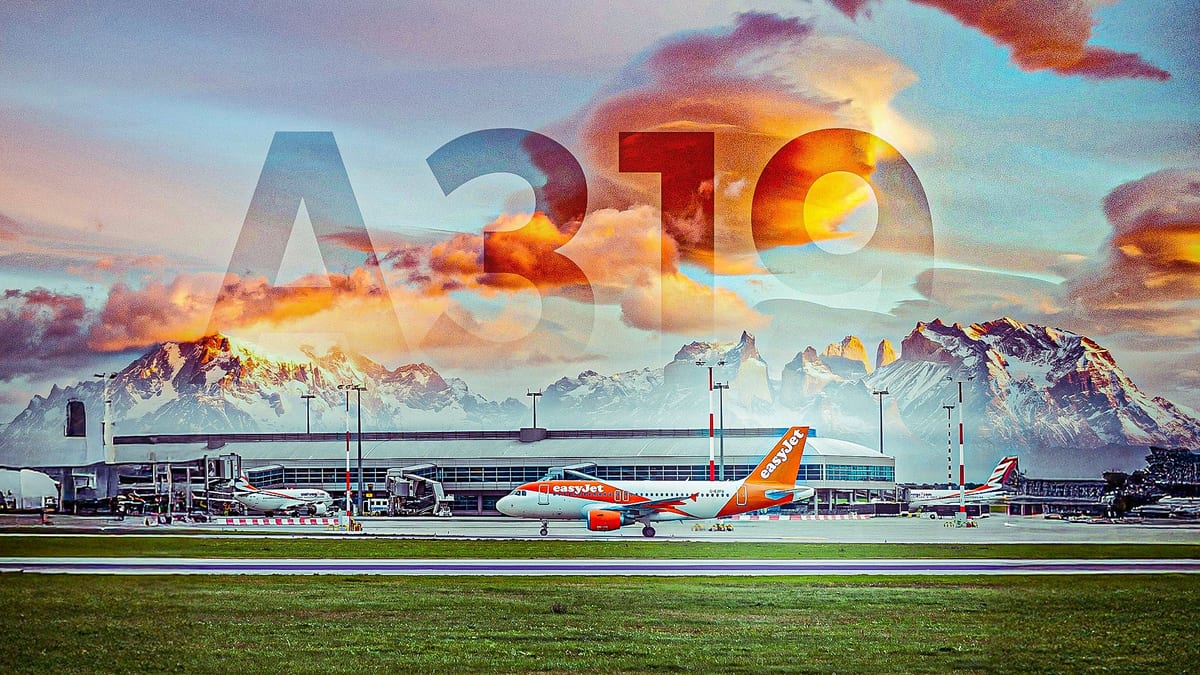
Image by Simple Flying - Aviation News
Incident on Corfu to London Service
According to published coverage of the event, the easyJet service was operating from Corfu to London Gatwick with more than 180 people on board when the aircraft ran into a pocket of severe turbulence at cruising altitude. The disturbance occurred not long after takeoff from the Greek island as the flight progressed northwest toward the Italian mainland.
Reports indicate the aircraft, an Airbus narrowbody, had reached around 28,000 feet when it encountered the abrupt vertical and lateral movements. Weather systems over parts of Italy were cited in local media as a contributing factor, with the aircraft believed to have entered a zone of instability that had been affecting the region.
Passengers described a brief but intense jolt inside the cabin, with service items and unsecured objects reportedly thrown into the air. The turbulence episode lasted only a short period, but it was sufficient to cause injury to crew members working in the aisle and galley.
Following the event, the captain elected to discontinue the flight to London and divert to Rome Fiumicino, where medical staff were requested to meet the aircraft upon arrival. The diversion allowed injured crew to receive prompt treatment and enabled technical assessments of the aircraft before it continued in service.
Flight Attendants Sustain Leg and Ankle Injuries
Publicly available information from Italian and international media indicates that two flight attendants were seriously hurt during the turbulence encounter. One member of cabin crew reportedly suffered a broken leg, while another sustained a severe ankle injury after being thrown against cabin structures.
Coverage of the incident notes that the crew were in the midst of preparations for in-flight service when the aircraft hit the rough air. With seat belts unfastened so they could move through the cabin, they were more exposed to the sudden vertical movements than seated passengers, most of whom were reported to have escaped injury.
After landing in Rome, emergency medical teams boarded the aircraft to assist the injured crew members. They were subsequently transported to local hospitals for further assessment and care. easyJet later arranged onward travel for passengers to London on alternative services once the situation had been stabilized.
There were no reports of serious passenger injuries linked to the turbulence, underlining how the use of seat belts, even when the sign is off, can significantly reduce the likelihood of harm when conditions deteriorate unexpectedly.
Italian Authorities Open Safety Investigation
Italian civil aviation officials initiated a formal inquiry into the circumstances surrounding the turbulence event. According to media summaries of the investigation, the review is examining the meteorological conditions along the route, the flight path through Italian airspace, and the performance of on-board weather radar and forecasting tools.
Investigators are also reported to be evaluating whether the crew had sufficient prior warning of potential turbulence and how the seat belt sign and cabin service were managed in the period leading up to the incident. Such analyses are standard practice after significant in-flight injuries and are intended to identify safety lessons rather than assign blame.
Regulators and safety agencies typically compare individual events with broader data on turbulence incidents affecting commercial aviation. Findings can feed into updated guidance for airlines on route planning, cabin procedures, and the use of predictive turbulence products that draw on satellite, radar and pilot reports.
Any recommendations that emerge are likely to be shared across the European aviation sector, reflecting a wider industry goal of reducing turbulence-related injuries among cabin crew, who statistically bear a disproportionate share of such harm compared with passengers.
Growing Focus on Turbulence Risk Worldwide
The easyJet incident near Italian airspace fits into a broader pattern of turbulence-related events that have attracted heightened attention from airlines, regulators and safety researchers. International aviation safety reports highlight that most serious injuries from turbulence occur to flight attendants who are standing or walking through the cabin when conditions suddenly deteriorate.
Recent high-profile incidents on long-haul flights have underlined how rapidly clear air turbulence can develop, sometimes in regions without visible storm clouds. Climate and atmospheric researchers have pointed to indications that certain jet stream patterns may be intensifying, which could increase the frequency of turbulence encounters on some busy routes.
Airlines have responded by investing in more sophisticated forecasting and by encouraging flight crews to take a conservative approach to cabin movement when convective weather or unstable air is expected along a route. This can include delaying or suspending service and keeping the seat belt sign illuminated for extended periods in areas of known instability.
The event on the Corfu to London route adds to the evidence base used by safety specialists to refine training and procedures, particularly around communication between flight deck and cabin crew when turbulence is anticipated or encountered without warning.
What Passengers Can Do to Stay Safer
While the easyJet flight attendants sustained the most serious injuries in this case, the episode also reinforces long-standing guidance for passengers. Aviation safety materials consistently recommend keeping seat belts fastened whenever seated, even when the sign is off, because unexpected turbulence can occur in otherwise smooth conditions.
Passengers are also advised to follow crew instructions promptly when the seat belt sign is switched on and to stow loose items such as hot beverages, laptops and heavy bags during periods of expected rough air. Overhead bins should be latched securely, and items kept under the seat in front where possible to prevent them from becoming projectiles.
For travelers apprehensive about flying, experts often note that modern commercial aircraft are engineered to withstand levels of turbulence far beyond those typically experienced in service. The main risk during such events is not to the structural integrity of the aircraft but to unrestrained occupants and loose objects inside the cabin.
In the wake of the easyJet diversion to Rome, discussions within the industry are likely to continue around how best to balance passenger comfort, on-board service and safety, with particular emphasis on protecting the flight attendants who move through the cabin to support travelers during every phase of flight.