

More news on this day
An easyJet leisure flight spanning Spain, France, and the United Kingdom has triggered widespread attention after reports described a single passenger’s post-diversion ordeal as a “£3,000 travel nightmare,” highlighting the financial and emotional toll that emergency reroutings can create for ordinary travelers.
Get the latest news straight to your inbox!
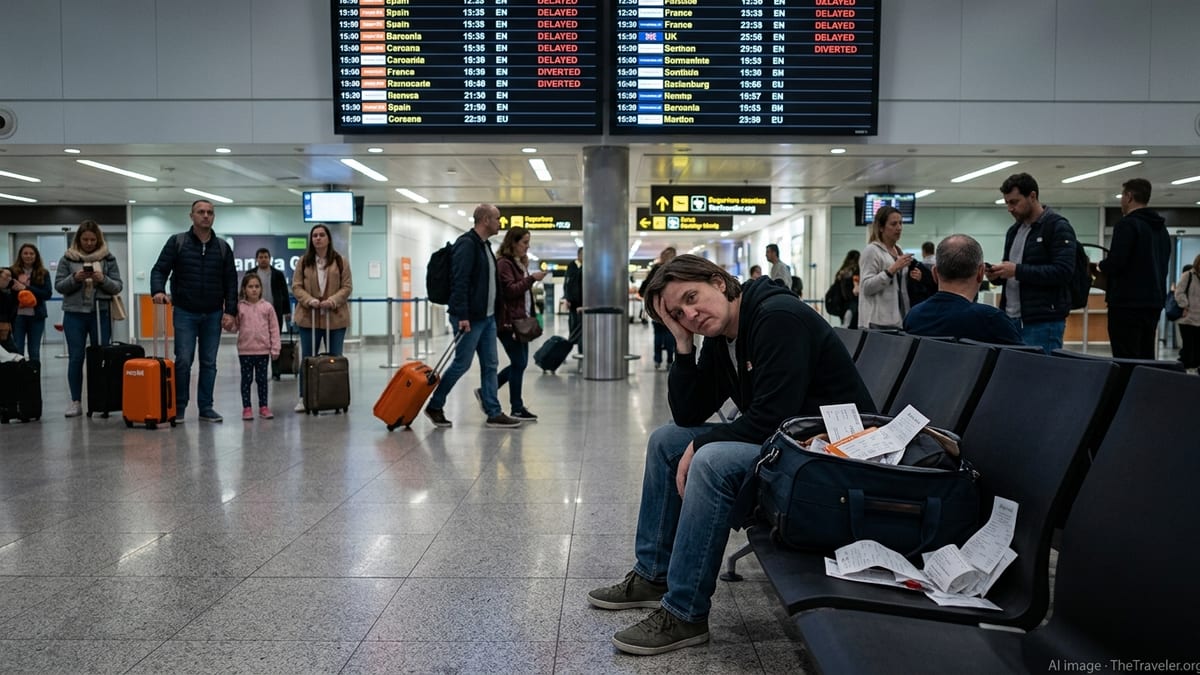
Emergency Diversion Turns Routine Flight Into Multi‑Country Saga
According to published coverage and social media accounts, the disruption began when an easyJet service operating between Spain and the United Kingdom was forced to divert unexpectedly to France following an in‑flight emergency. The nature of the emergency has not been fully detailed in public reports, but the diversion resulted in the aircraft landing at an alternate French airport instead of its planned UK destination.
Once on the ground, passengers were reportedly disembarked and held for several hours while operational checks and onward arrangements were assessed. The disruption left travelers caught between three jurisdictions: departing from Spain, diverted to France, and originally ticketed to arrive in the UK. For at least one passenger, what began as a short‑haul European flight quickly became a complex and costly journey spanning multiple borders.
The affected traveler has shared that the diversion and subsequent missed connections triggered a cascade of extra spending on accommodation, replacement transport, and incidental costs. By the time they eventually made it home, the total outlay connected to the disruption was reported to be around £3,000, far outweighing the original fare for the budget flight.
Passenger Describes Escalating Costs From Missed Connections
Publicly available accounts indicate that the stranded traveler initially attempted to follow the rerouting options proposed at the diversion airport. However, with limited same‑day capacity and onward seats in high demand during a busy travel period, many alternatives either sold out quickly or came with substantial last‑minute price tags.
Reports describe an escalating series of expenses: new flights to reconnect through the UK, overnight hotel stays unexpectedly added to the trip, meals purchased at airport prices, and extra ground transport to reach alternative airports and, eventually, their final destination. The cumulative impact of these individual costs reportedly took the total to roughly £3,000 by the end of the journey.
Travelers in similar situations often discover that non‑refundable elements of their plans, such as pre‑paid hotels or activities at the destination, cannot be recovered, adding to the sense of financial loss. In this case, published coverage suggests the passenger is still seeking clarity on which portion of the outlay may be recoverable under airline policies, insurance coverage, or European and UK air passenger regulations.
Spain, France, and UK Rules Complicate Passenger Rights Landscape
The incident underscores how complex passenger protections can become when a disruption spans multiple European countries. Flights involving Spain, France, and the UK can fall under overlapping frameworks that originated in European Union Regulation EC261 and its UK successor, UK261. These rules, in broad terms, set out compensation and care obligations for delays, cancellations, and denied boarding on qualifying flights.
However, emergency diversions linked to safety concerns or extraordinary circumstances are frequently treated differently from routine operational delays. Public guidance from regulators and consumer groups generally indicates that, in genuine emergency or safety‑related events, lump‑sum compensation may not be owed, even though airlines are still expected to provide assistance such as refreshments, communication, and, where necessary, hotel accommodation and re‑routing at the earliest opportunity.
When a diverted aircraft lands in a third country, as reported in this case, the legal and practical picture can become even more fragmented. Local border rules, available airport infrastructure, the presence or absence of airline staff on site, and nighttime flight restrictions can all influence how quickly passengers are processed and what options they are offered for continuing their journeys.
Growing Scrutiny of Low‑Cost Carrier Disruption Handling
The reported £3,000 ordeal adds to a broader spotlight on how large low‑cost carriers manage irregular operations across Europe. Recent seasons have seen a series of high‑profile cases in which passengers have described being left to arrange and fund their own accommodation or onward transport after diversions or cancellations, sometimes later disputing reimbursement decisions.
Consumer advocates frequently argue that many travelers are unaware of their entitlements and may accept costly alternatives without first checking whether the operating carrier is obligated to provide rebooking, hotel stays, or meal vouchers. In the case of the easyJet diversion involving Spain, France, and the UK, observers note that the passenger’s decision to secure their own route home, although understandable under stress, may complicate later claims if the airline contends that suitable options were available through its own channels.
Airline industry commentators point out that low‑cost business models rely on tight aircraft utilization and limited staffing at out‑station airports, both of which can slow response times when an aircraft unexpectedly arrives at an unscheduled destination. As a result, diverted passengers may experience longer waits for information, fewer on‑the‑spot staff, and reduced access to immediate alternative flight options compared with hub‑and‑spoke legacy carriers.
What Travelers Can Learn From the £3,000 Diversion Ordeal
While the precise circumstances and any eventual reimbursements in this easyJet case remain to be fully clarified in the public domain, the episode offers several practical lessons for travelers planning multi‑country European trips. Passenger rights specialists often advise keeping detailed records of all disruption‑related spending, including receipts for hotels, meals, ground transport, and replacement flights, as these documents are typically required when submitting claims to airlines or insurers.
Travel insurance with robust trip interruption or missed connection coverage can play a critical role in such scenarios, particularly where regulatory compensation is limited by the classification of an incident as an emergency or extraordinary circumstance. Policies vary significantly, and travelers are generally encouraged to review coverage terms before departure, paying close attention to caps on accommodation and transport reimbursements.
The reports from this Spain–France–UK diversion also highlight the importance of maintaining flexibility in onward itineraries whenever possible. Booking longer connection windows, avoiding tight same‑day commitments on arrival, and allowing some budget for contingencies can help reduce the stress and financial impact when events beyond a carrier’s control abruptly change the course of a journey.
For now, the passenger at the center of this widely discussed diversion continues to symbolize how a short European hop can rapidly turn into a multi‑country, multi‑day challenge. The case is likely to remain a reference point in ongoing debates over airline responsibilities and the real‑world experience of travelers navigating the complex rules that govern disrupted flights across Spain, France, and the UK.