

More news on this day
A passenger on an easyJet service has described being left thousands of pounds out of pocket after an emergency diversion triggered an improvised journey across Spain, France and the United Kingdom, raising fresh questions over what airlines owe travellers when flights go badly wrong.
Get the latest news straight to your inbox!
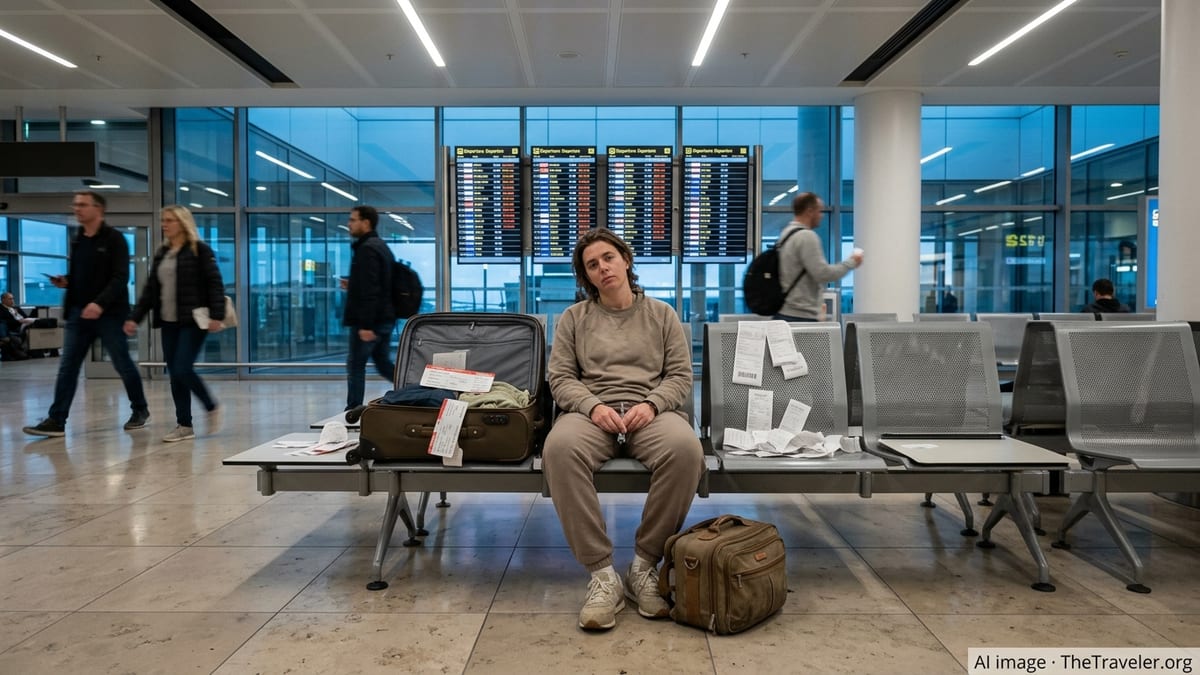
Emergency Diversion Turns Routine Flight Into Multi-Country Odyssey
According to recent reports in UK and European media, the incident began as a standard short-haul easyJet service operating between Spain and the United Kingdom when a mid-route emergency prompted an unscheduled landing in France. The precise nature of the emergency has not been widely detailed, but the diversion left passengers far from both their point of origin and their intended destination.
Once on the ground in France, passengers were reportedly held on board while ground staff and the crew determined how to manage the disrupted service. As the delay lengthened, concerns shifted from the initial emergency to the practical question of how and when travellers would be able to complete their journeys. Accounts indicate that information was fragmented, with announcements focusing on operational constraints rather than clearly outlining the options available to those on board.
With the original flight apparently unable to continue as planned, easyJet is reported to have worked on alternative routings back to the UK. However, at least one traveller has stated that the combination of diversions, rebookings and last minute arrangements ultimately resulted in a complex route that touched Spain, France and the UK, with onward connections and overnight stays becoming part of a journey that was originally meant to be a straightforward hop.
By the time the passenger finally reached home, the itinerary bore little resemblance to the initial ticketed plan. The disrupted route, changing departure points and additional surface transport together created what has been described as a cross-border odyssey stitched together under significant time pressure at airports in multiple countries.
Costs Spiral Into a Reported £3,000 "Travel Nightmare"
The financial fallout from the disruption has become a focal point of the story. The affected passenger has publicly described the experience as a £3,000 travel nightmare, citing out of pocket costs linked to extra transport, accommodation, food and missed onward plans. These expenses, racked up over the course of the improvised journey between Spain, France and the UK, have fuelled debate over who should ultimately bear the financial risk when flight plans collapse.
Published accounts indicate that, while certain elements of care such as limited refreshments or basic rebooking assistance were made available, other costs quickly fell to passengers themselves. Hotel stays, late night transfers between airports and cities, and the need to secure replacement connections at short notice in peak travel periods can rapidly push individual spending to levels far beyond the price of the original flight.
Reports also highlight the emotional strain of repeatedly paying out for taxis, train tickets and meals in unfamiliar airports and transit hubs, often without clear confirmation of later reimbursement. For families or travellers on tight budgets, a chain of diversions can transform an affordable short break into a financially destabilising episode before any formal complaint or claim is even submitted.
In this case, the headline figure of around £3,000 has come to symbolise that wider anxiety. It reflects not only direct travel expenses, but also knock on effects such as non refundable accommodation at the destination, missed work and additional childcare or pet care costs back home, all accumulating as the disruption spread across three countries.
Spain, France and the UK Highlight Complex Passenger Rights Landscape
The multi country nature of the diversion has drawn attention to the intricate legal framework governing air passenger rights in Europe. Flights beginning or ending in Spain and transiting France typically fall under the scope of the European Union’s Regulation EC261, which sets minimum standards for compensation and care in the event of cancellations, long delays and certain kinds of diversions involving EU carriers.
At the same time, departures and arrivals in the United Kingdom after Brexit are governed by UK261, a domestic version of the same rules with broadly similar provisions but enforced by UK regulators. When a journey links Spain, France and the UK, the applicable regime can shift depending on the origin, the operating carrier and precisely where in the itinerary the disruption occurs.
Publicly available guidance notes that carriers are generally expected to provide so called duty of care during extended disruptions, including reasonable meals, refreshments and accommodation where overnight stays become necessary. Compensation payments may also be owed in some circumstances, unless the airline can demonstrate that the disruption was caused by extraordinary circumstances beyond its control.
In practice, reports from consumer groups and traveller forums suggest that passengers often struggle to determine which authority to approach, which regulation applies and exactly what documentation is needed to support a claim when journeys cross several jurisdictions. A case involving an emergency landing in France, a departure from Spain and an eventual arrival in the UK sits at the intersection of these regimes, increasing the potential for confusion.
easyJet Response and Growing Scrutiny of Disruption Handling
As of the most recent published coverage, easyJet has been cited as acknowledging the disruption and pointing to operational or safety considerations behind the original diversion. Public statements from the airline in comparable incidents typically stress that the safety of passengers and crew is the primary concern when crews opt to divert, and that emergency decisions may lead to significant delays or re routings.
However, the case has fed into a broader pattern of scrutiny facing European low cost carriers over how they manage passengers once the immediate safety issue is resolved. Consumer advocates note that, while diversions for medical or technical reasons may be unavoidable, the subsequent handling of communication, rebooking options and expense reimbursement remains a frequent source of complaint.
In online accounts of this event, the passenger describes limited proactive guidance on available alternatives, with much of the onward planning apparently left in the hands of travellers themselves. Experiences shared on social media and travel forums often refer to long queues at airport service desks, difficulty reaching call centres and uncertainty over whether to self book hotels or replacement flights in the hope of later reimbursement.
Industry analysts observing this and similar cases argue that such experiences risk eroding trust in budget carriers at a time when demand for short haul European travel remains strong. The gap between legal entitlements under EU and UK rules and the lived reality of securing assistance at midnight in an unfamiliar airport continues to drive calls for clearer enforcement and more consistent standards of care.
What Travellers Can Learn From the £3,000 Diversion Saga
The reported ordeal of an easyJet passenger forced into an expensive three country detour underlines several lessons for travellers. Public guidance from consumer organisations consistently advises passengers to retain all receipts for reasonable expenses when disruption occurs, including food, transport and accommodation, so that detailed claims can be submitted later under EU or UK regulations.
Experts also recommend understanding in advance which rules will apply to a given itinerary. For journeys touching both the EU and UK, travellers can consult official summaries of EC261 and UK261 to familiarise themselves with thresholds for delay compensation, duty of care obligations and time limits for bringing a claim. Knowing, for example, that overnight accommodation should be provided in many prolonged disruption scenarios may influence how assertively passengers seek assistance at the airport.
Another recurring theme in public advice is the value of comprehensive travel insurance that explicitly covers missed connections, diversions and extended delays. While statutory regimes determine what airlines must provide, insurance policies can offer an additional layer of protection for secondary costs such as lost prepaid accommodation, alternative transport and incidental expenses that quickly accumulate when journeys unfold across multiple borders.
For now, the story of a short haul easyJet flight that evolved into a costly, multi country trek across Spain, France and the UK illustrates how a single unscheduled landing can cascade into a prolonged and expensive saga. It also highlights the continuing gap between written passenger rights and the complex realities travellers face when disruption turns a budget flight into a multi thousand pound ordeal.