

More news on this day
easyJet has announced a special Easter onboard fundraising campaign in support of UNICEF’s Children’s Emergency Fund, inviting passengers across its European network to donate spare change to help protect vulnerable children affected by conflicts and disasters in 35 countries.
Get the latest news straight to your inbox!
Seasonal Appeal Extends Longstanding easyJet–UNICEF Partnership
The new Easter onboard collection builds on more than a decade of collaboration between easyJet and UNICEF, during which passengers and crew have raised many millions of pounds through inflight appeals. Publicly available corporate reports indicate that the airline’s partnership, relaunched under the Every Child Can Fly initiative, has focused on giving customers a simple way to support children living through crises while they travel.
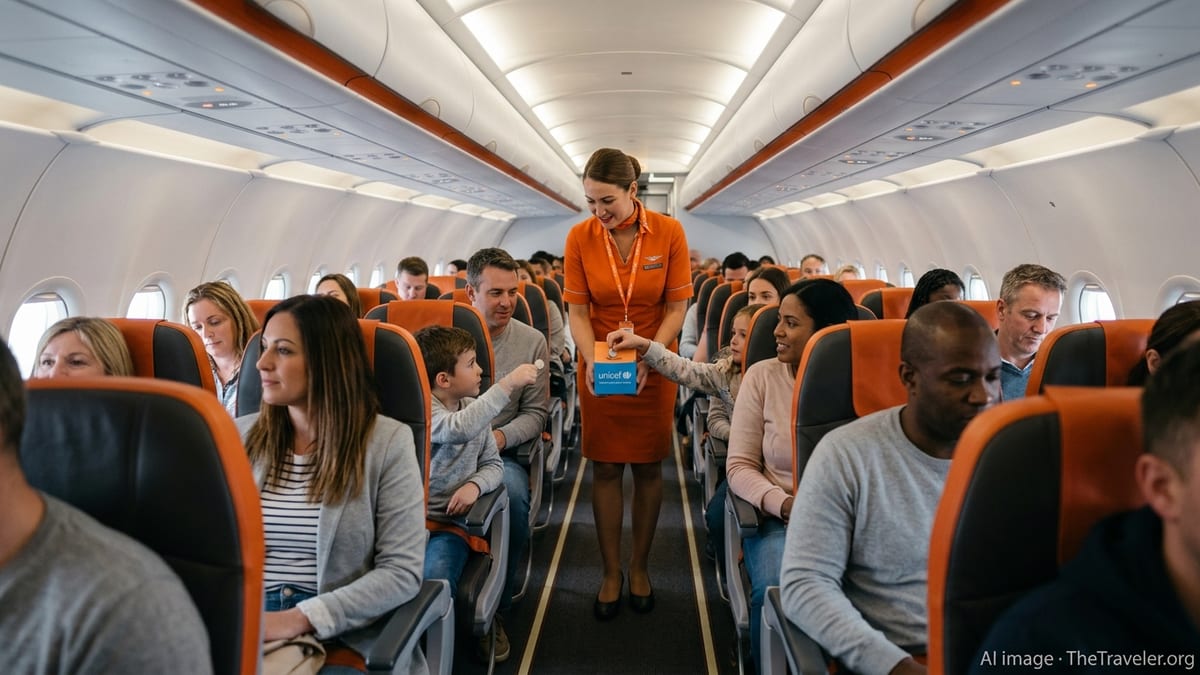
For the Easter period, cabin crew will invite customers to donate local currency and leftover coins into specially branded collection envelopes during flights. The money gathered is directed to UNICEF’s flexible Children’s Emergency Fund, which can be used rapidly wherever the need is greatest, rather than being tied to a single country or crisis.
Company and charity disclosures show that previous seasonal collections have generated significant sums in relatively short windows, particularly during major emergencies such as the Syria and Türkiye earthquakes and the conflict in Ukraine. The Easter appeal is positioned as a continuation of this model, aligning a peak travel moment with an opportunity to contribute to global child protection efforts.
By linking the campaign to Easter travel, easyJet is targeting one of its busiest holiday periods, when family leisure travel across Europe typically surges. The airline operates an extensive short‑haul network, and the collection is expected to run across a large proportion of its routes to maximize participation and visibility.
Support for Children in Emergencies Across 35 Countries
According to UNICEF materials outlining the role of the Children’s Emergency Fund, donations from corporate partners and the public are pooled to help children before, during and after emergencies. The fund can be deployed to support rapid responses to sudden‑onset disasters, as well as ongoing crises that receive less media attention but continue to affect children’s lives.
easyJet’s Easter onboard collection is highlighted as contributing to this global pool, which currently covers work in 35 countries facing conflict, displacement, disease outbreaks and climate‑related shocks. In practice, this can include supplying safe water and sanitation, providing temporary learning spaces when schools are damaged, reuniting separated families, and delivering psychosocial support for children exposed to violence and upheaval.
Public information from UNICEF indicates that flexible, unearmarked funding is especially valuable in the early hours and days of an emergency, when the exact scale and location of needs are still emerging. Because the Children’s Emergency Fund is already in place, money raised through campaigns such as the easyJet Easter appeal can help ensure stocks of critical supplies and specialist teams are ready to deploy.
While the appeal is global in scope, UNICEF’s reporting shows that children in regions affected by protracted crises, including parts of the Middle East, sub‑Saharan Africa and Eastern Europe, remain among the most likely to benefit from this kind of support. For travelers boarding an easyJet flight over Easter, the initiative is framed as a tangible way to contribute to that wider safety net.
How Inflight Collections Turn Spare Change Into Lifesaving Support
Onboard donation drives have become a recognizable part of easyJet’s collaboration with UNICEF. Practical details shared in corporate responsibility documents explain that cabin crew make a timed announcement during the flight, often after the main onboard service, and move through the cabin with collection materials so passengers can give discreetly from their seats.
Donations typically include a mix of notes and coins in multiple currencies, including leftover holiday money that might otherwise go unused. The airline and UNICEF then work together to count and process the funds, converting them into a single operating currency before transferring them to the Children’s Emergency Fund.
Past reporting on the partnership describes how relatively small individual contributions can add up quickly across thousands of flights. In previous campaigns, easyJet customers have collectively funded vaccinations, education materials and safe learning spaces for children whose schooling was interrupted by emergencies, as well as other critical services such as nutrition screening and medical care.
The Easter focus aims to encourage participation from families and leisure travelers, many of whom are flying with children. Background materials for earlier campaigns suggest that this audience has responded positively to appeals connecting the excitement of travel with an opportunity to support children who are unable to enjoy the same security and freedom of movement.
Airline Philanthropy and Changing Expectations of Travelers
The Easter onboard collection also reflects a broader shift in how airlines approach social responsibility and community impact. Industry analyses note that passengers increasingly expect carriers to demonstrate tangible commitments beyond environmental performance, including support for humanitarian causes and vulnerable communities.
In this context, easyJet’s partnership with UNICEF is framed as a core strand of its social impact agenda, sitting alongside initiatives such as support for wish‑granting charities and community projects near its bases. The decision to spotlight UNICEF’s Children’s Emergency Fund over Easter aligns the brand with a highly recognized global organization and a cause with clear relevance at a time of elevated geopolitical and climate‑related instability.
Travel commentators point out that onboard collections also create visible moments of shared action among passengers, with the cabin environment providing a captive audience and a direct channel for engagement. While the amounts each person gives may be modest, the cumulative effect over a busy holiday period can rival that of large one‑off corporate donations.
At the same time, advocacy groups emphasize the importance of sustained, predictable funding over headline‑driven spikes. By anchoring its appeal in a fund designed to operate across multiple countries and crises, easyJet’s Easter campaign is positioned as part of a longer‑term approach to supporting children’s rights and wellbeing in emergencies worldwide.
What Easter Travelers Can Expect Onboard
For passengers, the practical impact of the campaign is relatively simple. During flights over the Easter travel window, crew members are expected to highlight the opportunity to donate, explain in broad terms how UNICEF uses the funds, and collect contributions using clearly branded materials. Participation is voluntary, and there is no set amount required.
Travelers can give in cash using whatever spare currency they have to hand, including coins left over from previous trips. Information included in previous partnership materials suggests that even small sums are welcomed, with UNICEF able to leverage pooled funding to secure bulk rates on essential items such as water purification tablets, ready‑to‑use therapeutic food, school supplies and medical kits.
Passengers who choose not to donate will see little change to their usual onboard experience beyond a brief announcement and collection round. For those who do take part, the appeal offers a way to connect their journey with a wider narrative of global solidarity, particularly at a time of year that carries themes of renewal, hope and family in many European cultures.
As airlines continue to balance commercial pressures with rising expectations around social contribution, easyJet’s Easter collection for UNICEF’s Children’s Emergency Fund illustrates how inflight moments can be used to channel traveler generosity toward children living in some of the world’s most challenging and unstable environments.