

More news on this day
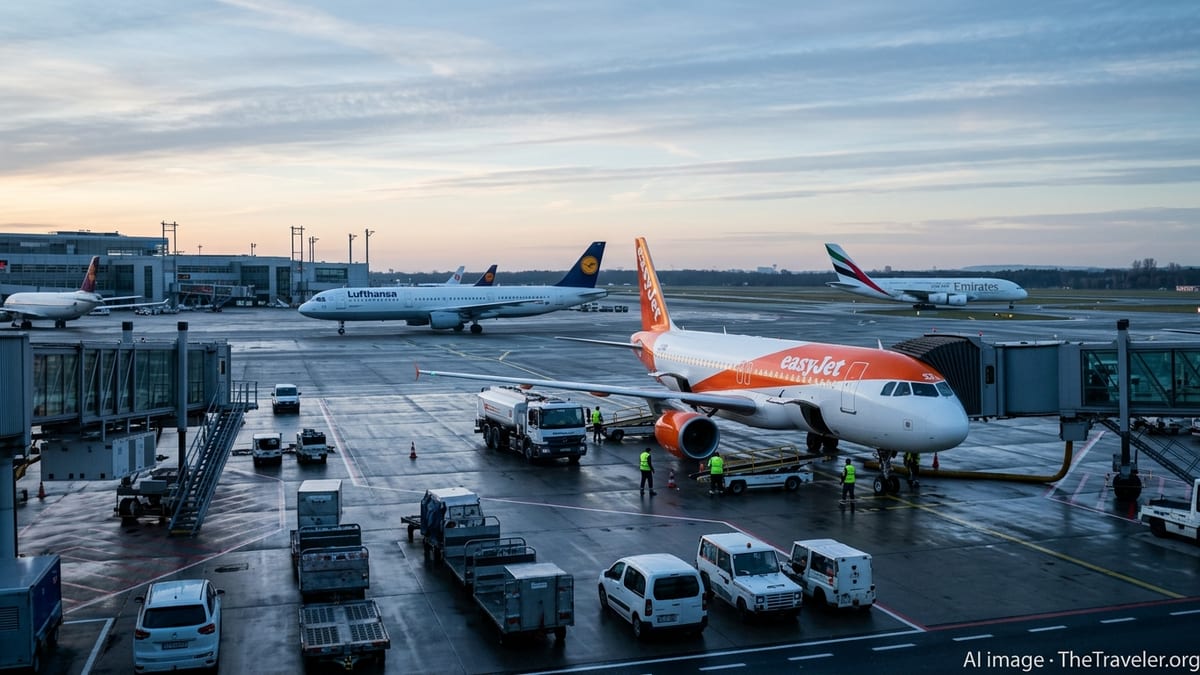
easyJet has been swept into a fresh wave of aviation turmoil as the Iran war and the closure of key Middle East air corridors drive jet fuel costs sharply higher, erase an estimated $50 billion from global airline market value, and unleash new uncertainty for European travelers heading to Asia, Africa and the Gulf.
Get the latest news straight to your inbox!
Middle East Conflict Sends Shockwaves Through Global Aviation
The latest escalation of conflict involving Iran, the United States and Israel has rapidly reshaped global air travel. Airspace closures over Iran, Iraq, Syria, Qatar and parts of the Gulf, together with temporary shutdowns of major hubs in Dubai, Abu Dhabi and Doha, have forced airlines to cancel hundreds of flights and reroute many more on longer paths around the region.
Publicly available flight-tracking data shows that traffic through the Gulf, one of the world’s most important transit corridors between Europe, Africa and Asia, has thinned dramatically in recent weeks. Analysts describe a system-wide shock similar in scale to earlier geopolitical crises, but now layered on top of already tight aircraft capacity and strong post-pandemic demand for international travel.
The conflict has also collided with a parallel energy shock. Benchmark crude prices have surged above 100 dollars per barrel amid fears over the Strait of Hormuz, while research on the 2026 Iran war indicates that jet fuel prices have more than doubled compared with pre-crisis levels, as refineries struggle to replace lost Middle Eastern crude suitable for aviation fuels.
For airlines, which typically count fuel as their single largest cost item, the combined impact of longer flight times and more expensive fuel is now feeding rapidly into balance sheets and investor expectations.
easyJet Shares Slide as Fuel and Route Risks Mount
easyJet, one of Europe’s largest low-cost carriers, has become a focal point of investor anxiety. The carrier’s latest financial disclosures already showed total headline costs, including fuel, rising faster than revenue as it expanded capacity and contended with higher airport, navigation and wage expenses. More recent commentary from market analysts highlights that fuel accounts for close to a third of easyJet’s airline cost base, leaving the group highly sensitive to any sustained spike in oil and jet fuel prices.
In the weeks following the sharp escalation of hostilities and the effective disruption of the Strait of Hormuz, easyJet’s share price has tracked broader airline indices lower. Earlier trading updates had underlined the impact of Middle East tensions on its longer routes, and analysts now warn that the latest conflict could further weigh on profitability if elevated fuel prices persist into the peak summer season.
Historical figures underline how quickly regional conflict can translate into tangible losses. Previous fighting around Israel and Gaza was reported to have cost easyJet tens of millions of pounds in cancelled flights and weaker demand on affected routes, even as the airline relied on fuel hedging to soften some of the blow from rising oil prices. The new flare-up, coming on top of that experience, has renewed questions over how much protection hedging strategies can provide if energy markets remain dislocated for months.
While demand for leisure travel across Europe remains robust, the combination of higher costs, potential schedule disruption and investor jitters is creating a more fragile backdrop for easyJet just as it moves to grow capacity and open additional bases across the region.
Gulf Super-Connectors and European Giants Under Pressure
easyJet’s turbulence is part of a much wider reckoning across the aviation sector. Emirates, Qatar Airways and Etihad Airways, the dominant Gulf super-connectors, have faced waves of cancellations and schedule reshuffles after airspace closures and strikes in and around the Gulf brought operations at Dubai, Doha and Abu Dhabi to a standstill for extended periods. Industry data suggests that these hubs, which usually process close to 90,000 connecting passengers per day for their largest carriers alone, have seen traffic fall sharply during the most intense phases of the conflict.
European full-service groups have also responded with significant changes. Lufthansa Group has suspended some services to Tehran, Tel Aviv and other regional destinations while rerouting long-haul flights to avoid Iranian and adjacent airspace, adding extra flying time and fuel burn. Reports from regional aviation consultancies note that Emirates, Etihad, Flydubai, Qatar Airways and Air Arabia have all implemented route suspensions or detours, which can add thousands of dollars in fuel costs to a single wide-body flight.
Low-cost rival Wizz Air has taken similarly drastic steps in the region. The carrier had already reduced its presence in certain Middle Eastern markets, and its Abu Dhabi-based offshoot has wound down local operations as geopolitical uncertainty and operational challenges eroded the business case for a hub model in the Emirati capital. For travelers who once relied on ultra-low fares between Europe and the Gulf, those cutbacks significantly limit options.
Credit analysts point out that many large European carriers, including Lufthansa and Air France-KLM, have some buffer in the form of fuel hedges and relatively strong balance sheets after a period of robust post-pandemic recovery. Even so, ratings agencies warn that a prolonged period of high energy prices and volatile airspace restrictions could squeeze margins and test the resilience of Gulf and European groups alike.
$50 Billion Market Rout Highlights Investor Nerves
Across global stock markets, the aviation sector has borne the brunt of investor concerns about the Iran war and the associated energy crunch. Since late February, publicly traded airline groups in Europe, North America and the Gulf have together seen roughly $50 billion in market value erased, according to aggregated market data and sector analyses published in early March.
Shares in major US carriers have slumped in tandem with their European counterparts as investors model the impact of sharply higher fuel bills. Research notes that every cent increase in jet fuel costs can add tens of millions of dollars in annual expenses for a large airline, while sustained double-digit percentage increases in fuel prices translate into multi-billion-dollar hits for the industry as a whole.
The sell-off has been particularly acute among airlines with limited fuel hedging or heavy exposure to routes crossing the Middle East. Market commentary singles out carriers that had expanded aggressively into Gulf and South Asian markets in recent years, and which now face the choice of flying longer, more fuel-intensive routes or suspending services entirely until the security situation improves.
easyJet’s inclusion in this broader downdraft underscores how tightly connected regional low-cost players have become to global energy and security dynamics. Even airlines without direct exposure to Iranian or Gulf airports can suffer when markets price in the risk of weaker consumer confidence, higher ticket prices and costlier operations across their networks.
What Travelers Should Expect in the Months Ahead
For travelers, the immediate impacts are higher fares on some long-haul routes, limited availability on flights that avoid conflict airspace and ongoing risk of schedule changes with little notice. Travel analysis sites report that airlines including British Airways, Lufthansa Group, Emirates, Qatar Airways, Etihad and Wizz Air have introduced flexible rebooking policies on affected itineraries, allowing passengers to adjust dates or routes when flights are disrupted.
Industry experts caution that the situation remains fluid. Additional airspace closures or security advisories could force airlines to cancel or reroute flights well into the northern summer season, especially on routes linking Europe with India, Southeast Asia and Australasia that typically overfly parts of the Middle East. Travelers are being encouraged to monitor itineraries closely, build in extra connection time and consider alternative routings via hubs less exposed to the conflict.
At the same time, higher operating costs are likely to filter through to ticket prices, particularly in premium cabins and on routes with limited competition. Some carriers may attempt to protect margins by trimming capacity, which can further tighten supply and support higher fares even as fuel prices squeeze profitability.
For easyJet, Lufthansa, Emirates, Etihad, Qatar Airways, Wizz Air and their peers, the coming months will be a delicate balancing act between safeguarding passengers, managing soaring fuel and insurance costs, and maintaining schedules that keep global business and leisure travel moving through one of the most turbulent geopolitical periods aviation has faced in years.