

More news on this day
easyJet is stepping up its UK presence with the reopening of a base at Newcastle International Airport and a broader push on paid extra legroom seating, moves that together signal more choice and comfort for British travelers planning short-haul trips across Europe from 2025 and beyond.
Get the latest news straight to your inbox!
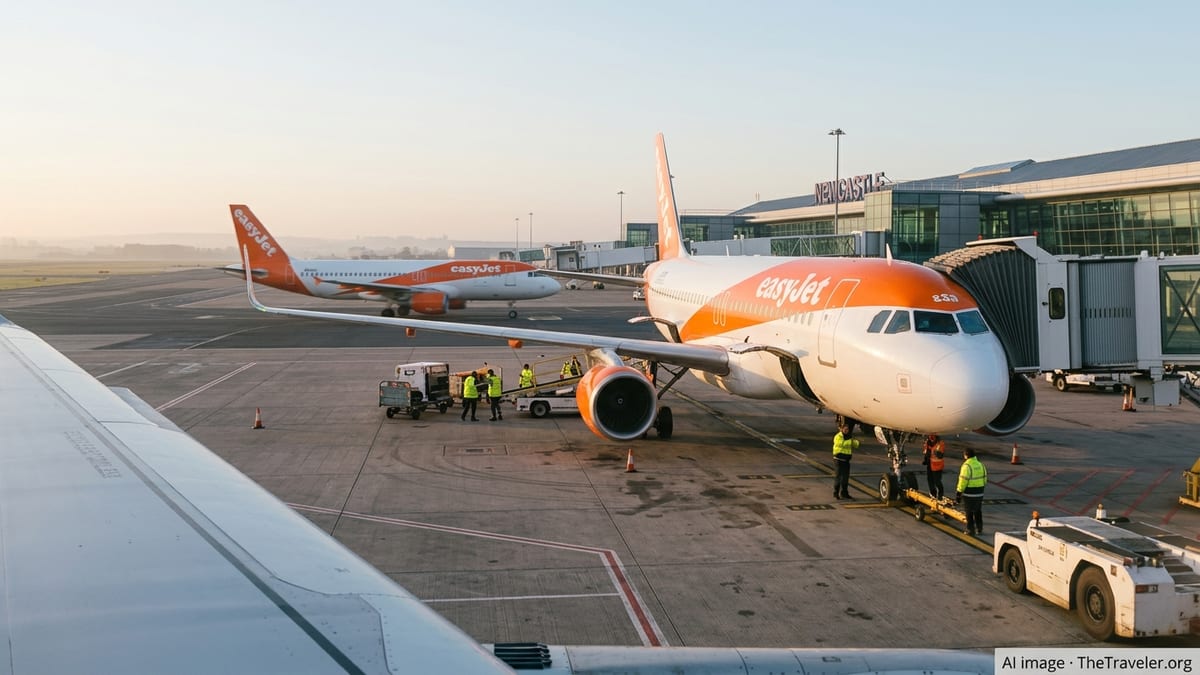
Newcastle Returns to the easyJet Route Map as a Base Airport
Publicly available information shows that easyJet is set to restore base operations at Newcastle International Airport roughly five years after withdrawing aircraft and crew during the pandemic. The move is part of a wider UK growth strategy that has already seen additional based aircraft at airports such as Bristol and London Southend, as well as a ramp-up in summer capacity across the network.
Having a base at Newcastle means aircraft and crew will be stationed overnight at the North East hub, rather than operating in and out from other airports. Industry analysis indicates that this typically allows airlines to run earlier departures, later evening returns and more frequent services on core leisure and city routes, giving local passengers a larger spread of flight times.
Newcastle has historically relied heavily on a mix of leisure carriers and a limited set of network airlines, and the loss of easyJet’s previous base reduced both choice and competition on popular European routes. The decision to return with based aircraft is expected to restore some of that lost connectivity, making it easier for travelers across Tyne and Wear, Northumberland and County Durham to start their trips locally rather than connecting via larger hubs in Manchester or London.
While full details of the base schedule are still emerging, reports suggest that easyJet will lean on its established strengths by focusing on Mediterranean beach destinations alongside selected city-break favorites. For passengers, the practical effect is likely to be more direct options during peak summer weeks and a stronger shoulder-season programme in spring and autumn.
What the New Base Means for Routes, Frequencies and Fares
According to recent aviation coverage, easyJet’s broader UK expansion includes a wave of new routes for summer 2025 from multiple British airports, with Newcastle positioned to benefit from the additional aircraft being deployed nationwide. When airlines commit to a base, they usually design schedules that maximize each aircraft’s daily flying hours, often resulting in extra rotations to high-demand sun and city destinations.
For travelers in the North East, that can translate into more frequent flights to well-known holiday spots in Spain, Portugal and Greece, as well as year-round links to major European cities. Increased capacity on these routes may also support more competitive pricing, particularly outside peak school-holiday weeks, as low-cost rivals vie for bookings from the same catchment area.
Extra based aircraft can also improve resilience during disruption. If a technical issue arises, having additional aircraft and engineering support on the ground locally can make it easier for the airline to recover the schedule. From a passenger perspective, that may reduce the risk of extended delays or overnight cancellations that can occur when spare capacity has to be ferried in from distant airports.
Regional business and tourism bodies frequently view new airline bases as catalysts for visitor growth and employment, and Newcastle is no exception. Industry commentary suggests that each UK-based aircraft supports hundreds of direct and indirect jobs across cabin crew, ground handling, maintenance, retail and hospitality, adding a local economic dimension to the travel benefits.
Inside easyJet’s Extra Legroom Strategy
Alongside route and base expansion, easyJet continues to emphasize paid seating options, including extra legroom rows and so-called Up Front seats. Product comparison information published by the airline indicates that these seats are offered as an upgrade on top of standard economy fares, with many bundled into fare types and membership products aimed at frequent travelers.
On most easyJet aircraft, extra legroom seats are located at exit rows and in some forward-cabin positions. Public seat-map data shows that these seats typically provide several additional inches of pitch compared with standard rows, which can make a noticeable difference on flights of three hours or more to southern Europe and North Africa.
Pricing for extra legroom varies by route, time of booking and demand, with third-party analyses indicating that UK travelers commonly pay a modest supplement per sector to secure the additional space. For passengers who are tall, travelling with limited mobility, or simply looking to work comfortably on a laptop, the relative cost can be offset by a more relaxed journey and easier access to the aisle.
easyJet also markets extra legroom seating as part of a wider unbundled model, where customers pay separately for options such as hold luggage, seat selection and speedy boarding. This approach allows price-sensitive travelers to stick with a basic fare, while those seeking extra comfort can tailor their experience without moving into a traditional premium cabin.
How North East Travelers Can Make the Most of Extra Space
With a new easyJet base set to increase departures from Newcastle, opportunities to combine convenient flight times with more comfortable seating are likely to expand. Travel experts often recommend that passengers who value legroom make seat selection a priority at the time of booking, particularly on peak-season flights where exit-row demand can be strong.
For families, it is important to note that safety regulations typically restrict under-16s from sitting in exit rows, which form the bulk of extra legroom seating on low-cost carriers. Parents in the North East planning trips from Newcastle may therefore prefer to opt for alternative seating near the front of the cabin or standard rows where the whole group can be seated together.
Passengers who travel frequently on the same routes, such as regular city commuters between Newcastle and major European hubs, may find value in membership products or fare bundles that include extra legroom or Up Front seating as part of the package. Publicly available information suggests that these can provide cost savings over multiple trips compared with buying upgrades on a one-off basis.
For occasional leisure travelers, monitoring prices over time and considering midweek departures can help keep overall trip costs in check while still leaving room in the budget for a legroom upgrade. Combining an early-morning departure from Newcastle with an exit-row seat can turn a long travel day into a more manageable experience, particularly when travelling with hand luggage only.
What To Watch Next as easyJet Builds for Summer 2026
Looking beyond the initial reopening of the Newcastle base, easyJet’s recently announced summer 2026 schedule suggests that the airline intends to keep growing UK capacity, with millions of seats already on sale across dozens of airports. Trade publications note that the carrier is targeting strong leisure demand to traditional sun destinations while also broadening its city-break offering.
As that wider expansion takes shape, the North East is positioned to gain from improved connectivity both to Mediterranean resorts and to key European cities that support inbound tourism and business travel. Additional frequencies from Newcastle may also make it easier for local passengers to connect onto longer-haul flights from major continental hubs, using easyJet services as a short-haul feeder.
From a comfort perspective, extra legroom seating is likely to remain a central feature of easyJet’s product, rather than a niche add-on. As more travelers weigh up the value of modest upgrades on short flights, airlines across Europe are competing on seat comfort, boarding priority and cabin experience without shifting away from low fares.
For UK passengers watching developments at Newcastle, the combination of a restored base and evolving seating choices means more control over both where and how they fly. The coming seasons will show how strongly travelers respond, and whether increased capacity and comfort options translate into sustained growth for the North East’s main airport.