

More news on this day
On Thailand’s Andaman coast, Phang Nga is drawing travelers who want more than postcard-perfect limestone cliffs and turquoise seas, as the province pairs its natural drama with an increasingly robust push for low-impact, community-based tourism.
Get the latest news straight to your inbox!
Protected Seascapes and Forests Under Pressure
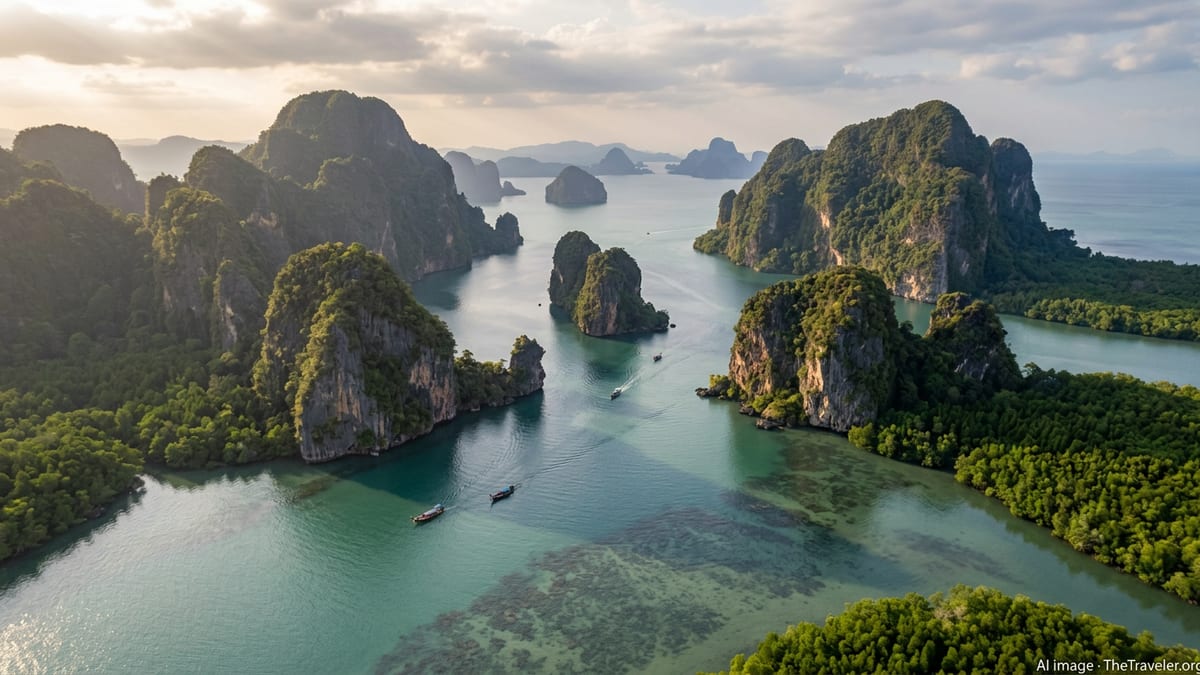
Ao Phang Nga National Park is the province’s best-known landscape, a shallow bay speckled with more than 40 limestone islands, mangrove forests and sheltered lagoons. Nearby, Khao Lak–Lam Ru National Park protects coastal hills and rainforest, while Ton Pariwat Wildlife Sanctuary and the compact Sa Nang Manora Forest Park conserve waterfalls and lowland forest close to town. Together, these areas form a patchwork of protected land and sea that underpins Phang Nga’s growing reputation as an eco-focused destination.
The province is also gateway to Mu Ko Similan and Mu Ko Surin national parks, two island groups in the Andaman Sea widely promoted for clear water, coral reefs and marine life. Both parks operate on a seasonal cycle that includes several months of closure each year to allow reefs and beaches to recover. Publicly available information for the 2025 season shows closures from mid-May to mid-October, mirroring previous years in which marine national parks in the region were regularly taken offline during the monsoon period to limit damage from storms and visitor pressure.
These measures reflect a broader pattern across Thailand’s Andaman coast, where popular islands and marine parks have adopted caps on daily visitor numbers, zoning rules for boats, and stricter controls on anchoring and snorkeling sites. Reports indicate that the Department of National Parks, Wildlife and Plant Conservation continues to adjust regulations based on reef health surveys and carrying-capacity studies, as concerns grow over coral bleaching, warming seas and chronic marine debris.
Despite protections, local observers note that discarded plastic and polystyrene remain visible in Phang Nga Bay’s currents and mangrove channels, especially after storms. This tension between spectacular scenery and persistent pollution is shaping how provincial authorities, tourism operators and community groups approach the next phase of development.
Digital Tools and Low-Impact Policies Shape Visitor Flows
Managing visitor numbers has become a central plank of Phang Nga’s sustainability push. According to Thai-language coverage in national media, Ao Phang Nga, Mu Ko Similan and Mu Ko Surin are among six marine national parks piloting a digital ticketing system that is expected to be fully rolled out across selected sites. The scheme is designed to centralize data on visitor flows, enable advance booking and support enforcement of daily quotas, particularly during peak season when tours to “James Bond Island” and other well-known spots sell out quickly.
Reports indicate that the electronic ticketing platform is being framed as an environmental and management tool rather than a simple convenience upgrade. By tying entry permits to specific time slots and capacities, officials aim to reduce congestion at popular beaches, avoid sudden surges in boat traffic, and ensure that rangers can track how many visitors are in sensitive zones at any given time. Public information suggests that this approach also supports revenue transparency, which can in turn help fund conservation activities in the parks.
Alongside ticketing reforms, long-standing rules on boat speeds, designated mooring buoys and no-anchor reef zones continue to guide operators in Phang Nga’s marine parks. Tourism businesses promoting eco-focused itineraries increasingly highlight compliance with these regulations in their marketing, reflecting growing awareness among travelers who want to minimize their impact when kayaking through caves, visiting sea-gypsy communities or snorkeling on offshore reefs.
On land, local municipalities and resort areas around Khao Lak have introduced a mix of zoning and infrastructure measures such as improved walkways, waste-collection points and wastewater treatment upgrades. Public documents from accommodation providers show that some larger properties now publish annual sustainability reports, tracking energy use, water consumption and waste separation while committing to reduce single-use plastics and source more products from nearby communities.
Community-Based and Conservation Tourism Gain Ground
Phang Nga has become part of a broader national shift toward community-based tourism and environmental, social and governance, or ESG-linked, travel initiatives. According to recent tourism-industry reporting, Thailand’s national tourism agency is promoting programs that pair private-sector partners with villages to develop low-impact tourism products and share benefits more directly with residents. While pilot projects span multiple provinces, southern coastal areas including Phang Nga have been highlighted as priority zones where nature-based tourism already plays a major role in local livelihoods.
In practice, this translates into homestays, guided walks, handicraft workshops and small-scale boat tours run by community groups rather than large external operators. Training supported by universities and non-profit organizations has focused on topics such as guiding skills, basic environmental interpretation and waste management. Conference materials and project summaries from responsible-tourism associations list Phang Nga among provinces where on-site workshops have been held in recent years to strengthen community roles in tourism planning.
At the same time, individual businesses are experimenting with deeper sustainability practices. Information shared by a Khao Lak-based tour company describes a “Phang Nga Coastal Clean Up Challenge” that has grown into an annual event, bringing together hotels, dive centers and local residents to collect debris from beaches and coastal forests. Coverage of the 2025 edition reports that participants removed more than a ton of waste in a single day, including plastic packaging, glass and fishing gear, with organizers framing the clean-up as both practical action and a way to keep the issue visible among guests.
Elsewhere along the Andaman coast, projects focused on plastic reduction and recycling provide templates that Phang Nga groups are watching closely. Studies on tourist waste in other Thai destinations underline the scale of the challenge, estimating hundreds of grams of plastic per visitor per day. The findings are reinforcing local drives to encourage refillable water bottles, bulk amenities in hotels and refill stations in tour offices, measures that are now increasingly visible in Phang Nga’s more sustainability-minded properties.
Wildlife Protection and Sea Turtle Conservation
Marine wildlife remains both a draw for visitors and a central concern for conservationists in Phang Nga. Reef fish, hard and soft corals, and occasional sightings of larger species such as manta rays and whale sharks underpin the appeal of diving and snorkeling trips out of Khao Lak and other coastal hubs. Seasonal closures of offshore parks are partly geared toward safeguarding these species during key breeding and feeding periods.
Closer to shore, sea turtles have become a symbolic focus of conservation in the province. Publicly available information on Phang Nga’s naval base references a Sea Turtle Conservation Center that combines head-start rearing of juveniles with visitor education. Travelers can learn about threats to turtles, ranging from entanglement in fishing gear to ingestion of plastic, while viewing hatchlings and rehabilitation pools. The center functions as one of several venues on Thailand’s Andaman coast where messaging around responsible marine tourism is made accessible to non-specialists.
Wildlife sanctuaries and forest parks inland also play a role in eco-tourism offerings. Ton Pariwat Wildlife Sanctuary, for example, is known for rivers and forested hills that attract rafting, birdwatching and trekking excursions, while Sa Nang Manora Forest Park provides nature trails close to the provincial capital. Published guidelines for visitors in these areas typically emphasize staying on marked paths, avoiding feeding wildlife and taking all rubbish out of the forest, underscoring how simple behavioral shifts can reduce pressure on habitats.
Researchers in conservation science are increasingly pointing to the importance of integrated management across land and sea, as deforestation, agricultural runoff and river pollution all affect coastal waters. While much of this work is national or regional in scope, Phang Nga’s dense cluster of terrestrial and marine protected areas means the province is often cited in discussions about how tourism, forestry and fisheries policies intersect.
How Travelers Can Support Sustainable Phang Nga
For visitors considering an eco-friendly itinerary in Phang Nga, publicly available guidance from responsible-tourism organizations and local operators points to several practical choices. Opting for smaller-group tours that follow park regulations, choosing kayaks or longtail boats that avoid sensitive seagrass beds, and respecting seasonal closures all help align individual trips with broader conservation goals. Travelers are also encouraged to learn basic Thai phrases, dress modestly in villages and seek out community-run experiences where a greater share of spending stays local.
Accommodation choices can also make a difference. Many hotels and guesthouses in Khao Lak and around Phang Nga town now advertise waste separation, refillable amenities, reduced linen changes and partnerships with local conservation or youth groups. Visitors can look for evidence of these practices on-site, such as clearly labeled recycling points and information about local projects, rather than relying solely on marketing claims.
Managing plastic consumption remains one of the most immediate and visible ways to reduce impact. Refill stations for drinking water, reusable shopping bags and refillable toiletries are increasingly available in tourist areas on the Andaman coast. Travel forums and trip reports from recent years describe how some visitors have completed extended itineraries in southern Thailand while relying on a single reusable bottle, making use of filtered water offered at hotels and tour offices.
As Phang Nga continues to balance rising visitor numbers with fragile ecosystems, the direction of travel appears clear. New ticketing tools, seasonal park closures, grassroots clean-ups and community tourism projects are gradually reshaping how the province presents itself to the world. For travelers willing to adjust expectations and habits, the result is a chance to experience one of Thailand’s most striking coastal landscapes while contributing, in small but tangible ways, to its long-term protection.