

More news on this day
An Edinburgh passenger’s long-running fight for compensation over a lost suitcase is set to continue, despite a Scottish court ordering Ryanair to pay almost £4,500 in damages more than seven months ago.
Get the latest news straight to your inbox!
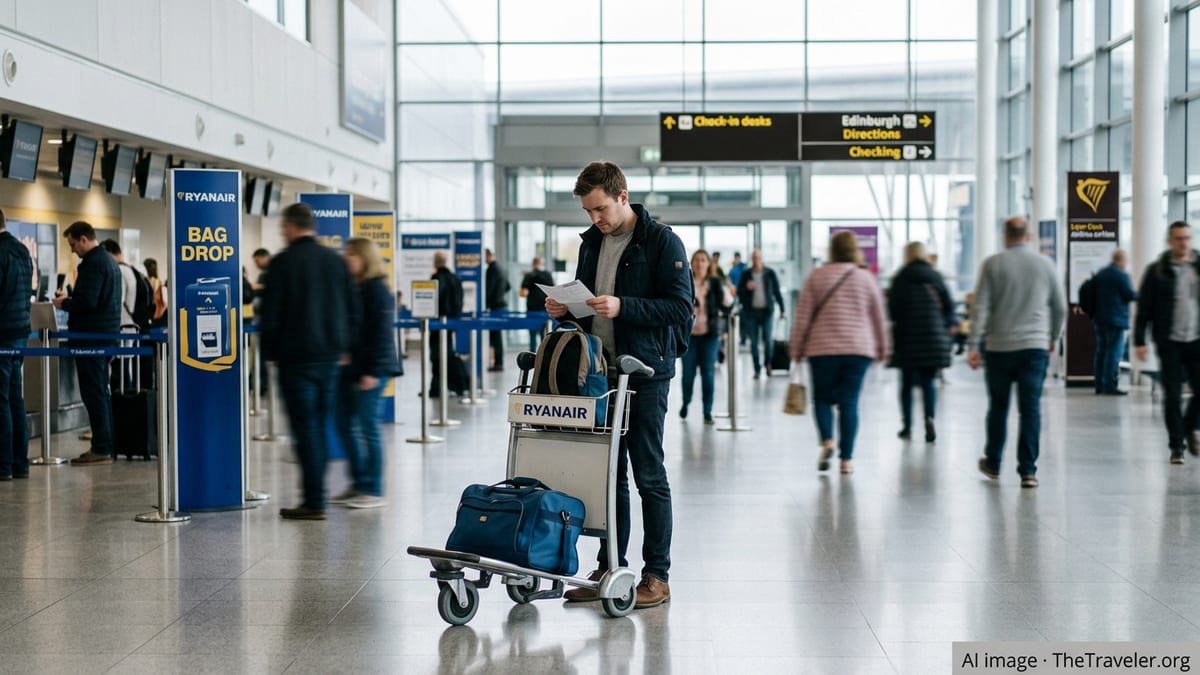
Two-Year Dispute Over Copenhagen Flight Luggage
The case centres on Edinburgh traveller Rosie McGrane, who flew to Copenhagen only to discover on arrival that her checked suitcase had not appeared on the baggage carousel. What initially seemed like a routine case of delayed luggage has since evolved into a protracted legal dispute lasting more than two and a half years.
McGrane pursued the airline after she said repeated attempts to secure compensation for her lost belongings went nowhere. Under international aviation rules and European consumer protections retained in UK law, passengers are entitled to claim for losses when their checked baggage is lost or destroyed, subject to specific time limits and evidential requirements.
According to court papers, McGrane argued that Ryanair had failed to deal with her claim properly and had left her significantly out of pocket for clothing, personal items and the suitcase itself. The value of the claim, including interest and expenses, approached £4,500 by the time it reached Edinburgh Sheriff Court.
Ryanair did not respond publicly to the detailed allegations in the case, but the airline is understood to have defended its handling of the original complaint and disputed both liability and the level of damages sought.
Sheriff Court Awards Almost £4,500, But Passenger Still Unpaid
In July last year, Edinburgh Sheriff Court ordered Ryanair to pay McGrane almost £4,500 after finding in her favour. The award covered the cost of the lost contents, the suitcase, and additional losses and expenses that built up during the lengthy dispute.
However, despite the judgment, McGrane has yet to receive payment from the airline. Speaking to local media, she described her frustration at having a clear court award on paper while still facing the practical reality of being uncompensated more than half a year later.
The situation underlines a key gap in the passenger rights system. While national courts can issue orders against airlines, they do not automatically guarantee swift payment. Claimants generally have to begin separate enforcement steps if a company fails to meet the deadline set out in a decree.
Legal observers note that in cross-border aviation disputes involving large carriers, enforcement can be complex and time-consuming, particularly where companies centralise finance and legal functions outside the jurisdiction where the judgment was issued.
What the Case Reveals About Passenger Rights Enforcement
Consumer advocates say McGrane’s experience is far from isolated, and argue that it exposes a broader weakness in how air passenger protections are enforced in practice. While legal frameworks such as the Montreal Convention and retained European regulations define clear rights to compensation for lost baggage, passengers still face practical hurdles converting those rights into money in their account.
In the United Kingdom, many disputes begin with internal airline complaints systems or through approved alternative dispute resolution schemes. Where those processes fail or are rejected, passengers can then turn to small claims procedures in the county courts or, in Scotland, the sheriff courts. Yet a successful decree is not the end of the story if a company delays or resists payment.
Lawyers point out that enforcement options, such as instructing sheriff officers to recover sums or seek assets, add extra layers of cost, paperwork and uncertainty. For individual travellers claiming for a lost suitcase, the prospect of yet another round of legal steps can be daunting and may deter some from pursuing their full entitlement.
Advocacy groups have renewed calls for regulators and governments to strengthen enforcement mechanisms, arguing that airlines that fail to comply promptly with court awards should face meaningful penalties or automatic collection procedures to protect consumers.
Ryanair Under Scrutiny Over Handling of Compensation Claims
Ryanair, Europe’s largest low-cost carrier, has long faced criticism from passenger groups over its handling of complaints and compensation claims, including those related to delays, cancellations and baggage issues. The airline maintains that it complies with applicable laws and has invested in online systems to process claims.
In recent years, however, consumer organisations, legal charities and travellers have reported a pattern of disputes in which passengers say they have had to escalate relatively modest claims to formal legal action in order to secure payment. Some have turned to online forums and advice services for guidance on navigating small claims procedures against the airline.
McGrane’s case has added to that scrutiny, partly because of the size of the award and partly because it follows a clear court order rather than a contested interpretation of the rules. For campaigners, it has become an illustration of how, in their view, airlines can still frustrate the system even after losing in court.
Ryanair has not recently commented on the specific Edinburgh judgment, but in previous statements on compensation disputes the carrier has insisted it respects court decisions and processes refunds and awards in line with legal requirements.
Implications for Scottish Travellers and the Wider Industry
The unresolved payment raises questions for travellers across Scotland who rely heavily on low-cost connections from Edinburgh, Glasgow and regional airports. With many routes dominated by a handful of budget carriers, consumers often have limited alternatives when problems arise.
Legal specialists say that while most flights proceed without incident, the relatively small number of serious baggage losses or compensation disputes can still have a disproportionate impact on passengers’ finances and confidence in the system. Cases like McGrane’s, they argue, highlight the importance of keeping receipts, documenting losses and acting quickly to lodge formal complaints when luggage goes missing.
The Edinburgh action also feeds into a wider European debate about whether current rules offer enough deterrence against poor complaint handling. Some experts have suggested that regulators should be given more direct powers to enforce court awards and impose fines where airlines delay payment without good reason.
For now, McGrane’s case remains unfinished, despite the court’s clear ruling. As her efforts to recover the sum awarded continue, the dispute has become a touchstone for discussions about how effectively passenger rights are upheld once travellers leave the arrivals hall and enter the often opaque world of airline complaints and legal enforcement.