

More news on this day
Egypt is moving to the center of Africa’s latest tourism push, aligning its Red Sea resorts, Mediterranean megaprojects and Nile heritage sites with regional partners to create multi-country itineraries designed to keep travelers on the continent for longer.
Get the latest news straight to your inbox!
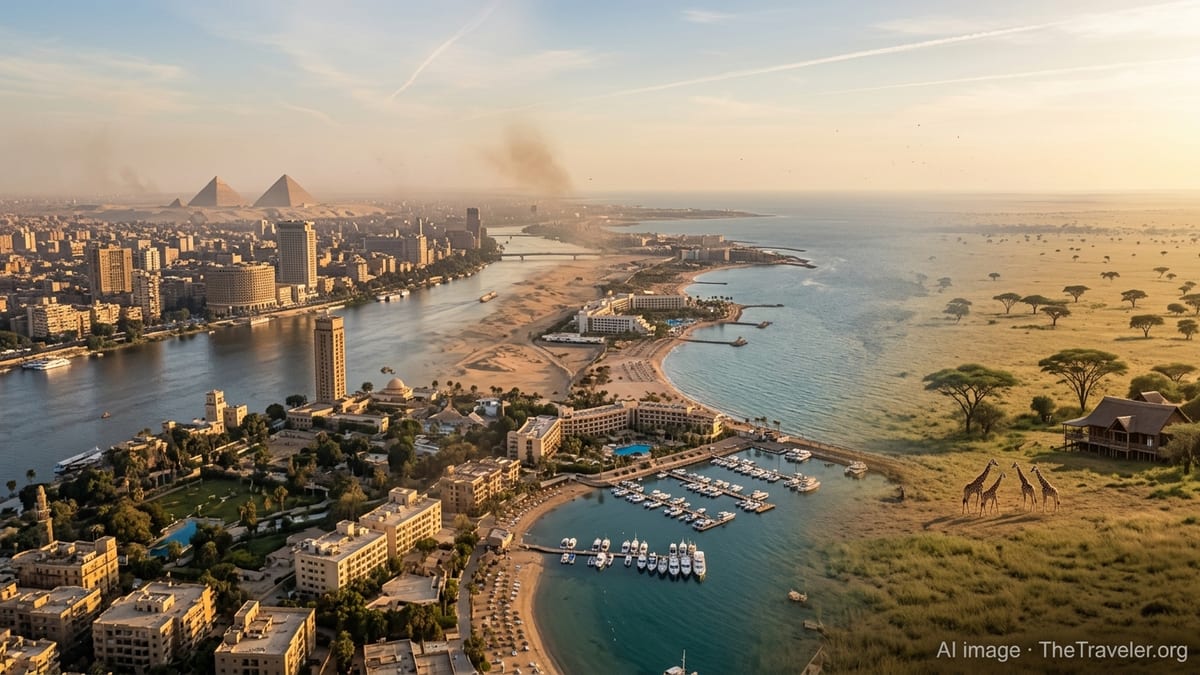
Egypt Positions Itself as a Continental Gateway
Publicly available information shows that Egypt’s tourism strategy is increasingly framed in a continental context, presenting the country not only as a standalone destination but as an entry point to wider African travel. The Ministry of Tourism and Antiquities has been promoting what it calls the country’s “unmatched diversity,” emphasizing how cultural, coastal, spiritual and adventure experiences can be combined in one trip and connected onward to neighboring regions.
Recent campaigns highlight Egypt’s 3,000 kilometers of coastline on the Red Sea and Mediterranean, alongside Nile cruises and desert oases, as the backbone of an expanded offering that can anchor longer African journeys. This approach dovetails with the broader shift in African tourism marketing away from single-country itineraries and toward multi-destination routes that link beaches, wildlife, culture and emerging city breaks.
New coastal investments, including large-scale developments on Egypt’s North Coast, are being presented in regional media as part of a larger effort to attract higher-spending visitors who might combine Mediterranean stays with Red Sea diving, Nile heritage circuits and onward travel to East or Southern Africa. The result is a tourism vision in which Egypt functions as both a magnet and a connector within Africa’s travel ecosystem.
Continental Frameworks Encourage Multi-Destination Itineraries
Across Africa, regional and continental bodies are increasingly building tourism into wider economic integration plans, setting the stage for alliances that support multi-country travel. The African Union’s tourism strategic framework for 2019 to 2028 identifies intra-African travel, region-based hosting of major events and joint marketing as priorities, underscoring efforts to treat the continent as an interconnected destination rather than a series of isolated markets.
At the same time, the African Continental Free Trade Area, which is gradually advancing implementation across services sectors, is being cited by analysts and officials as a platform for fusing trade and tourism. Public commentary on AfCFTA notes that shared payment systems, reduced barriers and cross-border transport corridors can make it easier for visitors to move between African states, encouraging combined itineraries that bundle multiple countries into a single trip.
Sector groups are also moving in this direction. The African Marketing Confederation recently launched a dedicated tourism chapter to help position “Destination Africa” more effectively, encouraging collaborative branding that can accommodate everything from North African heritage hubs such as Egypt and Morocco to East African safari circuits and Indian Ocean beach destinations. According to published coverage, marketing specialists see this as essential to turning Africa’s geographic diversity into bookable, multi-stop holidays.
Regional Visas and Airline Links Reshape the Travel Map
On the ground, visa and air connectivity reforms are gradually making it simpler for travelers to design cross-border routes that start or end in Egypt. Regional blocs such as the East African Community have been rolling out and refining single-visa schemes that allow visitors to move between member states on one document, while Southern African countries in the Kavango-Zambezi conservation area have expanded a shared visa model that facilitates seamless travel between multiple wildlife destinations.
Although Egypt is not formally part of these specific visa schemes, the trend toward regional entry regimes is changing traveler expectations and industry planning across the continent. Travel trade reports indicate that tour operators are increasingly designing packages that combine North Africa with East or Southern Africa, banking on gradual improvements in visa policy and flight schedules to reduce friction for customers.
EgyptAir and other African carriers have been expanding links between Cairo and key hubs such as Nairobi, Kigali and Johannesburg, creating new options for routing multi-country journeys without transiting through Europe or the Middle East. Industry commentators describe this as a step toward an intra-African aviation network that can support the type of multi-destination tourism Egypt and its partners are now promoting.
Alliances Turn “Destination Africa” into a Single Itinerary
The emerging alliances often take shape at trade shows, joint marketing platforms and regional tourism bodies that bring Egypt into the same planning space as other African destinations. Events such as We Are Africa’s trade gatherings, the Magical Kenya Travel Expo and pan-African tourism fairs have become key venues where tourism boards, private operators and hospitality brands collaborate on cross-border products.
Reports from recent industry meetings describe a surge in multi-country safari and culture packages that might link Egypt’s archaeological sites with Kenyan savannahs, Rwandan gorilla trekking or South African wine regions. Travel agents and destination management companies are bundling these offerings into single-booking itineraries under one contract and payment, simplifying logistics for travelers who want to experience several African landscapes in one trip.
Specialist organizations focused on African tourism promotion, some of which are recognized as partners to AfCFTA-related initiatives, are working with governments and businesses to remove practical obstacles to this model. Their efforts range from aligning marketing messages and branding to encouraging harmonized standards in accommodation, guiding and digital booking systems, allowing multi-destination packages to feel cohesive even as they cross borders.
Technology, Storytelling and Sustainable Growth
Technology and digital storytelling are emerging as critical tools in Egypt and Africa’s mega tourism plan. Egypt has invested heavily in online promotion, working with major technology platforms to showcase high-resolution imagery and interactive content that present the country’s beaches, historic neighborhoods and new urban developments as part of a broader African travel story. Campaigns emphasize year-round sunshine and varied landscapes, positioning these features alongside the continent’s wildlife reserves and cultural festivals.
Across Africa, travel-tech startups and booking platforms are attempting to knit together fragmented transport, accommodation and activities into user-friendly systems tailored to intra-African and international travelers. Some firms describe their ambition as building localized distribution networks that make it as easy to plan a Cairo-to-Cape Town itinerary as a multi-city European rail trip, with transparent pricing and real-time availability.
Sustainability is another pillar of the emerging alliance. African Union documents and tourism strategy papers consistently reference community benefits, conservation financing and climate resilience as goals for the sector’s next decade. In practice, this is encouraging partnerships that link coastal tourism in Egypt and North Africa with conservation-focused experiences in East and Southern Africa, giving visitors a narrative that combines cultural heritage, nature protection and responsible travel across borders.
As these strands come together, Egypt’s role as both a symbolic and practical gateway into Africa is likely to grow. With major infrastructure projects on its coasts, expanding air links and a deliberate shift toward pan-African branding, the country is increasingly embedded in a continental tourism network that aims to turn “Destination Africa” into a single, multi-stop journey rather than a one-off trip to a single nation.