

More news on this day
As airspace closures and military tensions ripple across the Middle East, Egypt has emerged alongside the United Arab Emirates, Saudi Arabia, Qatar, Jordan and Israel as a critical transit alternative, with Cairo, Sharm El-Sheikh, Hurghada, Dubai and Riyadh helping to keep key long-haul routes between Europe, Africa and Asia moving even as schedules remain volatile.
Get the latest news straight to your inbox!
Middle East Airspace Closures Redraw Global Flight Maps
Over the past two weeks, a dramatic escalation involving Iran, Israel and the United States has led to widespread airspace restrictions that are reshaping aviation across the region. Authorities in the United Arab Emirates, Qatar, Bahrain, Israel, Iran and Iraq have all imposed partial or full closures, forcing airlines to cancel, divert or reroute hundreds of flights and leaving many travelers stranded or facing marathon journeys.
Key Gulf hubs such as Dubai, Abu Dhabi and Doha experienced periods of shutdown or severely curtailed operations as carriers temporarily suspended services into and out of the airports. At one point, more than 1,800 flights were canceled in a single day as airlines halted operations and scrambled to reposition aircraft and crews. Routes that usually crisscross the Gulf, Iraq and western Iran have been pushed west over Saudi Arabia and Egypt or north via Türkiye and the Caucasus, adding hours of flying time and significant cost.
Security advisories from governments and aviation regulators continue to warn of elevated risk around conflict zones, including parts of Iran, Iraq, Syria and Yemen. While some corridors are reopening in a tightly controlled, day-by-day fashion, operators remain cautious. Travelers are being advised to expect rolling disruption rather than a quick return to normality, particularly for itineraries that rely on Middle East connections.
Egypt’s Airports Absorb Diversions and Act as Safety Valve
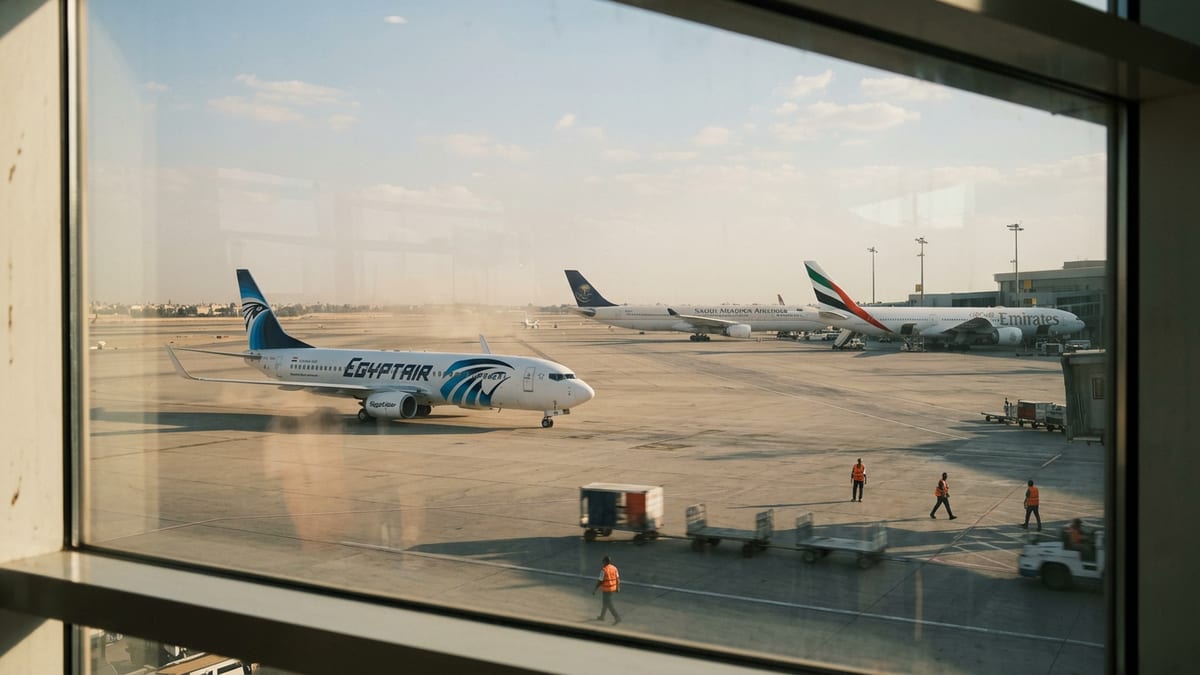
Against this backdrop, Egypt’s airspace remains open and its airports have become critical relief valves for regional and long-haul traffic. Cairo International Airport has seen a surge in diversions and unscheduled arrivals as flights bound for Gulf or Levant destinations seek safe alternatives. Local reports indicate more than 130 flight disruptions in recent days, with Egypt’s national carrier EgyptAir suspending several regional routes even as Cairo absorbs additional international traffic.
Red Sea gateways Sharm El-Sheikh and Hurghada, already popular with European holidaymakers, continue to function as stable entry points for leisure travelers. Flights from major European cities to both resorts are largely operating, albeit with some delays and aircraft changes as airlines rework rosters. Egyptian authorities say security has been tightened nationwide, but tourism operations along the Red Sea coast are running close to normal and remain central to Egypt’s strategy to position itself as a resilient travel hub.
Industry data from 2025 already showed strong growth at Egyptian airports, particularly in tourist centers such as Hurghada and Sharm El-Sheikh, and that infrastructure investment is now being tested by crisis conditions. For many carriers, routing via Egyptian airspace allows them to skirt higher-risk zones while still maintaining commercially viable links between Europe, Africa and South or Southeast Asia.
Dubai, Riyadh, Doha and Amman Stay Pivotal but Volatile
Even amid restrictions, the major Gulf and Levant hubs have not lost their importance. Dubai and Abu Dhabi remain essential to global networks run by Emirates and Etihad, while Doha continues to anchor Qatar Airways’ vast connecting web. As regulators gradually authorize limited corridors, some carriers are cautiously ramping up tightly controlled schedules on a day-by-day basis, prioritizing repatriation flights and key trunk routes.
Saudi Arabia’s airspace is open and heavily used as a west-east corridor, putting Riyadh and Jeddah at the center of revised routings. Saudi airports are reporting congestion and potential delays as overflights and diversions add to regular traffic. Jordan’s main gateway at Amman is open as well, offering an alternative for travelers unable to reach Israel or transiting to and from the wider region.
Israel’s civil airspace, by contrast, remains highly restricted, with only limited cargo and special approval flights operating. That has effectively shifted many itineraries that once passed through Tel Aviv toward Cairo, Amman or Gulf hubs. For travelers, this means fewer options and busier remaining routes, especially on short-notice bookings.
What Travelers Need to Know Before Flying Now
For anyone planning to travel through or near the Middle East in the coming days, flexibility and vigilance are crucial. Schedules that appear confirmed can change with little warning as military or regulatory conditions evolve, and airlines may issue rolling updates hours before departure. Travelers are being strongly urged to monitor their booking directly with the operating carrier’s app or website, rather than relying only on third-party agencies or static email confirmations.
When possible, experts suggest favoring itineraries that route through airports and countries currently assessed as open and stable, notably Egypt, Saudi Arabia and Jordan, while being aware that United Arab Emirates gateways are operating with partial restrictions. Building longer connection times into complex itineraries can provide a buffer if an inbound leg is delayed or rerouted, and purchasing travel insurance that explicitly covers disruption from airspace closures may help offset added hotel or rebooking costs.
Passengers already in the region who find their flights canceled or diverted should contact their airline promptly and be prepared for alternative routings or overnight stays. Many carriers are prioritizing rebooking for travelers who were mid-journey when airspace closures took effect. In some cases, this may mean routing through Cairo, Riyadh or Amman instead of the originally planned Gulf hub.
Planning Ahead as the Situation Remains Fluid
Looking ahead, aviation analysts expect a protracted period of adjustment rather than a quick snap-back for Middle East air travel. Even if some airspaces reopen more fully, airlines may continue to avoid certain routes for longer due to insurance costs, crew-safety concerns and the risk of sudden flare-ups. That is likely to keep Egypt and selected Gulf and Saudi airports at the heart of reconfigured networks for weeks, if not months.
For travelers, that means building contingency planning into any itinerary touching the region. Booking changeable fares where budgets allow, registering contact details with airlines and foreign ministries, and regularly checking official travel advisories can all reduce the risk of being caught out by fast-moving events. While Cairo, Sharm El-Sheikh, Hurghada, Dubai, Riyadh and other key hubs are striving to keep people and goods moving, the wider Middle East remains one of the most complex environments for civil aviation anywhere in the world right now.