

More news on this day
Egyptian National Railways is preparing a substantial increase in long-distance passenger services for the March 2026 Eid al-Fitr holiday period, focusing on Cairo–Alexandria and core Upper Egypt routes as demand for family travel and domestic tourism accelerates.
Get the latest news straight to your inbox!
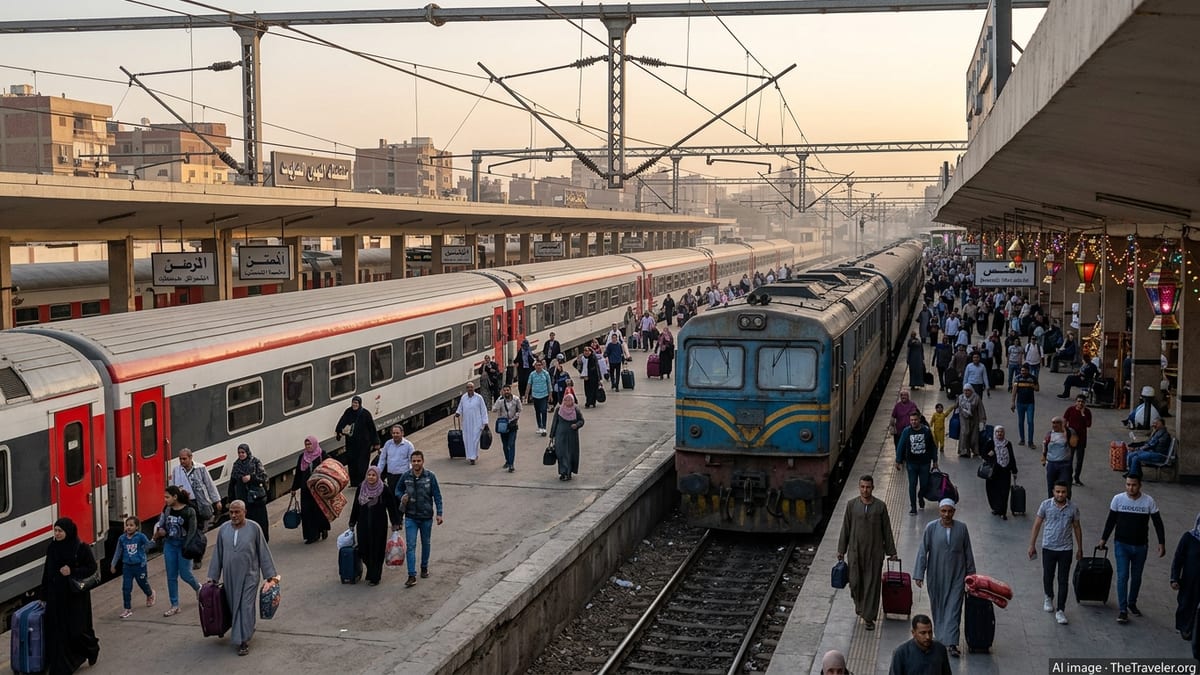
Holiday Surge Prompts Expanded March 2026 Timetables
Publicly available information on recent Eid operations and current Ramadan 2026 calendars indicates that Egypt is heading toward an intense travel window in the second half of March, when Eid al-Fitr is expected to fall. On long-distance rail, that period typically brings one of the highest passenger peaks of the year, driven by Egyptians returning to hometowns in the Nile Delta and Upper Egypt, as well as domestic holidaymakers heading to Luxor, Aswan and coastal cities.
Egyptian National Railways has followed a recurring pattern in recent years of adding services and capacity around Eid, with previous seasons seeing extra departures on heavily used north–south corridors and the country’s flagship Cairo–Alexandria line. Reports from earlier operations point to additional night services, seasonal Talgo runs and strengthened consists with extra coaches on existing trains, particularly to Upper Egypt cities such as Assiut, Sohag, Qena, Luxor and Aswan.
For March 2026, the Eid timetable boost is expected to build on that established playbook, pairing added departures with longer trains on select axes. The emphasis is likely to remain on routes radiating from Greater Cairo, including services that now also call at the newer Bashteel station, which has been increasingly integrated into intercity operations to relieve pressure on Cairo’s Ramses terminal.
Travelers can anticipate a compressed booking window in the run-up to the holiday, as past patterns suggest that rail seats sell out quickly once extra trains are loaded into the system. This is especially true in the evenings and overnight before Eid, when many passengers prefer to travel after breaking the fast.
Key Corridors: Cairo–Alexandria and Upper Egypt Focus
The Cairo–Alexandria corridor remains the backbone of Egyptian rail travel and is expected to receive one of the most visible boosts in capacity during the Eid period. Historically, additional express departures and reinforced formations have been deployed on this axis, reflecting strong demand between the capital region, industrial cities in the Nile Delta and the Mediterranean port.
Southbound services toward Upper Egypt are likely to see an even more pronounced increase. Published coverage of previous Eid seasons shows that extra trains often target the Cairo–Assiut–Sohag–Qena–Luxor–Aswan trunk, which carries large volumes of holiday travelers making family visits as well as tourists combining rail journeys with Nile cruises and archaeological sites. Night trains in particular tend to be heavily booked in the days leading up to Eid.
The pattern of reinforcing high-demand links rather than spreading resources thinly across the entire network suggests that March 2026 capacity will be concentrated on these strategic corridors. Additional stops at intermediate governorate capitals and junctions remain important, as they connect smaller communities to the main wave of holiday traffic without requiring complex new operating patterns.
Within Greater Cairo, coordination with other modes such as the metro and emerging monorail lines helps distribute passengers to and from major rail stations. While these urban systems are managed by different entities, their growing reach is expected to ease transfers to intercity Eid departures, particularly at hubs where metro and national rail networks intersect.
Ticketing, Booking Windows and Digital Tools
As in earlier Eid seasons, ticketing practices will play a central role in how smoothly the March 2026 travel surge unfolds. Public information and traveler reports from recent years highlight that advance sales for long-distance trains typically open on a limited horizon before departure, and that popular dates and sleeping-car accommodations can sell out rapidly.
The Egyptian National Railways mobile application and online portal have gradually become more important tools for securing seats, even as travelers continue to use station ticket counters. User experiences shared in recent seasons indicate that digital platforms can be highly convenient when functioning smoothly but may face heavy loads close to major holidays, underscoring the value of booking as early as the system allows.
For Eid 2026, a significant train boost is expected to be accompanied by staged loading of extra services into the booking system rather than a single on-sale moment. This approach, seen in other regional rail networks around religious holidays, can help operators respond to emerging demand patterns and adjust rolling stock allocations as early trains sell out.
Travelers are likely to benefit from monitoring seat availability frequently, particularly for night departures and higher-comfort categories. Families and groups may find it easier to secure clusters of seats if they target less concentrated travel days, such as early in the Ramadan-to-Eid transition rather than the last evening before the holiday.
Capacity, Safety and Recent Network Upgrades
The anticipated Eid expansion in March 2026 comes at a time when Egypt’s rail network is undergoing continuing modernization, from new rolling stock such as Talgo trains to infrastructure improvements on high-traffic corridors. Recent developments at key hubs, including the gradual rebalancing of long-distance services between Ramses and Bashteel stations, are intended to increase capacity and improve passenger handling during peak periods.
At the same time, national discussions on rail safety remain prominent after a series of incidents on various lines. Publicly accessible reports on recent derailments and service disruptions show that investigations and technical reviews have been initiated to address underlying issues. The Eid period, with its intense traffic and compressed schedules, is therefore likely to be accompanied by heightened operational vigilance and more visible maintenance activity.
Additional trains mean higher utilization of track, signaling and rolling stock, which can test the resilience of the system. In previous holiday peaks, operators in Egypt and across the wider region have used timetable padding, targeted speed restrictions on sensitive sections and pre-positioned rescue equipment to reduce the risk of extended disruptions should an incident occur.
For passengers, the modernization of key corridors and the introduction of newer trainsets on select services are expected to improve comfort on some Eid departures, although older rolling stock will remain a core part of the fleet. Mixed consist quality is likely, particularly on routes where the priority is maximum seat capacity rather than premium amenities.
Practical Tips for Eid Rail Travelers in Egypt
With a large Eid train boost planned for March 2026, travelers are advised to treat long-distance journeys as time-sensitive commitments rather than last-minute decisions. Based on prior years, aiming to book seats as soon as sales open for the desired date offers the best chance of securing preferred classes and departure times, especially for overnight trains to Upper Egypt.
Arriving early at major stations such as Ramses, Giza and Bashteel can help passengers navigate crowds, locate their platforms and coaches, and account for any additional security or ticket checks that may be in place during the holiday period. Families with children, older travelers and those carrying significant luggage may wish to build in even more buffer time.
Travelers planning multi-leg itineraries that combine rail with domestic flights, buses or Nile cruises should allow generous connection times in case of congestion or minor timetable variations. Past holiday periods have shown that even when core routes operate close to plan, station dwell times can increase as large numbers of passengers board and disembark.
Finally, those unfamiliar with Egypt’s rail system may find it useful to monitor local news coverage in Arabic and English during Ramadan for updates on added services, special timetables and any short-notice adjustments. Public information released in the days before Eid often provides the clearest picture of which extra trains will run, which routes have the highest demand and where remaining seat availability is concentrated.