

More news on this day
Egypt is consolidating its status as one of the most important outbound destinations for Russian travelers in 2026, with industry forecasts pointing to sharp growth in arrivals despite shifting regional risks and changing flight corridors across the Middle East and Black Sea region.
Get the latest news straight to your inbox!
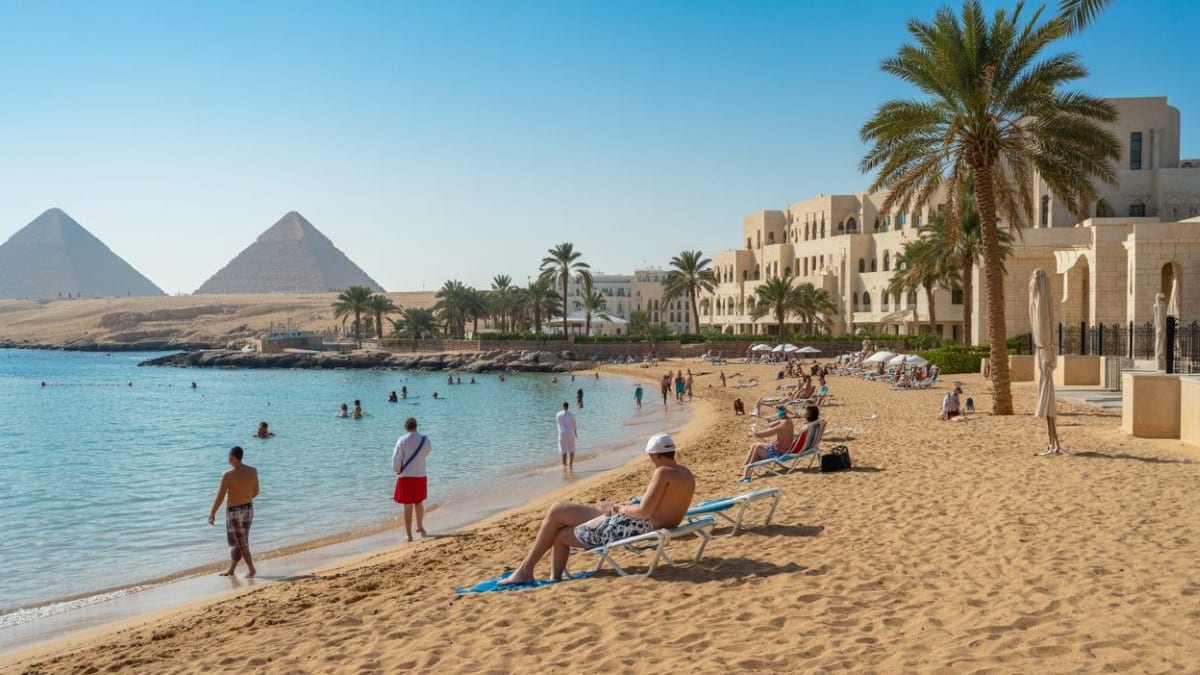
Image by Latest International / Global Travel News, Breaking World Travel News
Forecasts Point to Up to 50 Percent Growth in 2026
Publicly available industry data shows that Egypt has moved into the top tier of destinations for Russian tourists over the past two years, alongside Turkey and the United Arab Emirates. Data cited by the Association of Tour Operators of Russia (ATOR) indicates that Egypt hosted around 1.6 million Russian trips in 2025, following double digit growth in 2024.
Building on that base, a recent ATOR outlook reported in Egyptian and Russian media projects that Russian arrivals to Egypt could grow by as much as 50 percent in 2026. Tour operators describe Egypt as a “pillar” of outbound tourism from Russia, supported by year round demand for Red Sea beach holidays and comparatively competitive package prices.
These projections align with wider trends in Russian outbound travel. Central bank and border service statistics show Russians increased overall spending on foreign trips in 2025 and continued to favor destinations where direct or charter flights remain available and payment options are relatively predictable. Within this landscape, Egypt is positioned as a stable, mid price option that can absorb additional demand if other routes become constrained.
For travelers, the forecasted growth means more charter capacity, a broader range of package tiers, and potentially crowded peak seasons at core Red Sea resorts in late 2026, especially around school holidays and the New Year period.
Regional Tensions Reshape Routes and Risk Calculations
Egypt’s rise is taking place against a backdrop of heightened regional tensions and shifting travel patterns. Since the escalation of the conflict in Ukraine and subsequent disruptions in the Black Sea region, Russian airlines and tour operators have been forced to repeatedly reconfigure flight paths and destination mixes. Additional instability in parts of the Middle East has further complicated scheduling and insurance decisions.
According to published coverage tracking Russian outbound flows, Turkey remains the single largest market but its share has gradually declined as travelers diversify toward Egypt, the Gulf, and Southeast Asia. Reports from travel industry analysts in early 2026 highlight concerns that renewed security worries in parts of the Middle East could temporarily affect demand for some destinations, even as others, such as Egypt’s Red Sea corridor, continue to attract bookings.
In practice, many Russian travelers appear to be trading some geopolitical uncertainty for the perceived predictability of established resort zones. Industry commentary notes that the Hurghada and Sharm el Sheikh areas are marketed as relatively insulated from regional flashpoints, with closed compound resorts, controlled access, and long experience handling charter tourism from Russia and Europe.
However, travelers are increasingly aware that aviation routes, overflight permissions, and insurance coverage can change quickly in response to new developments. In 2026, experts expect that flexibility on dates and a clear understanding of cancellation or rebooking terms will be essential for Russians choosing Egypt as a main holiday destination.
Red Sea Resorts Lead the Charge
The strongest Russian demand is focused on Egypt’s Red Sea coastline, especially Hurghada and Sharm el Sheikh. These resorts have long histories with the Russian market, extensive all inclusive capacity, and dense networks of Russian speaking staff, signage, and services that lower the barrier for first time travelers.
Tourism market analyses show that Egypt’s 2025 performance was driven largely by these beach destinations, which offer competitive prices relative to Turkey and the UAE. A range of three to five star properties, combined with all inclusive packages, has proven particularly attractive to Russian families seeking to lock in costs in advance amid currency volatility.
Despite a series of high profile maritime incidents in the wider Red Sea over recent years, including vessel accidents reported off Egypt’s coast, data and trade commentary suggest that Russian demand has remained resilient. Travel companies have responded by emphasizing resort based excursions, vetted dive operators, and clearer communication around safety standards for boat and submarine tours.
On the ground, the growing Russian presence is also visible beyond hotel complexes. Long standing Russian communities in Hurghada and other Red Sea towns support schools, media outlets, and retail services that cater to repeat visitors and long stay guests, reinforcing Egypt’s role as both a holiday and semi seasonal living destination.
Packages, Pricing and Practicalities for 2026 Travelers
For Russians planning Egypt trips in late 2025 and 2026, the market is dominated by package holidays sold through established tour operators. According to industry breakdowns of 2025 bookings, a significant share of Russian travelers to Egypt still opt for inclusive packages covering charter flights, transfers, accommodation, and insurance in a single contract.
Analysts note that Egypt has benefited from a trend toward higher comfort levels among Russian outbound tourists. Recent market reports show a growing preference for four and five star properties and all inclusive plans, even as travelers remain highly price sensitive. In this context, Egypt’s ability to offer upscale beachfront hotels at lower average package prices than some competing destinations is a core part of its appeal.
Payment logistics have also evolved. While international financial restrictions have complicated the use of some bank cards abroad, tour operators and Egyptian partners have expanded options for prepayment in Russia, on site cash settlements, and the use of alternative systems where available. Travelers are advised in public guidance to confirm payment arrangements for extras such as excursions, medical services, and visa fees before departure.
Seasonality remains another practical consideration. Winter sun demand from Russia is expected to keep occupancy high between November and March, with shoulder seasons in spring and autumn offering somewhat lower prices and milder temperatures. Industry forecasts suggest that if projected growth materializes, late booking bargains in peak months will become less common in 2026.
Opportunities and Challenges Ahead for Egypt’s Tourism Strategy
Egypt’s government has set ambitious targets to expand overall tourism, with publicly discussed plans to roughly double foreign visitor numbers by the end of the decade. Within that strategy, the Russian market is regarded as a cornerstone, both for volume and for the reliability of charter based demand even during periods of global economic uncertainty.
At the same time, dependence on a limited number of source markets presents risks. Fluctuations in Russian outbound capacity, sanctions related constraints, or sudden security incidents affecting Russian citizens abroad can have an outsized impact on Red Sea resorts. The 2025 sinking of a tourist submarine near Hurghada, which involved Russian passengers, underlined the reputational stakes of safety lapses in high visibility tourist zones.
In response, publicly available information indicates that Egyptian authorities and private operators are under pressure to tighten safety oversight for maritime excursions, improve emergency response coordination, and maintain clear communication channels with foreign tour companies. Tourism analysts argue that visible improvements in these areas will be essential if Egypt hopes to sustain rapid growth from Russia while also expanding in Europe, the Gulf, and Asia.
For now, the trajectory appears positive. Russian outbound travel is recovering and diversifying, and Egypt’s mix of accessible pricing, established infrastructure, and year round beach weather positions it as one of the main beneficiaries. If 2026 forecasts prove accurate, Russian tourists will play an even larger role in shaping Egypt’s coastal economies and its broader tourism development agenda over the coming years.