

More news on this day
Egypt is cementing its status as one of the most important destinations for Russian holidaymakers, with new data and forecasts for 2026 pointing to sharp growth in arrivals despite geopolitical tensions reshaping travel patterns across the wider Middle East.
Get the latest news straight to your inbox!
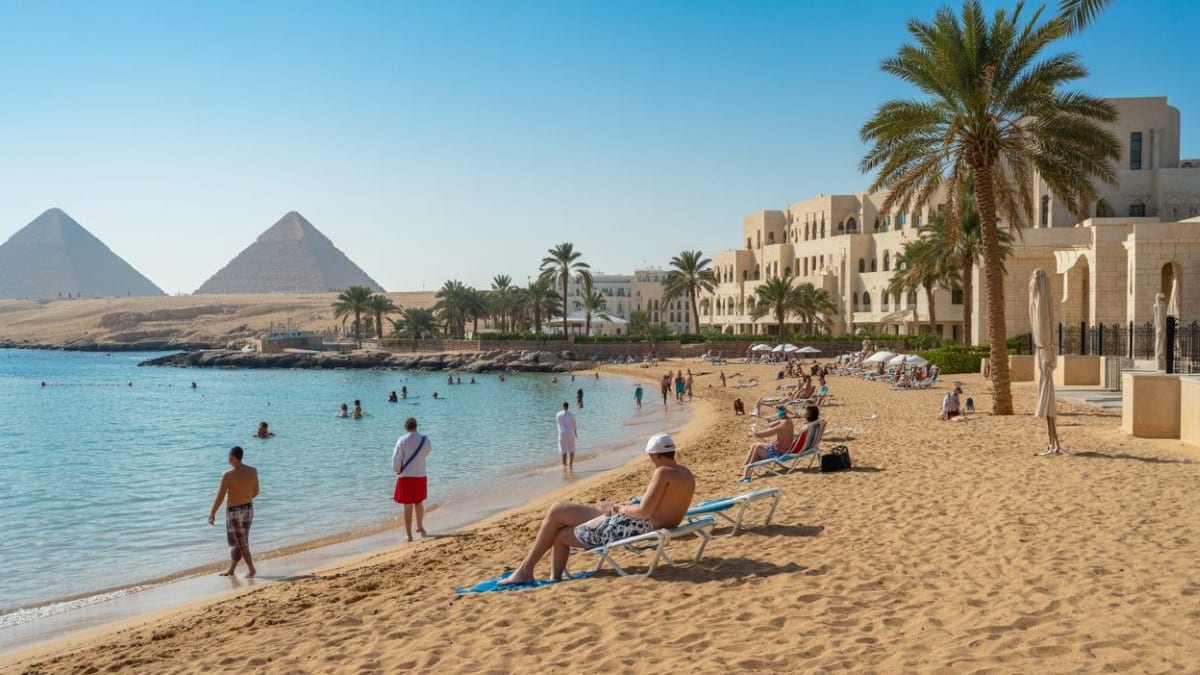
Image by Travel and Tour World – Tourism, Airline, Destination, MICE, Gobal Travel Market, Hotel news that you will find only over here.
Russian Demand Surges as Regional Flows Are Redirected
Recent data from Russian industry bodies and Egyptian tourism analysts indicates that Egypt has become a primary beneficiary of redirected tourist flows in the region, as conflict and instability complicate travel to several traditional Middle Eastern and Eastern Mediterranean destinations. According to published coverage citing the Russian Union of Travel Industry and major tour operators, demand among Russian travelers for Egypt rose by more than 20 percent in February and March 2026 compared with the same period a year earlier, underlining the country’s growing pull as a reliable winter-sun and shoulder-season option.
Reports from the Association of Tour Operators of Russia show that Egypt has moved into a leading position in the outbound market, capturing a substantial share of Russian package holiday sales in 2025 and retaining momentum into 2026. Analysts note that this shift builds on a strong rebound that began in late 2024, when Russian tourists started pivoting away from some regional destinations affected by security concerns and currency volatility, and toward Egypt’s established Red Sea resorts.
Industry monitoring from Russian and Egyptian outlets points to growth rates of between 30 and more than 50 percent in bookings for Egypt over the 2024 to 2025 period, creating a higher base for further expansion in 2026. This acceleration is particularly notable given broader uncertainty in global travel and the continuing economic impact of sanctions and currency swings on Russian consumers, suggesting that Egypt’s value proposition is resonating strongly with middle-income travelers.
Travel market observers add that regional tensions, including periodic escalations around the Eastern Mediterranean and in parts of the Gulf, have had the indirect effect of concentrating Russian demand in destinations perceived as relatively insulated from conflict. In this context, Egypt’s Red Sea coastline stands out as a tried-and-tested alternative, with established charter capacity and a long history of welcoming Russian package tourists.
Forecasts Point to Strong Growth Through 2026
While the surge in Russian demand is only one part of Egypt’s tourism story, it is becoming a crucial factor in overall growth projections. Forecasts highlighted by Egypt’s Cabinet Information and Decision Support Center and research groups such as Fitch Solutions estimate that total tourist arrivals could reach around 18.5 to 19 million in 2026, after hitting record levels in 2025. Within that total, Russian visitors are expected to form one of the largest single national segments.
Trade media focused on the Russian outbound market report that major tour companies anticipate up to 50 percent growth in Russian arrivals to Egypt by 2026 compared with pre-boom levels. Some large operators have reported demand increases of 30 to 55 percent in 2025 alone, suggesting that double-digit expansion could continue in the near term as more capacity is added and new resort areas come on line.
At the same time, macroeconomic data from Russian sources indicates that outbound tourism spending remains resilient, supported by a relatively strong ruble and pent-up demand after pandemic-era disruptions. According to published figures from Russia’s border service and financial authorities, outbound tourist trips rose in 2025, with Egypt ranking among the top three destinations by volume for Russian travelers and recording more than 1.6 million trips.
For Egypt, this influx is feeding into wider government targets that aim to push annual visitor numbers toward 30 million by 2028. Tourism revenues have already climbed sharply since 2023, according to official Egyptian economic briefings, and inflows from Russia are seen as an important stabilizing factor, helping to offset fluctuations in European and regional markets.
Why Egypt Appeals to Russian Travelers in 2026
Several structural advantages help explain why Egypt has pulled ahead as a leading Russian destination in 2026. Russian-focused tourism reports highlight a combination of competitive all-inclusive packages, relatively short flight times from key Russian hubs, and a long-established ecosystem of Russian-speaking staff, signage and services in major Red Sea resorts such as Hurghada and Sharm el Sheikh.
Survey results presented at events like the Moscow Dive Show suggest that Egypt continues to dominate among Russian divers and adventure tourists, with more than half of surveyed divers who traveled abroad in 2024 choosing Egyptian sites and many reporting that they did not visit any other country. This loyalty effect has carried into 2025 and 2026, supported by aggressive early-booking discounts from tour operators and hotels aiming to lock in Russian clientele for the high season.
Climate and pricing also play a role. For many Russian travelers, Egypt offers warm-weather escapes for much of the year at a cost point that undercuts several European and Indian Ocean alternatives, especially when packaged with charter flights. Travel trend analyses circulating in Russian trade media show that while some long-haul destinations have gained popularity among wealthier travelers, a large segment of the middle market continues to prioritize Egypt for its balance of affordability, convenience and perceived safety in resort zones.
Another factor is familiarity. Russian tourism to Egypt has a history stretching back decades, and resort towns on the Red Sea maintain visible Russian communities, schools and businesses. Publicly available information about long-term residents and repeated short-stay visitors suggests that this embedded presence reinforces word-of-mouth recommendations and provides reassurance for first-time travelers navigating changing geopolitical conditions.
Flight Capacity, Packages and New Resort Hotspots
The rapid growth in demand is being matched by a steady build-out of flight capacity and on-the-ground product. Russian and Egyptian aviation announcements over the past two years have detailed expanded charter programs and scheduled services between regional Russian cities and Red Sea airports, enabling travelers beyond Moscow and St. Petersburg to access Egypt without complex connections.
Russian travel operators cited in industry coverage describe Egypt as a cornerstone of their winter portfolios, with packages ranging from budget-friendly, all-inclusive stays to higher-end boutique and family resorts. Many are diversifying beyond the traditional hubs to promote emerging destinations on Egypt’s Mediterranean and Red Sea coasts, including areas around El Alamein and less-developed stretches south of Hurghada.
Egypt’s broader tourism strategy is also feeding into the Russian market. Authorities have announced large-scale investments in hotel capacity, transport infrastructure and cultural attractions, including the long-anticipated Grand Egyptian Museum near Cairo. Though the capital and Nile Valley remain secondary to the Red Sea for most Russian leisure travelers, tour designers are increasingly bundling short cultural extensions onto longer beach stays, appealing to repeat visitors seeking new experiences.
Trade publications note that dive centers, liveaboard operators and adventure outfitters are racing to secure exhibition space and promotion channels in Moscow and other Russian cities ahead of the 2026 high season. This coordinated push is expected to support further diversification of itineraries, from classic week-long resort stays to niche products such as wreck diving, kitesurfing and eco-lodges.
Safety, Perception Risks and What Travelers Should Watch
Egypt’s rise as a leading Russian destination has taken place against a backdrop of regional volatility and occasional local incidents, raising questions about risk management for both travelers and the industry. Events such as the 2025 Red Sea tourist submarine sinking near Hurghada, in which several Russian nationals were among the victims, and earlier maritime accidents have drawn intense media attention and prompted scrutiny of safety standards in the sector.
Publicly available reports indicate that Egyptian regulators and operators have responded with renewed emphasis on inspections, crew training and emergency procedures, particularly for marine excursions and high-risk activities. Tour companies serving the Russian market have in turn placed greater focus on vetting local partners, highlighting certified providers in their brochures and advising customers to follow safety briefings carefully.
Despite these headline incidents, demand indicators suggest that Russian travelers continue to perceive Egypt’s main resort areas as broadly safe and well managed, especially when compared with some neighboring destinations affected more directly by conflict. Travel analysts caution, however, that perceptions can shift quickly if new security or safety issues arise, and they stress the importance of monitoring official advisories, insurance conditions and operator updates when planning trips.
For prospective visitors looking ahead to 2026, practical considerations include checking visa requirements and entry rules for Russian citizens, confirming the status of direct flights from their home region, and reviewing recent information on health, safety and local regulations in chosen resort areas. Travel experts also recommend comparing package types carefully, as inclusions, cancellation terms and coverage for excursions can vary widely between operators, even when headline prices appear similar.