

More news on this day
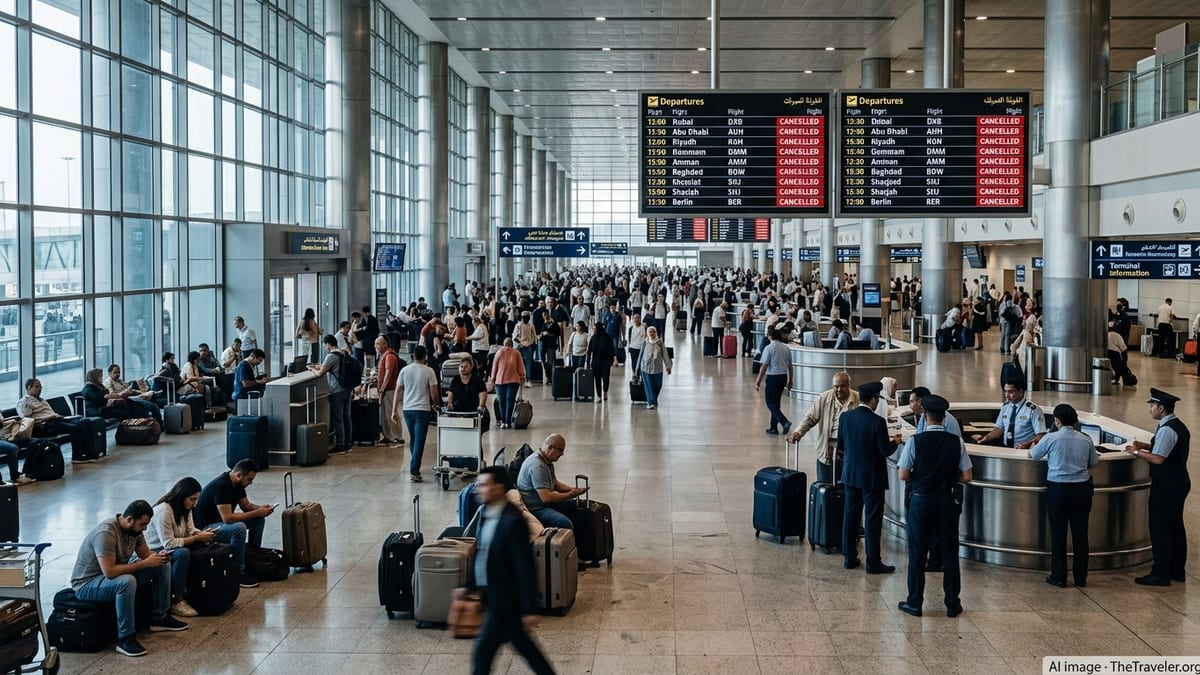
Air travel in and out of Egypt is facing renewed disruption as Egyptair and several Gulf and European carriers cancel or suspend more than a dozen flights linking Cairo and other Egyptian cities with key Gulf hubs such as Dubai, Abu Dhabi, Riyadh, Dammam, Sharjah and Amman, as well as major European destinations including Berlin.
Get the latest news straight to your inbox!
Regional Airspace Turmoil Continues to Hit Egypt Routes
Recent airspace restrictions and security concerns across parts of the Middle East continue to reverberate through Egypt’s key international routes. Publicly available airline updates and travel advisories show that carriers are still restructuring schedules around closed or heavily constrained airspace affecting the United Arab Emirates, Saudi Arabia, Iraq, Jordan and neighboring states.
Client advisories issued in early March highlighted the temporary suspension of normal operations through several Gulf airspaces, with only limited evacuations and essential services allowed on certain days. This has had a knock-on effect on airlines relying on Gulf hubs for onward connections to Europe, Asia and North America, squeezing capacity and leaving passengers from Egypt facing short-notice changes.
While some Gulf airports have partially reopened and begun operating restricted schedules, capacity remains significantly below normal. This environment has forced airlines serving Egypt to continue cancelling or consolidating services to key destinations such as Dubai, Abu Dhabi, Riyadh, Dammam and Sharjah, reducing options for both point to point and connecting traffic.
Egyptair Suspends Multiple Gulf and Levant Flights
Egypt’s flag carrier, Egyptair, has emerged as one of the most directly affected operators. According to regional newspaper coverage and flight disruption summaries published in early March, Egyptair suspended flights on several high demand regional routes, including services connecting Egypt with Dubai, Riyadh, Doha and other Gulf points.
Reports from regional news outlets and travel industry bulletins indicate that routes to Amman, Dammam and other nearby cities have also been disrupted, with a mix of outright cancellations and short term suspensions. These changes have reduced connectivity from Cairo and other Egyptian gateways to some of the region’s most important business and labor corridors.
Egyptair schedules compiled in public databases still list a broad network linking Cairo with Gulf hubs and European capitals, but actual flight operations have diverged from timetable data as carriers adjust to rapidly changing conditions. Travelers relying on Egyptair for transit through hubs such as Dubai or for links onward to markets like Berlin have been urged, in travel agency alerts, to verify their flight status close to departure.
Gulf Carriers Trim Services Touching Egypt and Beyond
Airlines based in the Gulf have also sharply reduced services that feed traffic to and from Egypt. Travel management advisories and airline statements summarised by industry analysts describe wide ranging suspensions by major carriers such as Emirates, Etihad Airways and several low cost operators.
In early March, publicly circulated bulletins from corporate travel providers noted that Emirates temporarily halted all regular passenger operations to and from Dubai before introducing a limited schedule of selective flights, many of them focused on repatriation. Data shared across traveler forums shows Cairo among the destinations operated on a restricted basis as capacity is gradually reintroduced.
Etihad and other regional carriers have adopted similarly conservative schedules, with reports indicating extended cancellations on routes from Dammam and other Saudi gateways, as well as persistent constraints on services into Abu Dhabi. Low cost carriers based in Sharjah and other secondary hubs have also been operating with reduced frequencies, which in turn has affected Egypt bound passengers who rely on these networks for cost effective connections.
For travelers in Egypt, the result has been a patchwork of available flights, shifting day by day as airlines reopen certain corridors while avoiding others. Many itineraries that once relied on smooth transits through Dubai, Abu Dhabi or Sharjah to reach European cities such as Berlin now involve lengthy detours or require rebooking onto alternative carriers and routings.
European Networks Adjust as Carriers Reroute Around the Gulf
The disruption has not been limited to Middle Eastern airlines. European carriers with extensive Gulf and Levant operations have also undertaken large scale schedule changes that indirectly affect Egypt. Analysis of airline operations documents and specialist aviation reports shows that several European airlines temporarily suspended services to Gulf cities, including Dubai, Dammam, Riyadh, Beirut and Amman, through early to mid March.
These suspensions have had a visible impact on connectivity between Egypt and Europe. With normal Gulf hub flows reduced, some long haul carriers have shifted capacity or rerouted flights to avoid closed airspace, sometimes bypassing traditional waypoints entirely. This has complicated journeys for passengers who previously combined European flights with Egyptair or Gulf carrier connections.
Berlin and other major European destinations remain accessible from Egypt, but options are narrower and, in many cases, indirect. Public flight tracking data and traveler accounts point to longer routings that skirt affected airspace, as well as higher load factors on the reduced number of remaining services. For some passengers, especially those traveling at short notice, this has translated into limited seat availability and higher fares.
Passengers Face Cancellations, Rebooking Challenges and Ongoing Uncertainty
For individual travelers, the immediate consequence of the latest wave of cancellations has been uncertainty and repeated itinerary changes. Passenger reports shared on travel and aviation forums over recent weeks describe journeys disrupted at short notice as flights from Egypt to Dubai, Abu Dhabi, Sharjah or Riyadh were cancelled or converted into restricted repatriation services.
Some travelers recount multiple rebookings as airlines adjusted schedules day by day in response to changing airspace access. Others describe difficulties securing alternative seats out of Gulf hubs back to Egypt after onward connections were disrupted. This experience has been especially acute for those traveling between Egypt and cities such as Amman, Baghdad or Berlin that depend heavily on one or two hub connections.
Corporate travel agencies and airline advisories consistently recommend that passengers monitor flight status closely in the 24 to 48 hours before departure and use airline apps or contact centers to confirm any last minute changes. Flexible ticket rules and special travel waivers introduced by a number of international airlines have provided some relief, allowing date changes without standard penalties on itineraries passing through affected airports.
With regional airspace conditions still evolving as of late March, publicly available information suggests that further adjustments remain possible. Travelers heading from Egypt to Gulf hubs or onward to Europe are being encouraged by travel industry guidance to build in additional time, consider alternative routings where feasible, and remain prepared for schedule changes even after check in.