

More news on this day
Egypt has confirmed a rise in visa-on-arrival fees at its border points from March 1, 2026, a seemingly modest five‑dollar increase that nonetheless adds fresh complexity for US and other foreign travelers already navigating a more restrictive global visa landscape.
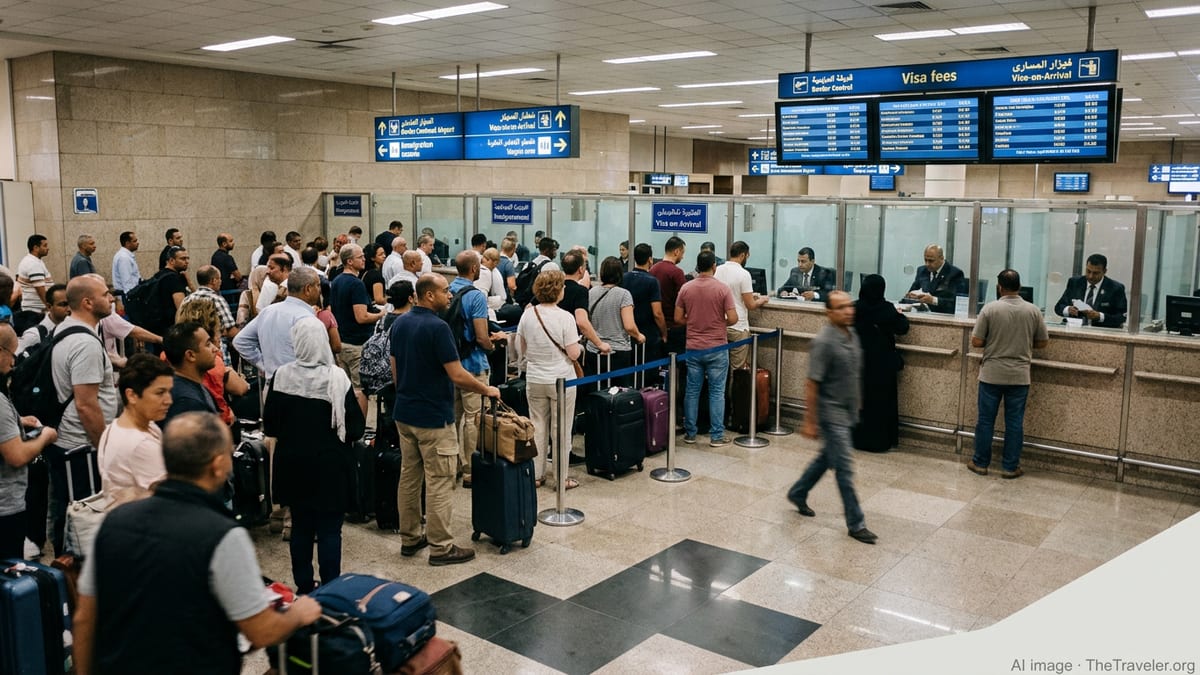
New Visa Costs at Egyptian Border Points
The Egyptian Chamber of Travel and Tourism Companies has announced that the emergency entry visa issued on arrival at ports of entry will increase from 25 to 30 US dollars from March 1, 2026. The adjustment applies across major airports and land crossings, covering the standard single‑entry tourist visa valid for 30 days. Tour operators and airlines have been instructed to update their materials immediately so that travelers are not caught off guard at the border by the higher fee.
Industry notices circulated in late February and early March indicate that the five‑dollar hike affects the widely used visa on arrival that many visitors from North America, Europe, the Gulf and parts of Asia have relied on for short stays. While some confusion remains over whether all e‑visas and consular visas are included in the new pricing, Egyptian tourism bodies have stressed that any visa issued directly at ports of entry will now be charged at the higher rate.
Egyptian tourism officials frame the move as part of a broader effort to modernize entry procedures and better regulate flows at airports and land borders. They argue that aligning fees with updated rules, alongside investments in processing systems, should help streamline arrivals at busy hubs such as Cairo and Hurghada, even as overall visitor numbers hit record levels.
US Travelers Face Shifting Middle East Entry Rules
For US passport holders, the change comes just as Egypt has been experimenting with more flexible entry options aimed at its most valuable long haul markets. Recent policy signals have pointed to expanded visa facilitation and, in some cases, visa‑free entry windows for travelers from the United States and parts of Europe, designed to attract higher‑spending visitors and longer stays. The latest fee rise at the border, however, underscores that access conditions can vary sharply depending on the route and visa channel chosen.
In practice, many American tourists and business travelers still opt for the convenience of visa on arrival rather than applying in advance. For these visitors, the impact is immediate: itineraries budgeted against the long‑standing 25‑dollar charge must now account for the higher cost at Egyptian counters. Travel advisers are already urging US clients to confirm whether they qualify for any visa‑free schemes tied to specific airlines, destinations such as Luxor and Aswan, or seasonal promotions, in order to avoid unnecessary fees.
The update also lands at a time when regional airspace closures and periodic security incidents have pushed more US travelers to route through Egypt on their way to or from neighboring countries. As the country positions itself as a relatively stable hub, clear and predictable border charges are increasingly important for both leisure visitors and those in transit who may need to exit and re‑enter at short notice.
Regional Trend: Turkey, Gulf States and Iran Tighten the Screws
Egypt’s decision sits within a broader pattern of tightening or recalibrated entry conditions across the Middle East and Eastern Mediterranean. Turkey has repeatedly adjusted its own visa and e‑visa rules over the past few years, moving away from the once common practice of buying a low‑cost sticker visa on arrival toward a more segmented system. Many nationalities now face higher fees, advance online applications or shorter stays, and border authorities have become less flexible with overstays and multiple back‑to‑back entries.
In the Gulf, Saudi Arabia and the United Arab Emirates have introduced ambitious e‑visa and tourism visa programs that on paper open doors to new markets, including the United States and much of Europe. At the same time, they have maintained or even strengthened background checks, documentation requirements and restrictions linked to work status, sponsorship and previous travel history. Visitors who once counted on lenient entry rules now find that eligibility can change quickly in response to labor market needs or regional security concerns.
Iran, Lebanon and several other states in the wider region have also adjusted visa fees, on‑arrival procedures and security screening in recent years. For some, higher visa prices are a way to capture much needed hard currency; for others, they are a tool to regulate tourist volumes or respond to diplomatic disputes. Taken together, these shifts contribute to a layered, sometimes opaque environment in which crossing borders in the Middle East demands more preparation than it did even a few years ago.
Why Egypt Is Raising Fees While Courting More Tourists
Egypt’s visa decision highlights an apparent paradox: the country is simultaneously seeking to attract more visitors and asking many of them to pay more at the border. Tourism is a critical source of foreign currency, and officials have repeatedly set ambitious targets, including a goal of reaching around 30 million annual visitors by 2030. Raising the visa‑on‑arrival fee by 20 percent offers a direct revenue boost at a time of currency pressure and high infrastructure costs, without significantly altering the overall affordability of an Egyptian holiday.
At the same time, Cairo is trying to differentiate between core strategic markets and casual short‑haul visitors. Seasonal visa exemptions for flights to cultural hotspots such as Luxor and Aswan, discounted or extended transit visas, and selective visa‑free arrangements for certain Western and Gulf nationalities are designed to keep Egypt competitive against regional rivals. By limiting the latest increase to emergency or standard visas issued at the point of entry, authorities appear to be nudging more travelers toward advance applications and structured tour packages that are easier to monitor and forecast.
Travel stakeholders note that a higher fee at the border could also help ease pressure on frontline staff by marginally discouraging last minute, unplanned arrivals. With aviation disruptions across the Middle East periodically diverting traffic through Egyptian airports, even small administrative changes that stabilize flows are seen as helpful to keeping queues manageable and processing times reasonable.
What International Travelers Should Do Now
For travelers from the United States, Turkey, Saudi Arabia, Iran, the United Arab Emirates, Lebanon and beyond, the key message is to verify visa rules and costs close to departure. Policies across the region can shift quickly, and conflicting reports about fee levels and eligible nationalities are common in the weeks after an official circular is issued. Relying on outdated assumptions about cheap, universally available visas on arrival can result in extra expenses at the border or, in extreme cases, denied boarding at the airport.
Travel agents and tour operators are advising clients to secure e‑visas or consular visas whenever practical, especially during peak seasons or when connecting itineraries span several countries with evolving entry rules. Doing so not only locks in clearer conditions and costs but can also provide more recourse if flights are disrupted or borders temporarily close. In parallel, travelers are urged to keep digital and printed copies of all visa approvals, as well as proof of accommodation and onward travel, ready for inspection.
For Egypt specifically, monitoring announcements from airlines, hotel partners and national tourism offices over the coming weeks will be important, as authorities refine how the new visa‑on‑arrival fee interacts with emerging visa‑free initiatives and special schemes in Upper Egypt. With more countries in the region using visas and border fees as instruments of both tourism strategy and economic policy, informed preparation is rapidly becoming as essential as a passport for anyone planning a trip through the Middle East and North Africa.