

More news on this day
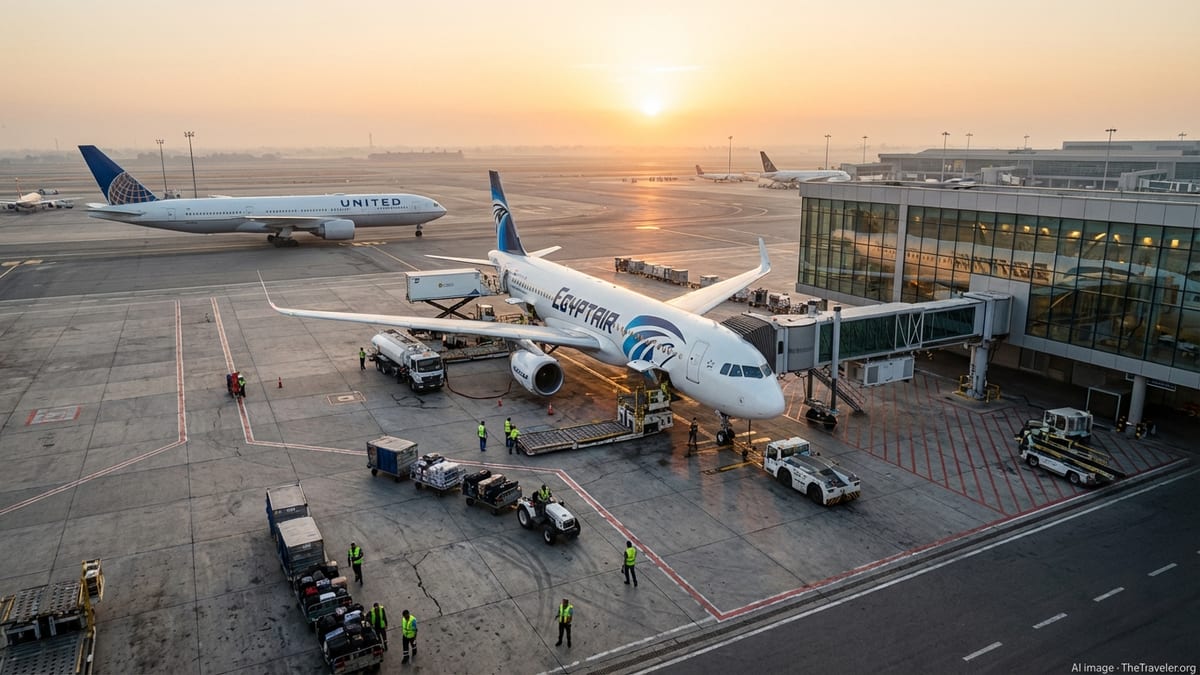
EgyptAir is gearing up for a major North American network shake-up in 2026, using Cairo International Airport as a long-haul super-connector linking Los Angeles, Chicago, New York, Toronto and beyond in a move poised to reshape how Americans and Canadians reach Egypt, the Middle East and Africa.
A New West Coast and Midwest Gateway to Egypt
The centerpiece of EgyptAir’s latest expansion is the launch of nonstop flights from Cairo to Los Angeles and Chicago, officially confirmed by the airline and now on sale for travel from late May and June 2026. The Los Angeles route is scheduled to begin on May 23, 2026, followed by Chicago O’Hare on June 21, both operating three times weekly and turning Cairo into a far more powerful bridge between North America, North Africa and the wider Middle East.
For travelers in California, the new Los Angeles service removes the need to backtrack through traditional European hubs or connect via the Gulf on itineraries that often stretched to 20 hours or more. Instead, a single long-haul sector to Cairo followed by a short onward connection to destinations across Egypt or the region promises to cut journey times and simplify complex, multi-stop tickets.
In Illinois and across the U.S. Midwest, Chicago’s addition to the network offers similar benefits. O’Hare’s role as a major domestic hub means EgyptAir’s Cairo flights instantly become an option not just for Chicago residents but for travelers funneling in from cities across the central and eastern United States.
Crucially, these flights join EgyptAir’s existing North American services to New York JFK, Newark, Washington Dulles and Toronto, widening the carrier’s footprint from coast to coast and allowing Cairo International Airport to function as a true long-haul hub for the airline’s 2026 schedule.
A350-Powered Long-Haul and What It Means On Board
EgyptAir’s new routes are underpinned by the arrival of its Airbus A350-900s, part of a broader fleet renewal that will see up to 10 of the type joining by the end of 2027 alongside new Boeing 737 MAX aircraft for shorter routes. The A350s are already being positioned as the flagship for ultra-long services such as Cairo to Los Angeles, which will be the airline’s longest route at roughly 12,300 kilometers and about 15 to 16 hours of flying.
For passengers, that matters. The A350-900’s lower cabin altitude, higher humidity and quieter engines are designed to reduce fatigue on marathon sectors, making it easier to arrive in Cairo ready to connect onward or begin a trip immediately. EgyptAir is configuring the aircraft with a two-class layout including lie-flat business class seats and a high-density but modern economy cabin, with updated in-flight entertainment and charging at every seat aimed at keeping travelers comfortable across the long Pacific and Atlantic crossings.
The same aircraft type is expected to serve the new Chicago route, giving Midwestern travelers a similar experience and aligning the onboard product more closely with what many have become accustomed to on European and Gulf carriers. As EgyptAir gradually retires older Boeing 777-300ERs from long-haul duty, the A350 becomes central not only to performance and fuel efficiency but also to the airline’s efforts to compete for premium leisure and business traffic.
For families, students and tour groups heading to Egypt’s major attractions or onward into Africa and the Middle East, the combination of a modern cabin and nonstop flying can make the difference between a grueling two-day journey and a single long but manageable travel day.
Cairo’s Hub Strategy: Connecting North America to the Region
While the headlines are focused on Los Angeles and Chicago, the broader story is Cairo International Airport’s transformation into a more robust long-haul hub. EgyptAir already uses Cairo to connect its North American flights with a network spanning cities across Egypt, the Gulf, the Levant and parts of Africa and Asia, and the new routes are timed to feed into those banks of departures and arrivals.
Travelers from California and Illinois will be able to reach not just Cairo but also secondary Egyptian destinations such as Luxor, Aswan and Sharm El Sheikh, often with a single stop and a through-checked itinerary. For many travelers who previously routed via Europe or the Gulf to reach the Red Sea or Upper Egypt, the ability to connect via Cairo on a single carrier simplifies visas, baggage handling and schedule planning.
The move also complements Egypt’s broader aviation push. Government and industry officials have framed 2026 as a key growth year, with additional long-haul capacity tied to rising visitor numbers and the continued ramp-up of tourism around sites from the Pyramids of Giza to the long-delayed Grand Egyptian Museum. More direct access from the United States and Canada is seen as crucial to sustaining that growth and diversifying the mix of source markets.
For North American travelers eyeing multi-country itineraries, Cairo’s position at the crossroads of Africa, the Middle East and even parts of Southern Europe makes the new network especially useful. With a single stop in Egypt, it becomes feasible to string together trips that combine ancient sites, Red Sea beaches and onward connections to destinations stretching from Nairobi to Amman.
Star Alliance Links With United and Beyond
EgyptAir’s membership in Star Alliance is another reason these new Cairo routes matter for travelers in California, Illinois and across the continent. In practice, it means that passengers booking from cities such as San Francisco, Denver, Houston or even smaller Midwest markets can purchase a single-ticket itinerary connecting on United Airlines to Los Angeles or Chicago, then onward on EgyptAir to Cairo.
Loyalty program members benefit as well. Miles and elite status can typically be earned and, in many cases, redeemed across both carriers, so a family in Los Angeles booking a summer holiday to Egypt can credit their journey to an existing United or EgyptAir frequent flyer account. For business travelers, coordinated schedules and through-checked baggage reduce friction on complex itineraries that may combine domestic and international segments.
Star Alliance connectivity also extends beyond the United States. EgyptAir’s services to Toronto tap into Air Canada’s network, offering Canadians new options to reach Cairo and then connect further into Egypt and the region. Combined with the airline’s New York, Newark and Washington services, the 2026 network shift effectively rings North America with Star-linked gateways into Cairo.
For travelers used to routing through European capitals, this growing partnership web creates a viable alternative. Instead of changing alliances or carriers mid-journey, many will be able to remain within the Star system from their home airport all the way to Egypt and back, with the added benefit of more predictable handling during delays or disruptions.
What It Means for Your Next Trip Planning
For leisure travelers planning 2026 and 2027 vacations, the immediate impact of EgyptAir’s expansion is more choice. From Los Angeles, Chicago, New York, Newark, Washington and Toronto, Cairo will be within one long-haul flight, with onward options to resort destinations and cultural hotspots that previously required multiple connections. That can translate into shorter travel days, fewer chances for missed flights and, often, more competitive fares as EgyptAir goes head-to-head with established European and Gulf carriers.
The schedule also opens up fresh possibilities for trip design. A traveler from California could fly nonstop from Los Angeles to Cairo, spend several days in the capital and at nearby archaeological sites, then connect to the Red Sea coast before returning home via Chicago, taking advantage of open-jaw ticketing and Star Alliance partners for domestic positioning flights.
Business and diaspora travelers stand to benefit too. For Egyptian communities in Southern California and the Midwest, direct links to Cairo mean easier family visits, reduced transit times and less reliance on crowded European hubs during peak holiday periods. Cargo capacity on the A350s, meanwhile, will support trade flows in both directions, from Egyptian exports to U.S. consumer goods headed for the Egyptian market.
For anyone eyeing a trip that touches Egypt, the Middle East or parts of Africa after May 2026, it will be worth checking whether Cairo now offers a more direct, convenient or competitively priced path than your usual European or Gulf connection. The answer, increasingly, is likely to be yes.